





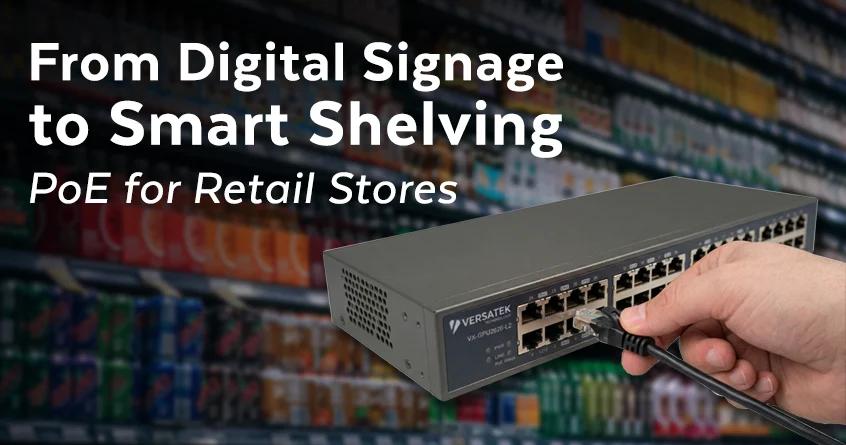
In the rapidly evolving landscape of global commerce, the physical storefront is undergoing a profound metamorphosis. While e-commerce has fundamentally altered consumer behavior, the "brick-and-mortar" experience remains a vital touchpoint for brands, offering tactile product engagement, immediate gratification, and a community-centric atmosphere that digital storefronts simply cannot replicate. However, the retail environment of 2024 and beyond is no longer just a display space; it is a high-tech ecosystem. To remain competitive, retailers are increasingly turning to Power over Ethernet (PoE) technology as the foundational infrastructure required to support the modern, hyper-connected shopping experience.
The Evolution of the Retail Infrastructure
The modern shopper enters a store with high expectations. Whether interacting with an interactive kiosk, scanning a QR code for detailed product specs, or expecting seamless checkout via an integrated Point-of-Sale (POS) system, consumers demand efficiency, connectivity, and security. Meeting these expectations requires more than just high-speed internet; it requires a robust, scalable power and data architecture.
Power over Ethernet (PoE) has emerged as the gold standard for this transformation. By consolidating power and data delivery into a single Ethernet cable, PoE eliminates the need for separate, bulky electrical wiring for each connected device. This architectural shift allows retailers to simplify deployments, drastically reduce installation costs, and gain the agility needed to relocate devices as floor layouts shift.
Chronology of the Connected Store
- The Early 2000s: Retail infrastructure focused on simple, wired POS systems and limited surveillance. Connectivity was largely siloed.
- 2010–2015: The rise of Wi-Fi access points and basic digital signage began to push the limits of traditional electrical grids within retail footprints.
- 2016–2020: The proliferation of IoT sensors and high-definition IP cameras necessitated a more robust power solution. The adoption of early PoE standards became common.
- 2021–Present: The "Smart Store" era. With the advent of 802.3bt standards (supporting up to 90 watts), PoE now powers everything from heavy-duty digital kiosks and sophisticated lighting systems to advanced thermal and security sensors.
Supporting Data: The Case for Efficiency
The pressure on modern retailers is immense. Profit margins, particularly in grocery and warehouse formats, often hover between 2% and 3%. In such a thin-margin environment, every operational inefficiency—from wasted energy to security-related inventory shrinkage—directly impacts the bottom line.
- Security Stakes: Data from the FBI suggests that 15% of robberies occur in 24-hour retail environments. Modern PoE-powered surveillance, utilizing high-wattage PTZ (pan-tilt-zoom) cameras, acts as both a deterrent and an early warning system.
- Operational Scale: A typical retail warehouse spans over 146,000 square feet. Managing this space requires thousands of endpoints, from RFID readers to climate sensors, all feeding into a centralized management system.
- Public Safety: A recent study highlighted that 38% of consumers have witnessed a crime in a supermarket, with 70% of those surveyed indicating they avoid stores with a history of safety issues.
Segmented Retail Applications: From Convenience to Warehouse
The implementation of PoE is not a "one-size-fits-all" endeavor. Different retail sectors leverage the technology to address unique pain points.
Convenience Stores: The 24/7 Security Challenge
For convenience stores, speed is the primary value proposition. However, their 24/7 nature makes them prime targets for criminal activity. By deploying PoE-enabled smart security, store managers can integrate license-plate recognition software and automated security triggers. Because these cameras are powered via the network, they can be deployed at perimeters and fuel pumps with minimal architectural disruption, providing real-time data to off-site monitoring stations for faster emergency response.

Retail Warehouses: Managing the Massive
The sheer scale of a retail warehouse requires precise inventory management. When operating on a 3% margin, the loss of perishable goods due to improper temperature control is unacceptable. PoE-powered sensors can monitor humidity and temperature in real-time. If a freezer unit malfunctions, the system can automatically adjust environmental controls or alert maintenance staff before stock is compromised. Furthermore, PoE-powered Wi-Fi access points ensure that staff using tablets for inventory management never encounter "dead zones" in the massive facility.
Supermarkets: Precision at the Point of Sale
In the grocery sector, the checkout experience is the final, and often most critical, point of customer interaction. PoE-powered POS systems ensure that payment terminals remain operational and connected without the clutter of extra power cords. This cleanliness and reliability facilitate faster throughput, reducing the frustration of long queues. Additionally, the use of PoE in self-checkout kiosks adds a layer of oversight, as cameras can be integrated directly into the kiosk infrastructure to minimize loss.
Official Industry Perspectives and Implications
Industry experts emphasize that the primary implication of adopting PoE is "future-proofing." Retailers who rely on legacy electrical setups find themselves paralyzed when it comes time to renovate or pivot their floor plans.
"Retailers should not just build for today’s floor plan," says an industry analyst. "They must build for the inevitability of change. Whether it is adding a new digital signage display, relocating a camera for better coverage, or integrating a new IoT-based inventory tracker, the infrastructure must be fluid."
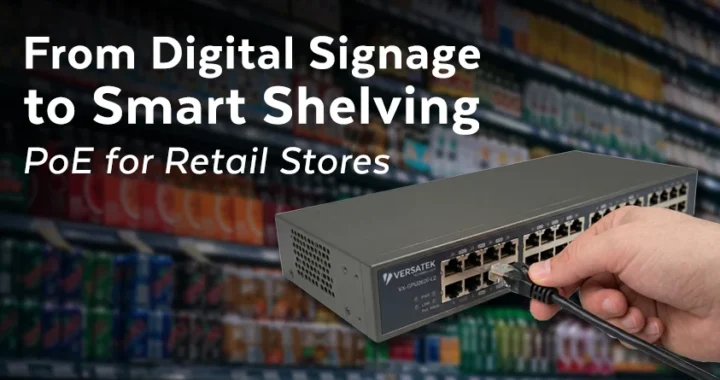
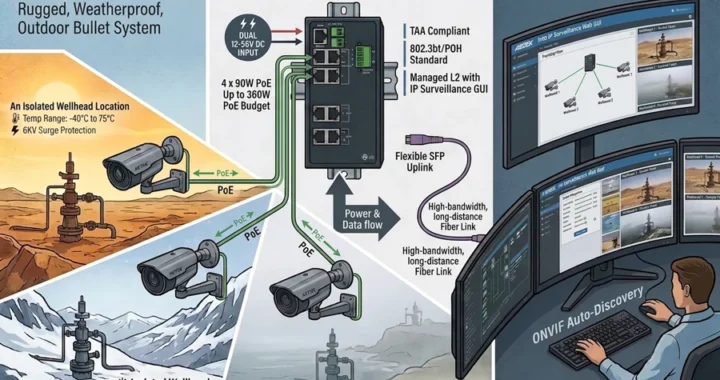
The implication of this shift is a more resilient retail model. By utilizing industrial-grade PoE switches—such as the D60-044 Managed Industrial switch from Versa Technology—retailers can protect their hardware against power surges and extreme temperature fluctuations. When coupled with an Uninterruptible Power Supply (UPS), a PoE-based network can continue to function even during a local power grid failure, ensuring that security and POS systems remain active when they are needed most.
The Path Forward: Strategic Implementation
For retailers looking to modernize, the transition to a PoE-enabled environment is a strategic investment in agility. The shift involves three distinct phases:

- Assessment: Audit existing infrastructure to identify power-hungry devices and "blind spots" in data coverage.
- Scalability: Invest in high-wattage (90W) PoE switches that support the 802.3bt standard, ensuring that future hardware upgrades do not require a complete overhaul of the power delivery system.
- Integration: Move beyond basic connectivity by integrating sensors, surveillance, and POS systems into a single, unified management dashboard.
The Role of Versa Technology
Versa Technology has positioned itself as a leader in this space by providing industrial-grade solutions designed for the rigors of the retail environment. Their focus on high-wattage support and fiber-uplink capability allows retailers to bridge the gap between their centralized data centers and the furthest reaches of the sales floor. As retailers look to manage thousands of devices across multiple locations, the reliability offered by managed industrial switches becomes the bedrock of operational success.
Conclusion: The Future-Proofed Storefront
The storefront of the future is not defined by its products alone, but by the intelligence of its infrastructure. As we look ahead, the retail environment will only become more reliant on data-driven insights, automated security, and seamless customer interactions.
Retailers who view their network infrastructure as a strategic asset rather than a utility expense will be the ones to define the next era of commerce. By leveraging the power, flexibility, and reliability of PoE, store operators can ensure that their businesses are not only protected against current threats but are also fully prepared for the technological innovations of tomorrow.
The message to the retail industry is clear: the ability to pivot is the greatest competitive advantage. Through the deployment of a robust, PoE-backed infrastructure, that pivot is no longer a costly disruption—it is a standard operating procedure.
For those interested in securing their retail environment, exploring the latest in managed industrial switching solutions is the first step toward a more efficient, secure, and profitable future.