






Despite a banner year of financial growth across the board, the mood among the East Coast’s top construction firms is one of measured, almost nervous, restraint. The 2025 ENR East Top Contractors rankings reveal a sector that has achieved significant revenue milestones, yet remains deeply preoccupied with the structural shifts of a post-pandemic economy. While the numbers suggest a period of peak performance, industry leaders are increasingly looking over their shoulders, bracing for a future defined by interest-rate volatility, geopolitical instability, and a fundamental change in how clients view commercial space.
The Financial Landscape: A Year of Robust Growth
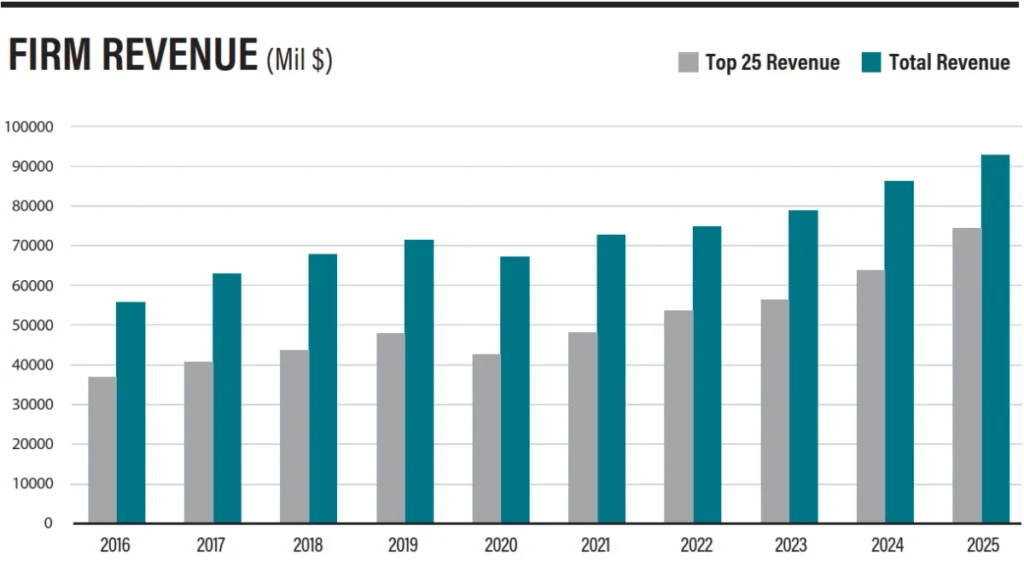
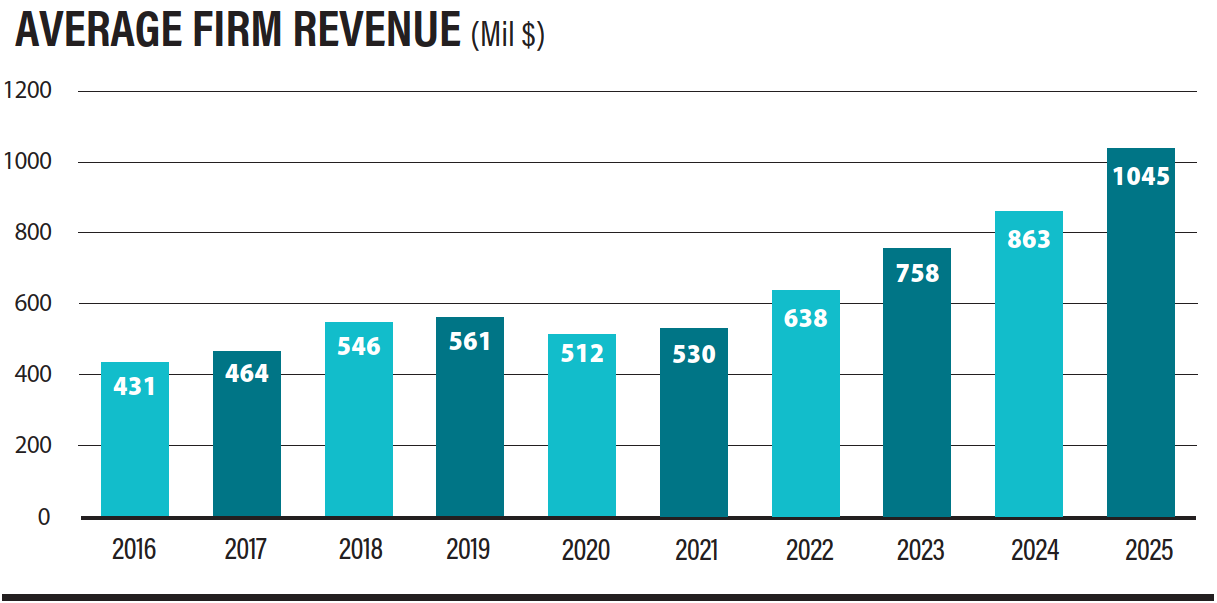
The 89 firms that participated in this year’s survey reported a combined revenue of $93.08 billion for work performed across the Eastern Seaboard—a notable 7.77% increase over the previous year’s $86.37 billion. This performance covers a diverse territory spanning from Maine to Virginia and west into West Virginia, highlighting the sheer scale of infrastructure and commercial development currently underway.
The elite tier of the industry—the Top 10 firms—led this charge with an 11.29% revenue surge, hitting a collective $51.64 billion. The leaderboard saw a dramatic shake-up, signaling a highly competitive environment. HITT Contracting ascended to the top spot with a staggering 46.62% revenue increase, reporting $7.58 billion in total billings. Turner Construction maintained its formidable presence in second place with $6.73 billion, while the previous year’s leader, Whiting-Turner Contracting Co., slipped to third despite a solid 4.35% growth rate, bringing their revenue to $6.24 billion.
This growth is not uniform, however. Regional performance illustrates the shifting geography of construction demand:
- MidAtlantic: The top 15 firms in this subregion saw a massive 21.89% revenue jump to $33.36 billion.
- New York-New Jersey: These powerhouses posted a collective $25.95 billion, reflecting a healthy 12% growth.
- New England: The top 15 firms here experienced a slight contraction, with revenue dipping to $13.44 billion from $13.85 billion the prior year, suggesting a cooling period in the northernmost states of the region.
Chronology of Caution: From Pandemic Recovery to Modern Uncertainty
To understand the current "cautious vibe," one must look at the recent evolution of the sector. Following the initial shock of the pandemic, the construction industry benefited from a surge in stimulus-funded projects and a temporary boom in demand for logistical and residential space. However, as 2024 turned into 2025, the narrative shifted.
Early in 2025, firms were buoyed by large-scale projects initiated during the post-lockdown era. Yet, by mid-year, the "flu-like symptoms" described by industry veterans began to manifest. As companies finalized their hybrid work policies, the commercial office market—a staple for many large contractors—began to falter under the weight of excess unleased space.
"The commercial office and life sciences sectors continue to have flu-like symptoms as companies adjust to hybrid workstyles, reduced office needs and overall excess unleased space," says Chris Doepper, COO and executive vice president at Dimeo Construction. His firm, based in Johnston, R.I., mirrored the industry’s broader success with $646.82 million in revenue, an 11.39% jump, yet he remains anchored by the reality of the current market cycle.
The industry is currently in a "wait-and-see" phase. The combination of high interest rates and global geopolitical tensions—specifically the ongoing conflict involving Iran—has created a climate where clients are pulling back on speculative developments. The consensus is that the market is awaiting a "clarity event" that would allow for more aggressive capital deployment.
Supporting Data: The Shift Toward Efficiency
The data suggests that the "winners" of the coming years will not necessarily be the companies that can secure the most work, but those that can manage the most complexity.
Take, for example, the performance of firms like DPR Construction and Gilbane Building Co. DPR, ranked No. 12 with $2.42 billion in revenue, has noted that their primary constraint is no longer the availability of work, but rather the industry’s "delivery capacity." This sentiment is echoed by Gilbane’s regional president, Ryan Hutchins. Despite Gilbane’s revenue growth to $3.61 billion, Hutchins emphasizes that success in the current climate is fundamentally different from the growth-at-all-costs models of the past.
"Success over the next few years won’t be driven by demand alone; it will be defined by how effectively projects are delivered," Hutchins notes. This transition from volume-driven success to execution-driven success is supported by the changing role of the general contractor. Firms are increasingly moving away from being mere builders and toward being "risk-mitigation partners."
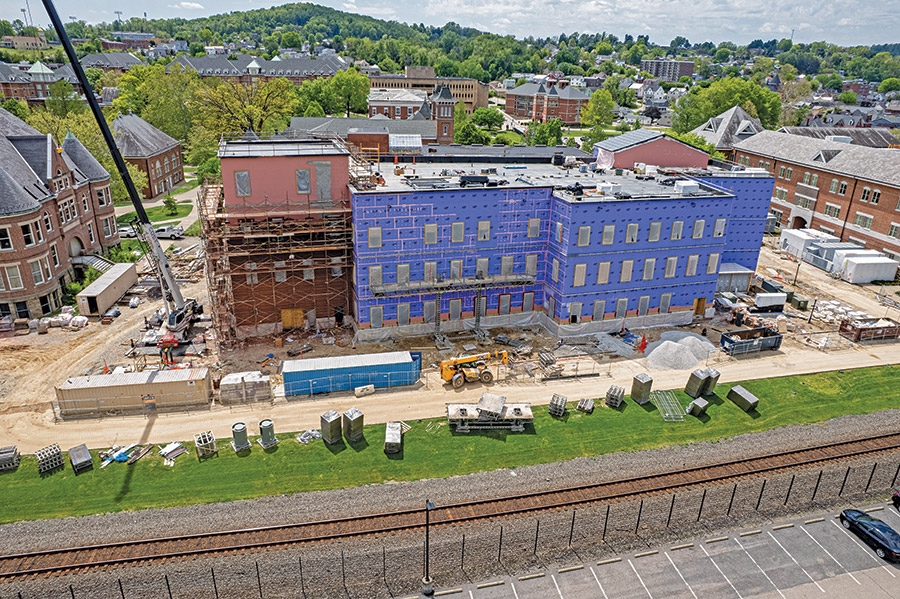
This shift is visible in the project pipeline. While new office tower starts may be slowing, institutional and specialty projects—such as the science building at Pennsylvania Western University, currently being built by Rycon Construction—continue to provide a steady, if disciplined, stream of work.
Official Responses: Navigating the "Uneven" Market
Industry leaders are unanimous in their assessment: the market is active, but it is deeply uneven.
Camilo Garcia of DPR Construction anticipates that the Northeast market will remain active but characterized by significant volatility over the next 12 to 24 months. He identifies the challenge as one of balance—maintaining the agility to pivot between sectors as owners reprioritize their assets.
For Kevin Montez, president and COO of Rycon Construction, the current environment demands a change in the contractor-client conversation. "The conversation is shifting. It is less about just building and more about getting involved early, helping clients navigate costs and risk, and finding practical ways to keep projects moving," Montez says. This "early involvement" model allows firms to provide cost-certainty before a project hits the point of no return, effectively insulating the client from the market volatility that has plagued the industry for the past two years.
However, not all sectors are suffering from the same malaise. The hospitality sector, particularly in New York City, remains a bright spot. David Margolius of Shawmut Design and Construction notes that this sector has "come back with real force." His confidence in the New York market remains unshaken, serving as a reminder that even in an "uneven" climate, regional hubs of demand can buck national trends.
Implications: A New Era of Professionalism
The implications for the construction industry are clear: the "easy" growth phase is over. The coming years will be defined by three critical factors:
- Prioritization over Expansion: Clients are no longer canceling projects wholesale; they are reprioritizing. Contractors must be adept at helping owners filter their portfolios to focus on the most viable projects.
- The Rise of the Risk Manager: As interest rates and material costs remain fluid, the contractor’s ability to guarantee a project’s financial viability becomes more valuable than their ability to lay concrete.
- Capacity as a Constraint: The labor shortage and supply chain bottlenecks remain real. Firms that have invested in technology, prefabrication, and efficient delivery methods will have a distinct competitive advantage over those relying on traditional, labor-heavy methodologies.
As we look toward the remainder of the decade, the "cautious vibe" expressed by executives is not necessarily a signal of a coming crash. Rather, it is a sign of a maturing industry. The 2025 ENR East Top Contractors have proven they can grow in the face of uncertainty. The question for the next few years is whether they can prove they can thrive in an environment where predictability is the most expensive and sought-after commodity.
"We remain cautiously optimistic," says Kerim Evin of Skanska USA Building. This sentiment, repeated across boardrooms from Boston to Washington, summarizes the current state of the industry: eyes wide open, pencil sharpened, and waiting for the market to provide the clarity required for the next big leap.