




The modern factory floor is undergoing a metamorphosis. For decades, it has been a landscape of industrial chaos: a tangled web of high-voltage conduits, cumbersome power adapters, and hazardous daisy-chained extension cords snaking around sensitive machinery. Each time a facility manager sought to integrate a new sensor or upgrade a workstation, the process necessitated hiring licensed electricians, drilling through reinforced concrete, and enduring significant downtime. This "spaghetti cabling" approach is not merely an aesthetic eyesore—it is a significant operational bottleneck and a persistent safety risk.
However, a quiet revolution is taking hold. In the streamlined, smart factory of today, the clutter is vanishing. The catalyst for this transformation is Power over Ethernet (PoE). By delivering both electricity and high-speed data over a single Cat 6a (or better) cable, PoE is fundamentally altering the economics and logistics of manufacturing. As Industry 4.0 and the Industrial Internet of Things (IIoT) demand unprecedented device density, PoE has emerged as the unsung infrastructure hero, with market analysts projecting a 17% compound annual growth rate (CAGR) through 2034.
Main Facts: The Convergence of Power and Data
At its core, PoE is a sophisticated delivery mechanism that allows networking cables to carry electrical power to connected devices. What began as a niche solution for VoIP phones and basic office cameras has matured into a robust, high-wattage standard capable of supporting industrial robotics, advanced machine vision, and edge computing nodes.
The primary shift is the elimination of the dual-infrastructure requirement. In a traditional factory, IT networks and electrical grids operate in silos. PoE collapses these silos into a unified "nervous system." With everything managed through a centralized switch dashboard, upgrades are no longer "construction projects"; they are simple plug-and-play operations. This convergence is essential for the high-density sensor networks required for real-time manufacturing analytics.
A Chronological Evolution of PoE Standards
The rapid adoption of PoE in industrial settings is not accidental; it is the result of decades of standardization by the Institute of Electrical and Electronics Engineers (IEEE).
- 2003 (IEEE 802.3af): The initial PoE standard provided up to 15.4W of DC power. While limited, it proved that data and power could coexist on the same copper pairs, setting the stage for smart office connectivity.
- 2009 (IEEE 802.3at / PoE+): Increasing power requirements for pan-tilt-zoom cameras and wireless access points pushed the envelope to 30W, marking the first time PoE could be considered for more than just basic devices.
- 2018 (IEEE 802.3bt / PoE++): This was the "industrial turning point." By delivering up to 60W or 90W of power, the 802.3bt standard allowed PoE to support high-performance IIoT devices, including industrial displays, sophisticated sensors, and motorized actuators.
- Present Day (The Multi-Gigabit/SPE Era): The focus has shifted toward speed and distance. With the emergence of 10G+ throughput and Single Pair Ethernet (SPE), PoE is now capable of powering the heavy-duty machinery of the future while maintaining extreme data fidelity.
Supporting Data: Why the Shift is Accelerating
The transition toward PoE-driven manufacturing is backed by compelling economic and operational metrics. Industry reports indicate that for large-scale deployments, PoE can reduce installation labor costs by as much as 40%. Because no high-voltage electrical certification is required to install Ethernet cabling, maintenance teams can scale their sensor networks without waiting for external electrical contractors.

Furthermore, intelligent power management at the switch level is yielding substantial energy efficiency gains. Modern AI-driven PoE switches utilize "smart power" algorithms that monitor the power consumption of every connected device. If a sensor or a piece of equipment enters a low-power state or is decommissioned, the switch dynamically reallocates that electricity, reducing "always-on" phantom energy consumption. Facilities have reported up to a 25% reduction in energy overhead for connected lighting and IoT device arrays.
Official Perspectives: Bridging the IT/OT Divide
Industry leaders and network engineers increasingly view PoE as the bridge between Information Technology (IT) and Operational Technology (OT).
"The integration of power and data into a single, managed fabric isn’t just about cleaning up cables," says one lead systems architect at a top-tier manufacturing firm. "It’s about visibility. When your power delivery is managed by an IP-based switch, you gain the ability to monitor the health of your infrastructure remotely. You can detect a power fluctuation in a robotic arm before it results in a system-wide failure. That is the definition of predictive maintenance."
The Ethernet Alliance has echoed this sentiment, emphasizing that the future of the factory floor lies in high-bandwidth, software-defined infrastructure. As IEEE standards push toward 200 Gbps, 400 Gbps, and beyond, PoE is evolving from a mere delivery mechanism into a diagnostic tool that can flag mechanical wear and tear through intelligent power draw monitoring.
Implications for the Future of Manufacturing
1. The Death of the "Construction-Based" Upgrade
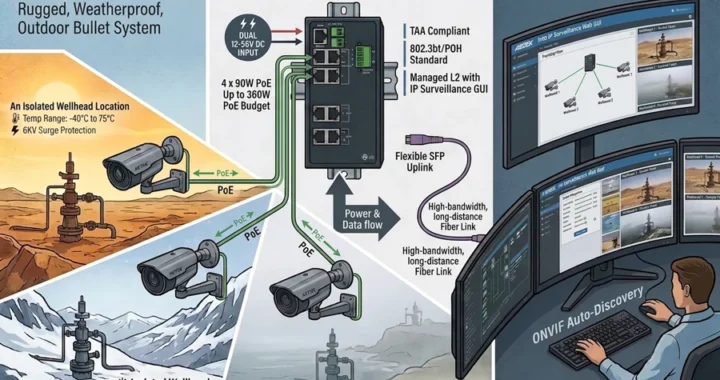
In the past, expanding a production line meant a month of planning, electrical blueprints, and physical construction. With PoE, expansion is digital. By utilizing ruggedized industrial switches—rated for temperatures from -40°C to 75°C and designed to withstand high-vibration environments—manufacturers can extend their networks into areas previously considered too harsh for sensitive electronics. The implication is a factory floor that is truly agile, capable of being reconfigured in hours rather than months.
2. Sustainability and Green Manufacturing
The push toward "Green Manufacturing" is heavily reliant on resource optimization. PoE supports this by significantly reducing the volume of copper and PVC cabling required in a facility. Fewer cables mean less material waste, less heat generation, and a reduced carbon footprint. By centralizing power management, factories can eliminate the energy waste associated with localized power supplies (AC-to-DC converters) that are often inefficient and prone to failure in harsh industrial settings.

3. Enabling the AI-Integrated Factory
As AI becomes the backbone of modern production, the demand for real-time data becomes insatiable. High-definition machine vision systems, autonomous mobile robots (AMRs), and edge computing nodes all require reliable, high-wattage power and consistent, low-latency connectivity. PoE provides a single, unified pipeline for these technologies, ensuring that the "brain" (the AI software) is always in contact with the "limbs" (the robotic actuators and sensors).
4. Long-Term CAPEX vs. OPEX
While the initial investment in industrial-grade, managed PoE switches is higher than basic power-only infrastructure, the long-term Return on Investment (ROI) is definitive. The reduction in downtime, the ability to perform remote power cycling, and the elimination of expensive electrical permit cycles create a lower Total Cost of Ownership (TCO). In a competitive global market, the manufacturer that can iterate its production floor the fastest is the manufacturer that wins.
Conclusion: A Foundational Requirement
The adoption of Power over Ethernet in manufacturing is no longer an optional upgrade; it is a foundational requirement for any facility aiming to compete in the era of Industry 4.0. As we move toward 1.6 Tbps Ethernet speeds and beyond, the infrastructure that powers our devices will become as smart as the devices themselves.
For manufacturers, the path forward is clear: abandon the legacy of tangled, static wiring and embrace a dynamic, software-defined architecture. By leveraging PoE, companies can create a resilient, scalable, and highly efficient manufacturing ecosystem that is ready for the challenges of the next decade. The factory of the future is not just connected—it is powered by the very same intelligence that drives its production.