




Introduction: The Final Push for Energy Infrastructure
In the heart of East Africa, a monumental engineering feat is approaching its critical conclusion. The East African Crude Oil Pipeline (EACOP), a 1,443-km artery designed to transport crude oil from the landlocked oil fields of Hoima, Uganda, to the Indian Ocean port of Tenga, Tanzania, is entering its final construction phase. As of late June 2026, the project remains a focal point of geopolitical ambition, environmental controversy, and unprecedented logistical complexity.
Tanzania’s Minister of Energy, Deogratius Ndejembi, recently visited the construction front to oversee the final hurdles of the $5.6-billion project. Among the most pressing requirements is the integration of a specialized power grid to support the world’s largest electrically heated pipeline. With mechanical construction and hydro-testing slated for completion in the second half of 2026, the project consortium is racing to meet its target of delivering "first oil" by January 2027.
The Engineering Challenge: A Heated Lifeline
The EACOP is no ordinary pipeline. Because the crude oil discovered near Lake Albert is highly viscous, it requires constant thermal management to remain fluid enough for transport. The 24-inch diameter pipe must be continuously insulated and maintained at a constant temperature of 122°F (50°C).
To achieve this, engineers have deployed a sophisticated electrical trace heating system that runs the entire length of the pipeline. This technological requirement creates a unique dependency on stable electricity, prompting Minister Ndejembi to mandate that the Tanzania Electric Supply Co. Ltd. (TANESCO) finalize high-voltage power hook-ups at key pumping stations. The project designers have integrated a sustainability component, with plans to power a significant portion of the pipeline’s operational needs through dedicated solar arrays, aiming to offset the high energy demand required for thermal maintenance.
The pipeline is designed for a throughput of approximately 230,000 barrels per day. This infrastructure is the essential missing link for the Tilenga and Kingfisher oil fields, where an estimated 6.5 billion barrels of reserves—first discovered in 2006—await extraction.
Chronology of Development
- 2006: Significant oil reserves are discovered beneath and around Lake Albert, Uganda, sparking long-term development plans.
- 2022: The Engineering, Procurement, and Construction (EPC) contract is awarded to a joint venture comprising Australia-based Worley Ltd. and China Petroleum Pipeline Engineering.
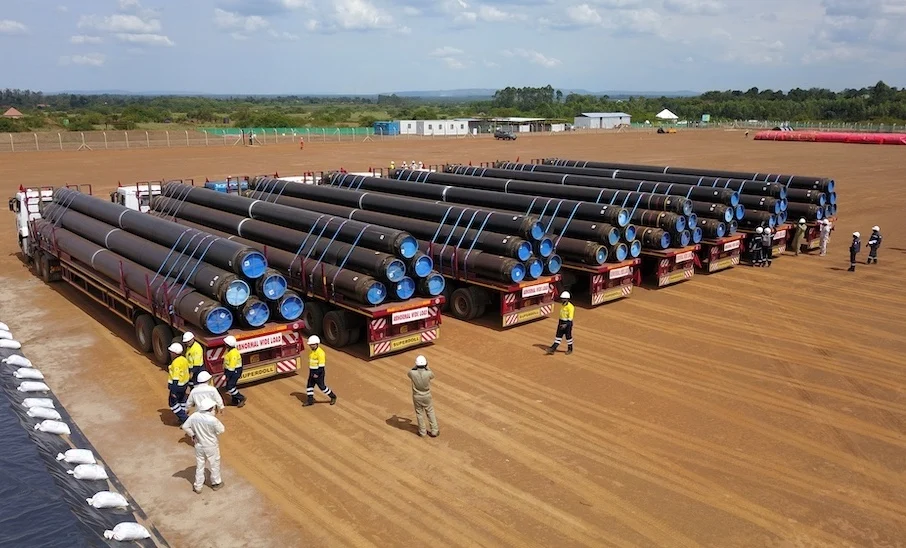
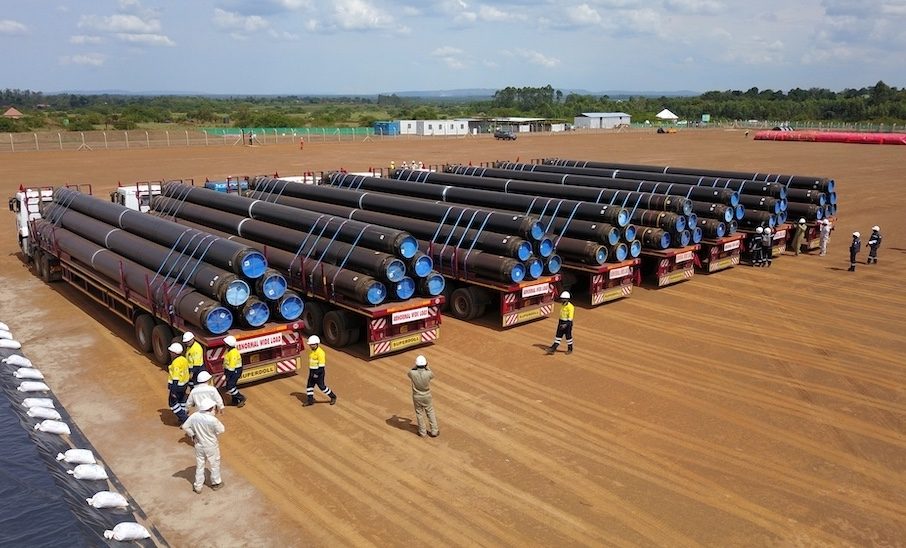
- 2023-2024: Major construction mobilization begins; insulated line pipes are delivered to main camps in Uganda and Tanzania.
- June 2026: Tanzanian government officials conduct site inspections, prioritizing power grid integration for the heated pipeline system.
- Late 2026 (Projected): Completion of mechanical construction and commencement of system-wide hydro-testing.
- January 2027 (Projected): Expected arrival of first oil at the Chongoleani export terminal.
Supporting Data and Stakeholder Landscape
The financing structure of the EACOP serves as a case study in modern energy investment shifts. Originally, the development plan sought a traditional financing mix of 60% bank loans and 40% equity from shareholders. However, the reality of the project’s financing reflects the growing pressure of Environmental, Social, and Governance (ESG) mandates.
Facing widespread divestment campaigns, dozens of global commercial banks refused to provide direct financing, citing the project’s environmental footprint and climate risks. Consequently, the financing model pivoted; shareholders have provided roughly 90% of the funding to date. The ownership structure is dominated by French energy giant TotalEnergies, which holds a 62% stake. Other stakeholders include the Uganda National Oil Co. (15%), the Tanzania Petroleum Development Corp. (15%), and the China National Offshore Oil Corp. (8%).
According to government reports, the project has been a significant engine for local employment, creating approximately 10,000 jobs across the construction phase, involving both specialized international engineering teams and local contractors.
Environmental and Ethical Implications
The project’s path across East Africa is not without controversy. The pipeline traverses ecologically sensitive areas, including wetlands, river basins, and the Murchison Falls National Park, which serves as a vital wildlife haven. Environmental advocacy groups and climate scientists have labeled the project a "carbon bomb," estimating that its operation could lead to the release of more than 379 million tons of CO2 over its operational lifespan.
A June 25 report by Yale Environment 360 highlighted the concerns of energy engineering experts regarding the potential for leaks in sensitive ecosystems and the long-term impact on regional biodiversity. These groups argue that the project locks East Africa into fossil fuel dependency, potentially undermining the transition to renewable energy.
TotalEnergies, however, maintains that the project is being executed to the highest international standards. The company argues that the development is a sovereign choice for the host nations, essential for their economic transformation. Ernest Rubondo, CEO of the Uganda Petroleum Authority, has consistently championed the line as the "backbone of Uganda’s crude oil exports," emphasizing that the revenue generated will fund national development, education, and infrastructure.
Legal Challenges and Future Outlook
The legal landscape surrounding the EACOP has been as volatile as the environmental discourse. Multiple lawsuits have been filed against TotalEnergies in various jurisdictions, alleging failure to mitigate human rights risks and environmental damage. While many of these cases have been dismissed on procedural or technical grounds, the litigation is far from over.
Legal observers anticipate further challenges in London, where EACOP Ltd. is registered. These cases are likely to test the limits of corporate accountability for overseas projects and the extent to which international companies can be held liable for the climate impact of their subsidiary operations.
Despite these hurdles, the physical reality of the pipeline is nearing fruition. For the governments of Uganda and Tanzania, the pipeline represents a transformational economic opportunity. For international observers and climate activists, it remains a test case for whether large-scale hydrocarbon infrastructure can coexist with modern climate targets.
Conclusion: A Turning Point for East African Energy
As the 2027 deadline approaches, the EACOP stands at the crossroads of two competing narratives. On one side, it is a triumph of industrial engineering—a project designed to overcome extreme environmental and geological constraints to deliver energy security to landlocked nations. On the other, it is a lightning rod for the global climate movement, representing the ongoing tension between national development aspirations and the urgent need to decarbonize the global energy sector.
Whether the project ultimately serves as an engine for "economic transformation" or a liability in the global climate balance sheet remains to be seen. What is certain is that the infrastructure being welded into the East African landscape today will have profound, long-lasting consequences for the region’s economy, ecology, and social stability for decades to come.
About the Author
Debra K. Rubin serves as ENR Editor-at-Large for Energy, Business, and Workforce. With a focus on the intersection of global energy development, regulatory policy, and industry workforce trends, Rubin provides in-depth analysis on the major infrastructure projects shaping the 21st-century landscape. She manages the annual ENR Top 200 Environmental Firms ranking and is a lead organizer for the Groundbreaking Women in Construction forum.