





Technology is often lauded for its seamless integration into our daily lives, but its reliability is only as strong as its weakest link. For a personal device, a software freeze is a momentary inconvenience, solved by a simple reboot. However, in the high-stakes realm of autonomous transportation, that same "freeze" is not a mere glitch—it is a critical safety failure. As we transition toward a world of self-driving cars, automated freight, and intelligent rail systems, the margin for error has effectively vanished. A nanosecond of latency or a momentary loss of connectivity can be the difference between a smooth transit and a catastrophic derailment.
The promise of autonomous systems—optimized traffic flow, increased safety, and reduced human error—is entirely dependent on the physical infrastructure that anchors it. If a commuter train fails to register an obstacle due to a network lag, or if traffic signals fail to cycle correctly to prioritize first responders, the promise of "smart" transit crumbles. While the industry is fixated on AI algorithms and sensor fusion, the true battle for the future of mobility is being fought in the trenches of network hardware and power reliability.
The Evolution of Autonomous Transit: A Chronology of Integration
The progression toward fully autonomous transportation has been a steady, albeit complex, evolution over the last decade. It began with simple driver-assist features and has morphed into a sophisticated, interconnected ecosystem of "machines talking to machines."
- 2014–2018: The Era of Foundation. The industry moved from basic cruise control to advanced lane-keeping and collision avoidance. During this period, the focus was primarily on onboard computing power.
- 2019–2022: The Connectivity Pivot. As companies like Waymo began commercializing robotaxi fleets in select U.S. cities, it became clear that onboard intelligence was insufficient. Vehicles needed to talk to the cloud and the roadside. This marked the birth of V2X (Vehicle-to-Everything) communication.
- 2023–2025: The Regulatory and Infrastructure Awakening. With states like California and Texas removing significant barriers for driverless freight trucks, the focus shifted from "Can we build it?" to "Can we support it?" Industry leaders began acknowledging that autonomous systems are only as stable as the power and data networks they run on.
- 2026 and Beyond: The Push for Full Automation. Projects like the Bosch Engineering automated train initiative represent the current horizon. The goal is no longer just "driver assistance," but fully autonomous systems capable of self-diagnosis, safe shutdown, and intelligent navigation without a human safety driver.
Supporting Data: The Anatomy of a Failure
To understand why network infrastructure is the "silent backbone" of transportation, one must look at the data requirements. An autonomous vehicle generates gigabytes of data per hour—data that must be processed, analyzed, and acted upon in real time.
When we analyze the failures of autonomous systems, the culprit is rarely the AI model itself. Instead, it is frequently a "communication breakdown." A 2023 industry review noted that nearly 40% of critical operational delays in pilot-stage smart cities were attributed to power fluctuations at the edge or intermittent network latency.
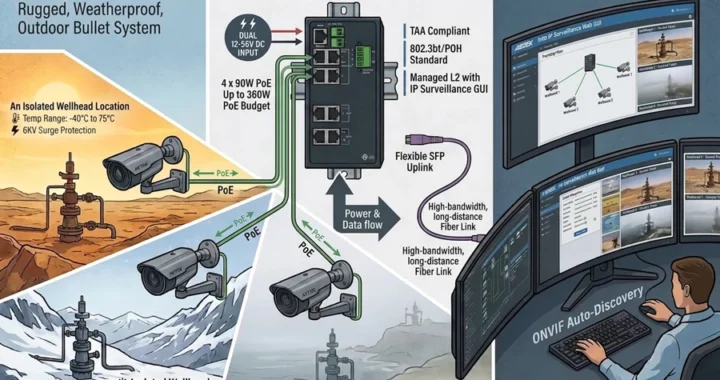
Furthermore, the physical conditions in which these systems operate are punishing. A traffic control unit in a downtown corridor faces temperature swings, vibrations from heavy traffic, and the constant threat of power surges. Standard commercial hardware, designed for air-conditioned offices, simply cannot withstand these environments. This is where Power over Ethernet (PoE) technology becomes a necessity rather than a luxury. By providing both power and high-speed data over a single cable, PoE simplifies the architecture, reduces the number of failure points, and when paired with Uninterruptible Power Supplies (UPS), ensures that systems remain online even during grid failures.

Official Industry Perspectives
The consensus among infrastructure architects is clear: we are currently building the skeleton of a new civilization, but the skin—the connectivity—must be reinforced.
"Autonomous transportation networks are essentially distributed computing centers that move," says a senior systems architect involved in smart city integration. "When you move the compute to the edge, you are relying on switches and cabling that are exposed to the elements. If that switch fails, the ‘brain’ of the intersection goes blind. We need industrial-grade, hardened hardware that treats a traffic light the same way a data center treats a server rack."
Engineers at companies like Versa Technology have been vocal about the need for "network transparency." As systems become more complex, the ability to remotely diagnose a cable fault or monitor power draw is critical. "You cannot send a technician into a busy intersection every time a sensor flickers," explains a spokesperson for Versa. "The goal is to provide the intelligence to manage the infrastructure remotely, ensuring that when an autonomous vehicle requests a green light, the infrastructure is physically capable of responding."
The Technological Pillars of Autonomy
The success of the autonomous revolution rests on the synergy of four core technological pillars:
1. Edge Computing
By processing data closer to the collection point—at the railyard or the street corner—transportation systems can achieve the sub-millisecond response times necessary for safety. This requires ruggedized PoE switches, such as the Versa D60 series, capable of operating in extreme temperatures ranging from -40°C to 75°C.
2. Sensor Fusion and V2X
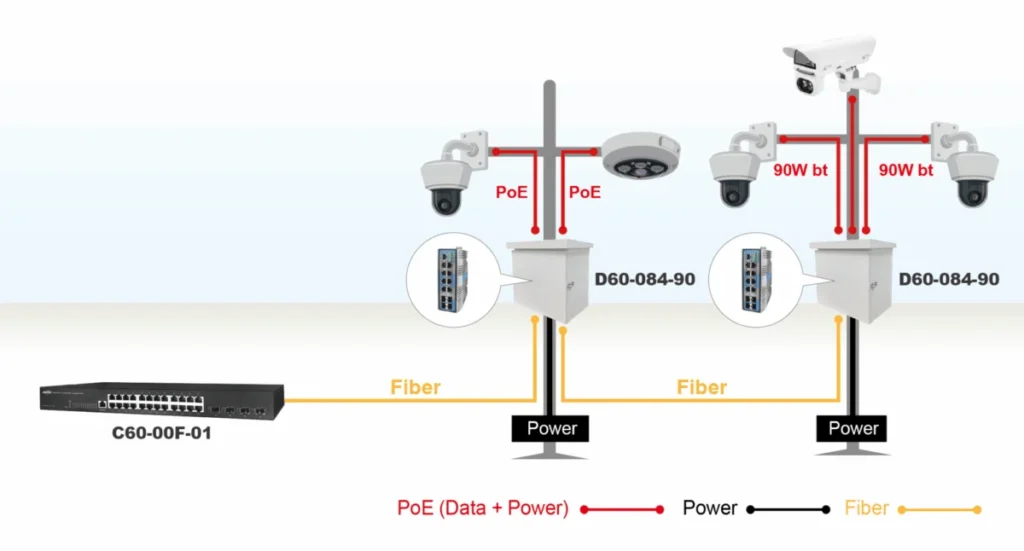
Autonomous vehicles are not islands; they are part of a larger swarm. Using LiDAR, RADAR, and multi-sensor cameras, they constantly map their environment. This data must be backhauled to control centers instantly. High-performance PoE switches that support 90W of power are essential to keep these power-hungry sensor arrays operational.

3. High-Speed Connectivity (5G and Fiber)
While wireless technology is the "face" of the network, the "veins" are fiber optics and high-speed Ethernet. The ability to integrate these technologies into a single managed device allows for a hybrid approach that ensures redundancy. If a 5G signal drops, the hard-wired backup takes over instantly.
4. Resilient Power Management
PoE is the unsung hero of this transformation. By consolidating power and data, it eliminates the need for expensive, localized electrical work at every pole or camera mount. More importantly, when managed through a centralized UPS, it provides the backbone of a fail-safe system that can keep traffic signals operational during a city-wide blackout.
Implications for the Future of Mobility
The implications of this infrastructure-first approach are profound. If we successfully build a resilient network, we unlock the potential for a massive reduction in traffic fatalities, a significant decrease in carbon emissions due to optimized traffic flow, and a fundamental shift in how freight moves across the country.
However, if we ignore the infrastructure, we risk a "brittle" system. A brittle system is one that works perfectly under ideal conditions but fails spectacularly during a storm, a power flicker, or a routine maintenance update. The goal for 2026 and beyond is to move away from these vulnerabilities.
The Role of Specialized Hardware
Companies are now investing heavily in "managed" industrial switches. These devices go beyond basic connectivity; they offer:
- Network Topology Mapping: Giving operators a visual, real-time view of every sensor and device in the network.
- Cable Diagnostics: Identifying a fault in a cable buried beneath a road without having to excavate.
- Layer 2/3 Security: Protecting the transportation network from cyber threats, which is a growing concern for critical national infrastructure.
As we look toward a future of fully automated freight and autonomous passenger transit, the conversation must shift from the novelty of the vehicle to the integrity of the network. The road to autonomy is not just paved with asphalt and sensors; it is built on a foundation of hardened, reliable, and intelligent network infrastructure.

Conclusion: Preparing for the Autonomous Horizon
The transition to autonomous transportation is inevitable, but its safety and success are not guaranteed. We are at a juncture where the sophistication of our software has outpaced the ruggedness of our hardware. To bridge this gap, engineers, urban planners, and policy-makers must prioritize the deployment of industrial-grade networking solutions that can withstand the rigors of the open road.
Whether it is the deployment of high-density sensor arrays at intersections or the implementation of automated rail systems, the requirement remains the same: constant, uninterrupted power and data. By investing in resilient PoE technologies and edge-ready infrastructure today, we ensure that the autonomous transportation systems of tomorrow are not just "smart," but fundamentally safe.
For those tasked with building these networks, the choice of components—from managed switches to power-over-ethernet splitters—is not merely a procurement decision; it is a commitment to the public safety of the future. As we continue to refine the AI that steers our vehicles, we must never lose sight of the wires and switches that steer the infrastructure, for it is there that the true reliability of our future mobility is written.