






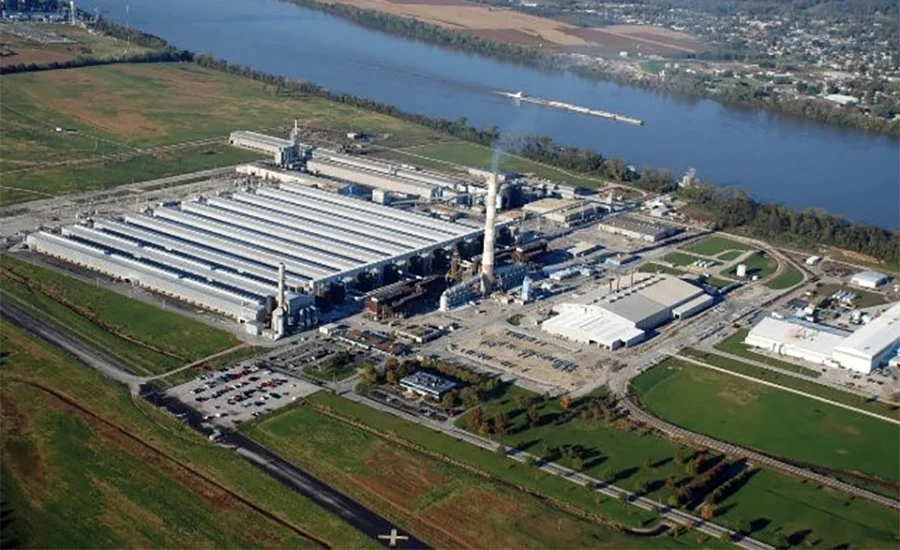
In a significant milestone for the industrial revitalization of the Ohio River Valley, Kentucky utility regulators have officially authorized a 482-megawatt (MW) power agreement for TeraWulf Inc.’s “Justified Data Campus.” The decision, handed down on August 21, provides the necessary regulatory clearance for the Easton, Md.-based digital infrastructure developer to accelerate its ambitious transformation of a shuttered Century Aluminum smelter in Hawesville, Ky., into a global hub for artificial intelligence and high-performance computing.
The project, which represents a massive infusion of capital into the region, is expected to see combined investments between TeraWulf and its primary tenant, AI research company Anthropic, exceed $14 billion. By repurposing a site that had served as an industrial bedrock from 1969 until 2022, TeraWulf is attempting to prove that the heavy-duty electrical infrastructure left behind by legacy manufacturing can be the catalyst for the next generation of technological growth.
Chronology of Development: From Aluminum to AI
The transition of the Hawesville site from a decommissioned smelter to a high-tech data hub has moved with remarkable speed since the site’s closure in 2022.
- February 2, 2026: TeraWulf officially acquires the Hawesville property in a transaction valued at approximately $302 million. The acquisition grants the firm over 250 buildable acres and critical, pre-existing electrical infrastructure.
- March 10, 2026: TeraWulf hosts a formal construction kickoff with global engineering giant Fluor, which has been tapped to serve as the general contractor for the campus.
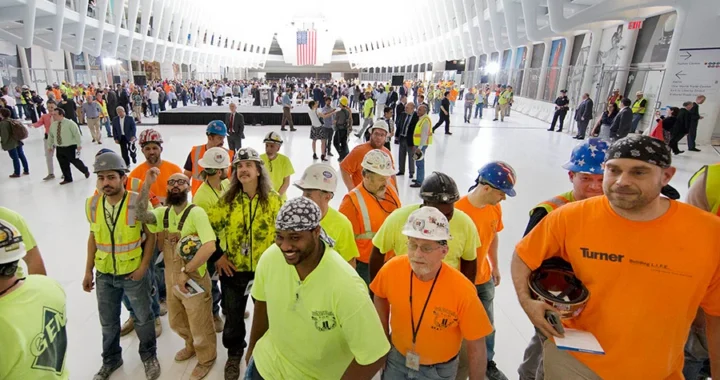
- March 12, 2026: A contractor outreach event is held, drawing more than 20 local Kentucky firms into the project’s supply chain.
- July 6, 2026: AI powerhouse Anthropic signs a landmark 20-year lease for 401 MW of critical IT capacity at the campus.
- August 21, 2026: The Kentucky Public Service Commission (PSC) approves the 482-MW electric-service agreement, satisfying a key regulatory mandate required to move forward with the power ramp-up.
- September 2027 (Projected): TeraWulf anticipates the commencement of its power ramp, marking the first phase of operational delivery for the campus.
- Early 2028 (Projected): Full delivery of the 401 MW of contracted capacity for Anthropic is expected to be achieved.
Supporting Data and Financial Scope
The scale of the Justified Data Campus is difficult to overstate. What began as a $3.5 billion to $4 billion proposal has evolved into an even more expansive vision. TeraWulf now estimates that the site development and the construction of the initial data halls will cost between $4 billion and $4.5 billion.
However, this figure excludes the secondary investment by Anthropic. According to TeraWulf’s filings with the Kentucky PSC, Anthropic is expected to deploy approximately $10 billion in high-performance computing equipment and related infrastructure within the leased space. This brings the total projected economic impact of the project to over $14 billion.
Infrastructure and Remediation
The site’s appeal to TeraWulf lies in its "plug-and-play" industrial pedigree. The facility features:
- An energized substation inherited from the Century Aluminum era.
- Multiple high-voltage transmission lines already connected to the regional grid.
- A direct, robust connection to the regional transmission network via five 161-kV Big Rivers Electric Corp. circuits.
Environmental stewardship is a central component of the project’s early phase. As of June 30, TeraWulf had identified approximately $16.5 million in asset-retirement obligations, primarily centered on asbestos remediation and the removal of spent pot liners—the byproduct of decades of aluminum smelting. The company is working closely with state authorities under the Kentucky Brownfield Program and has secured the necessary permits for construction within the Ohio River floodplain.
Official Responses and Strategic Vision
TeraWulf’s leadership has emphasized that the project is not just a data center, but an example of "industrial circularity."

“At Justified, we’re taking a former industrial site with existing transmission infrastructure and putting it back to productive use at scale,” said Paul Prager, CEO of TeraWulf, in an August 24 statement.
The regulatory environment remains a focal point for the company. Kerri Langlais, a spokesperson for TeraWulf, confirmed to ENR that the August 21 approval was the essential final step required to validate the electric-service agreement. While she stopped short of confirming that the financial close had occurred, the company’s filings had previously signaled that securing this regulatory approval was a prerequisite for finalizing the financing necessary to support the 2027 power ramp.
Big Rivers Electric Corp. and Kenergy Corp., the electric cooperatives serving the site, have structured a 15-year agreement that protects local ratepayers. Under the terms, TeraWulf is required to bear the entirety of market costs, transmission upgrades, and customer-specific infrastructure expenses. This includes a net obligation of roughly $11.2 million for substation modifications, offset by a $600,000 credit for existing electrical equipment.
Implications for the Energy Grid and AI Industry
The approval of the Justified Data Campus signals a broader trend in the U.S. utility sector: the strategic pairing of high-load data centers with retired heavy-industrial brownfields. By utilizing existing transmission capacity, projects like Hawesville minimize the need for new, lengthy, and environmentally contentious transmission corridors.
However, the path forward is not without further oversight. The PSC’s approval does not grant immediate permission for the campus to draw its full 482-MW load. The facility must still secure final operational sign-offs from the Midcontinent Independent System Operator (MISO). These transmission arrangements are critical to ensuring that the massive energy draw of the AI campus does not destabilize the local or regional grid.
Economic and Technological Ripples
The choice of Anthropic as the primary tenant is significant. As one of the leading developers of large language models, Anthropic’s long-term commitment to the site suggests that the "arms race" for AI compute capacity is shifting from generic data centers to purpose-built, high-power environments. The 401-MW lease represents a substantial increase from the 370 MW originally presented to regulators earlier this summer, reflecting the rapid, evolving needs of the AI sector.
For the region, the project serves as a vital economic engine. The inclusion of over 20 local firms in the preconstruction and engineering phases, guided by Fluor’s expertise, indicates that the ripple effects of the investment are already being felt in the local Hawesville economy.
As the project moves from the demolition and remediation phase into vertical construction, the eyes of the energy and technology sectors will remain fixed on Kentucky. The Hawesville site stands as a test case: if TeraWulf can successfully navigate the integration of massive AI compute loads with the aging infrastructure of the American heartland, it may provide a template for future developments across the nation. For now, the "Justified" project remains on track, transforming the ghost of an aluminum era into the heartbeat of the AI future.