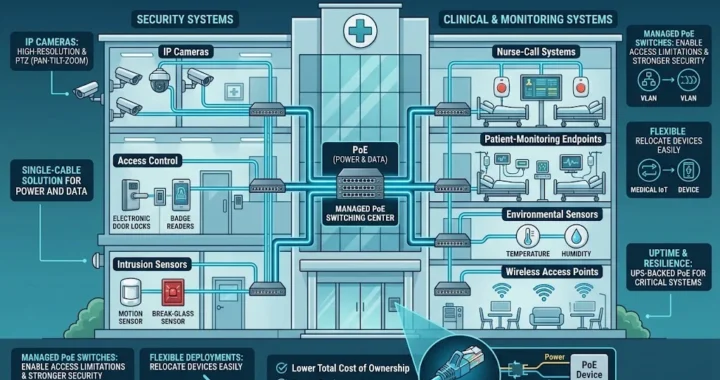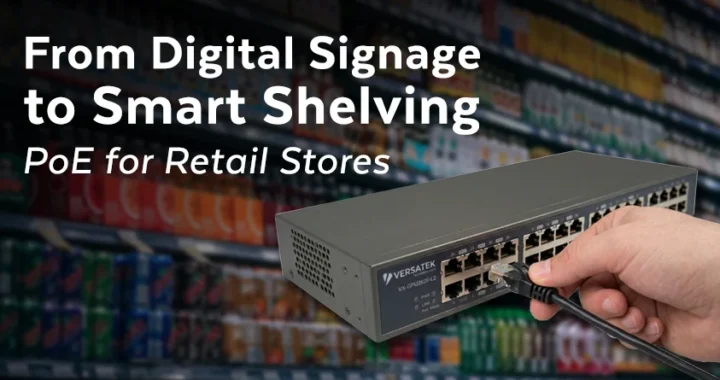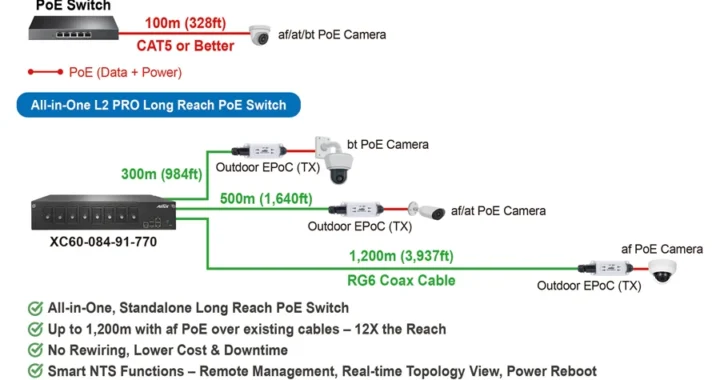






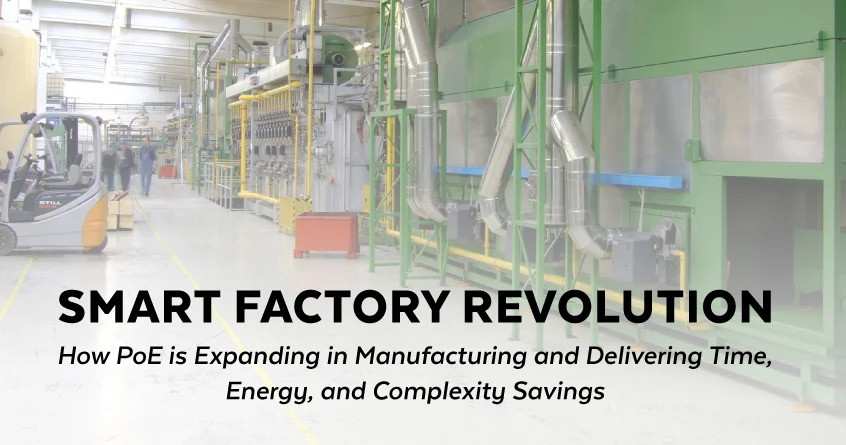
The modern factory floor is undergoing a metamorphosis. For decades, the landscape of industrial production was defined by a chaotic, tangled web of high-voltage conduits, bulky power adapters, and precarious daisy-chained extension cords snaking around high-precision machinery. This "spaghetti wiring" was more than an aesthetic nuisance; it was a systemic bottleneck. Every time a plant manager sought to integrate a new sensor, security camera, or edge-computing node, the process required a licensed electrician to run new power lines—a costly, time-consuming endeavor that often resulted in significant operational downtime.
Today, that clutter is rapidly disappearing, replaced by the streamlined efficiency of Power over Ethernet (PoE). By consolidating electrical power and data transmission into a single Ethernet cable, PoE has emerged as the unsung hero of Industry 4.0 and the Industrial Internet of Things (IIoT). As manufacturers scramble to optimize for speed, intelligence, and sustainability, PoE is providing the foundational architecture that allows these smart factories to scale at the speed of software.
The Core Facts: What is PoE and Why Now?
At its most fundamental level, Power over Ethernet is a technology that allows network cables to carry electrical power to end devices. Utilizing Cat 6a or higher cabling, a PoE-enabled switch delivers both the data packets required for operational control and the wattage necessary for hardware operation.
While the technology originated in the early 2000s to support VoIP phones and basic security cameras in office environments, its application has shifted dramatically toward the factory floor. The recent surge in adoption is driven by the explosive growth of IIoT sensor density. Modern manufacturing demands low-latency, secure, and wired connectivity that can survive the harsh realities of industrial environments—dust, high-frequency vibration, and extreme temperature fluctuations.
A Chronology of Connectivity: From Office Utility to Industrial Standard
The evolution of PoE has been defined by a series of rigorous IEEE standards, each increasing the wattage capacity to meet the demands of heavier industrial equipment:
- The Early Era (IEEE 802.3af): Introduced in 2003, this standard provided up to 15.4 watts of power, primarily sufficient for low-power VoIP handsets and static surveillance cameras.
- The PoE+ Era (IEEE 802.3at): Arriving in 2009, this update doubled the power to 30 watts, allowing for more complex devices like PTZ (pan-tilt-zoom) cameras and basic Wi-Fi access points.
- The High-Power Era (IEEE 802.3bt): The most recent major leap, supporting up to 60W or 90W of power. This shift was the "tipping point" for manufacturing, as it suddenly made it possible to power industrial-grade LED lighting, digital signage, advanced machine vision systems, and even some small-scale robotics.
Today, we are witnessing the dawn of the "Multi-Gigabit" era. With the advent of 10G+ PoE and emerging Single Pair Ethernet (SPE) standards, the industry is moving toward a future where PoE acts as a high-bandwidth, software-defined nervous system for the entire production line.
Supporting Data: The Economic Case for Integration
The market for PoE solutions is not merely growing; it is accelerating. Industry analysts project a compound annual growth rate (CAGR) of approximately 17% through 2034. This growth is directly proportional to the "sensorization" of the factory floor.

Manufacturers are realizing that the ROI of PoE goes far beyond the price of the switch. A comparative analysis of traditional electrical installation versus PoE-based deployment reveals several critical data points:
- Deployment Velocity: Traditional electrical installation for a new production cell can take days due to permitting, conduit bending, and electrical panel work. PoE-based deployment is a "plug-and-play" operation that can be completed in minutes.
- Energy Efficiency: AI-driven PoE switches provide granular control over power allocation. By eliminating "always-on" phantom power draws and enabling remote, scheduled power cycling, facilities have reported up to a 25% reduction in energy bills related to peripheral device networks.
- Material Reduction: Fewer cables translate to lower thermal signatures in cable trays, reduced fire hazards, and a significant decrease in raw material consumption—a key metric for companies pursuing ESG (Environmental, Social, and Governance) certifications.
Official Industry Perspectives
Industry leaders and standardization bodies, such as the Ethernet Alliance, emphasize that PoE is no longer an optional upgrade, but a foundational requirement for resilience.
"We are seeing a convergence where IT and OT (Operational Technology) networks are becoming indistinguishable," says a spokesperson for Versa Technology, a leader in industrial networking. "When you remove the dependency on traditional 110V/220V AC for every single device, you unlock a level of architectural agility that was previously impossible. Our industrial-grade switches, rated for temperatures ranging from -40°C to 75°C, are proving that Ethernet is just as rugged as the machines it controls."
Furthermore, as AI integration deepens, these switches are evolving into predictive maintenance tools. Modern managed PoE switches can monitor the power draw of connected devices in real-time. A spike or drop in current consumption can signal mechanical wear or an impending motor failure, allowing maintenance teams to intervene before a catastrophic shutdown occurs.
Implications for the Factory of the Future
The shift toward PoE-powered manufacturing has profound implications for the way we conceptualize industrial facilities.
1. The Death of the "Fixed" Production Line
Historically, a factory floor was designed around the permanence of its electrical infrastructure. Moving a machine meant re-hiring an electrician. With PoE, the network is the infrastructure. Because data and power are delivered through a standardized jack, production lines can be reconfigured or expanded to accommodate new product runs with unprecedented speed.
2. Bridging the IT/OT Gap
For years, the "Information Technology" side of a business (servers, enterprise software) and the "Operational Technology" side (PLCs, motors, assembly line robots) spoke different languages and lived on different networks. PoE creates a common physical layer that forces these two worlds together. This integration allows data from the sensors on the factory floor to feed directly into enterprise AI models, creating a seamless feedback loop of real-time operational optimization.

3. Future-Proofing for 1.6 Tbps
The horizon of Ethernet technology is moving faster than the physical needs of current machinery. The Ethernet Alliance is already working on standards to support transmission speeds of 200 Gbps, 400 Gbps, 800 Gbps, and even 1.6 Tbps. By installing a robust PoE-ready Cat 6a or Cat 7 cabling foundation today, manufacturers are essentially "future-proofing" their facility against the data-heavy demands of the next three decades of automation.
4. Sustainability as a Default
Green manufacturing is no longer just a marketing buzzword; it is a regulatory and financial necessity. PoE supports this by centralizing power management. When a factory can power its lighting, occupancy sensors, security cameras, and environmental controls through a single, managed, and intelligent switch, the total energy footprint of the facility drops. The ability to "darken" segments of the factory that are not in use via a software dashboard—rather than physical breakers—represents a massive leap forward in lean energy management.
Conclusion: The Path Forward
The transition to a PoE-powered manufacturing environment is not merely a technical upgrade; it is a strategic repositioning. As global competition intensifies and the pressure for rapid, AI-driven innovation grows, manufacturers cannot afford to be tethered to the slow, rigid electrical standards of the 20th century.
By adopting PoE, companies are removing the friction that slows down growth. They are replacing complexity with intelligence, and waste with efficiency. While the initial capital expenditure of high-grade industrial switches and certified cabling may appear higher than traditional methods, the long-term gains—manifested in higher uptime, lower labor costs, and superior operational visibility—make it one of the most compelling investments in the modern industrial landscape.
The factory of the future is quiet, clean, and connected. It is a space where intelligence and power move in harmony, carried by a single, humble Ethernet cable. For those ready to scale, the infrastructure is already here.