







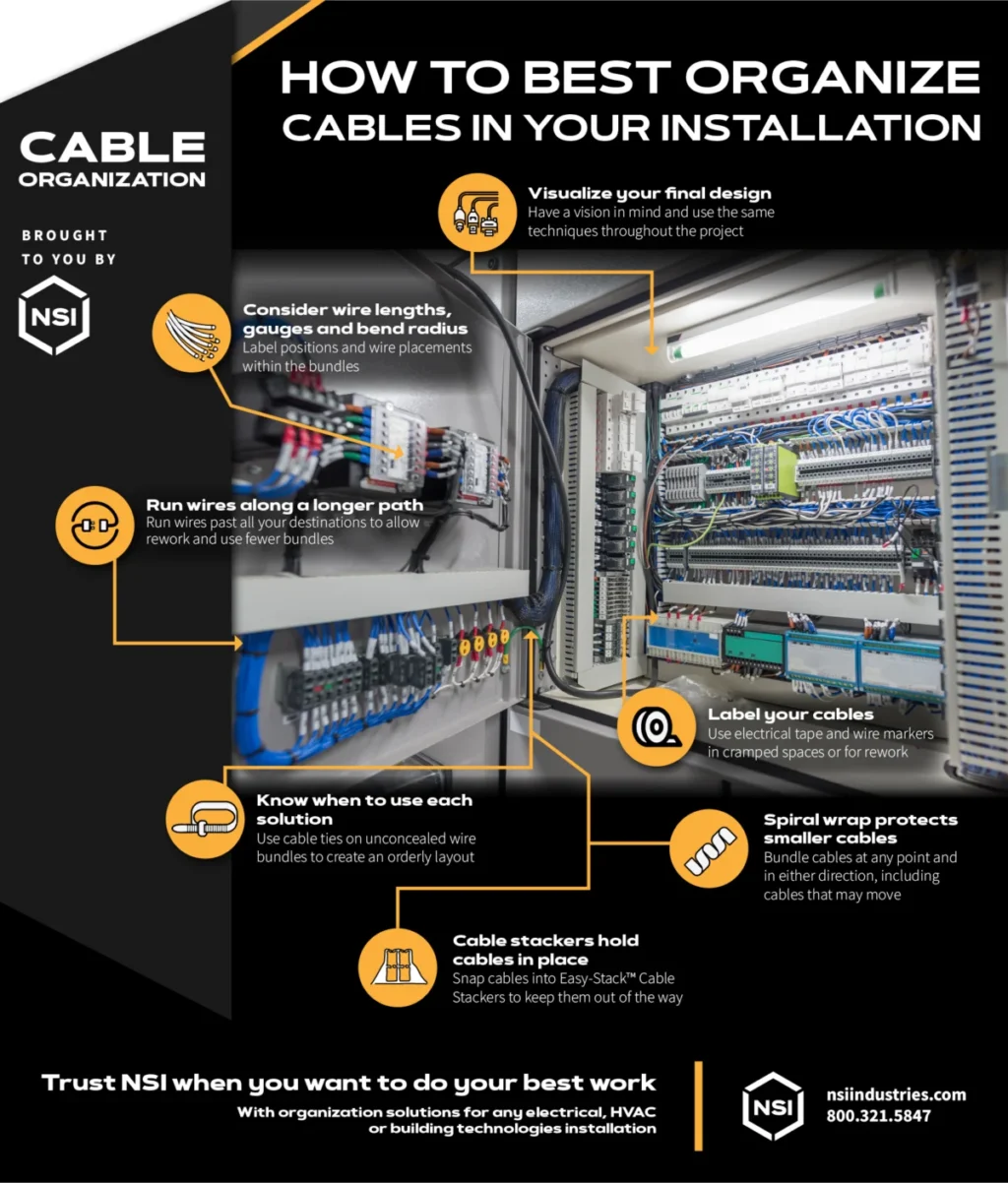
In the electrical and building technology industries, the quality of a professional’s work is often judged by what remains hidden behind the drywall or tucked inside a panel. While the functionality of a circuit is the primary requirement, the "signature" of a master electrician lies in the neatness, logic, and durability of the cable management. As industry standards evolve and the density of electrical and data infrastructure grows, the practice of tidy, methodical cable management has transitioned from a matter of aesthetics to a critical component of safety, efficiency, and long-term asset value.
NSI Industries, a leader in electrical infrastructure solutions, argues that every cable run is a testament to the installer’s expertise. For the modern electrician, mastering the discipline of organization is no longer just a "nice-to-have" skill—it is an essential pillar of professional practice.
The Foundations of Efficient Installations
At its core, professional cable management is about creating an environment that is as easy to maintain as it is to install. When a technician opens a junction box or inspects a cable tray, the state of the wiring tells a story about the care and competence of the original installer.
The Efficiency Dividend
A cluttered workspace is a significant obstacle to productivity. When wires are bundled haphazardly, troubleshooting becomes a diagnostic nightmare. An organized system allows for rapid identification of circuits, reducing the time required for routine maintenance and emergency repairs. By employing a consistent labeling system and routing cables in logical, parallel paths, an electrician can transform a potential "spaghetti mess" into a structured network that can be serviced in minutes rather than hours.
Safety: The Non-Negotiable Priority
Beyond operational efficiency, the safety implications of poor cable management cannot be overstated. Loose or improperly secured cables often become trip hazards in unfinished spaces. More critically, improper cable handling can lead to electrical failure. When cables are tightly coiled, knotted, or bent beyond their specified bend radius, they can create "hot spots." These localized areas of heat buildup increase resistance and can, in extreme scenarios, lead to insulation degradation, short circuits, or fire. A professional, organized installation ensures that heat is dissipated correctly and that cables remain physically sound throughout their lifespan.
A Strategic Approach to Project Design
Organizing a space is not merely about using the right products; it is about adopting a philosophy of consistency. From residential retrofits to massive industrial data centers, the best installers follow a disciplined, top-down strategy.
The Power of Intentional Design
Before a single fastener is driven, a professional installer should have a clear vision of the final installation. This involves visualizing the entire run, from the point of origin to the final destination. By establishing a consistent approach—such as maintaining specific heights for horizontal runs or using uniform intervals for cable ties—the electrician creates a system that is intuitive for anyone who may work on the project in the future.
Strategic Routing and "The Extra Mile"
It is tempting to run wires via the most direct path to save time and materials. However, seasoned pros often choose a longer, more structured path. Why? Flexibility. By leaving extra length at key points and avoiding the temptation to pull wires taut, an installer provides themselves with a "buffer." If a termination point needs to be moved or a wire end becomes damaged, the extra length allows for re-stripping and re-terminating without the need to pull an entirely new cable.
Choosing the Right Arsenal: NSI’s Cable Management Solutions
The market for cable management is vast, but selecting the right tool for the specific environment is what separates a novice from a master. NSI Industries provides a comprehensive portfolio designed to address the unique challenges of modern construction.
Cable Ties and Mounts
Cable ties remain the workhorse of the industry. When used with appropriate mounts, they provide the structural backbone for neat cable bundles. The secret to a professional finish is uniformity: using ties of the same color, size, and spacing creates a visual standard that speaks to the quality of the craftsmanship.
Flexible Protection with Spiral Wrap
In environments where cables are subject to movement or exposure, spiral wrap is an indispensable tool. Its design allows for the protection of smaller cables while maintaining the ability to route wires into or out of the bundle at any interval. It is the ideal solution for organizing cables in areas that require flexibility without sacrificing order.
Wire Marking: The Language of Maintenance
Labels are the roadmap of an installation. Using high-quality electrical tape or professional marking systems allows an electrician to identify circuits, phases, and destinations at a glance. In complex projects, this documentation is the difference between a quick repair and an expensive, system-wide outage.
The Innovation of Cable Stackers
Modern installation technology has introduced tools that significantly reduce labor time. Products like the "Easy-Stack" cable stackers represent a shift toward efficiency. These self-securing devices allow installers to simply snap cables into place against a stud, eliminating the need for cumbersome clips or manual fastening. This not only speeds up the job but ensures that the cables are spaced appropriately to prevent overheating.
Industry Implications and Future-Proofing
The construction industry is currently facing a dual challenge: a shortage of skilled labor and an increasing complexity in building systems. As "smart" buildings become the standard, the amount of low-voltage and data cabling being installed is skyrocketing.
The Economic Value of Tidiness
For building owners, an organized electrical system is a major asset. It reduces the total cost of ownership (TCO) by minimizing downtime during future upgrades or modifications. Facility managers are increasingly demanding documentation and high-quality cable management because it protects their long-term infrastructure investment.
Professionalism as a Competitive Advantage
In the eyes of a customer, a clean, organized electrical panel or server room is a tangible sign of a high-quality job. It fosters trust. When a client sees the care taken in the "behind-the-scenes" work, they are far more likely to trust the integrity of the hidden components, such as wire connections and safety grounding. This reputation for excellence is the most powerful marketing tool an electrician can possess.
Conclusion: Setting the Standard
The discipline of cable management is a reflection of professional integrity. It is the quiet, consistent work that ensures the systems powering our world remain safe, reliable, and efficient. Whether you are managing a small residential project or a complex industrial facility, the products you choose and the methods you employ define your standing in the industry.
As NSI Industries continues to innovate and supply the tools necessary for modern electrical challenges, the focus remains on empowering the electrician to perform their best work. By investing in quality materials—from robust cable ties to intuitive stackers—and committing to the principles of organized installation, professionals can ensure that their work stands the test of time.
Ultimately, cable management is more than just tidying up. It is about precision, safety, and a commitment to the craft. Every bundle, every tie, and every label is an opportunity to prove your skill. In an industry defined by its complexity, those who master the art of organization do not just complete jobs; they build reputations that last a lifetime. When you demand the best for your projects, you ensure that your work is not just functional—it is exemplary.