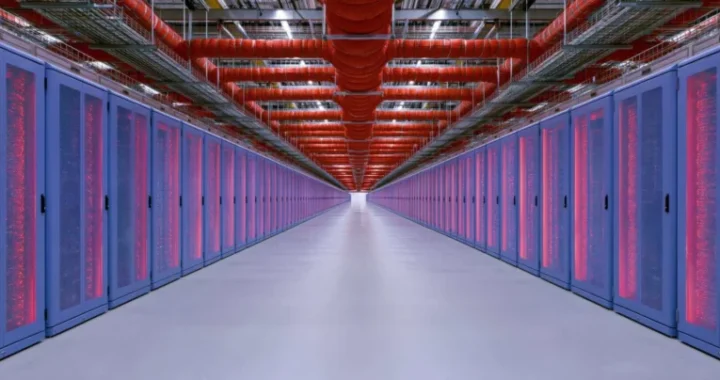








The global digital economy is currently undergoing a structural transformation of unprecedented velocity. As AI-driven workloads, search, video streaming, and cloud services converge, the underlying physical infrastructure—the sprawling, interconnected web of data centers—is being pushed to its breaking point. For hyperscale operators, the traditional metrics of reliability are no longer sufficient; they are becoming obsolete. To address this, Google, in partnership with the Telecommunications Industry Association (TIA), has embarked on a mission to redefine data center physical infrastructure quality through a rigorous, industry-wide standard.
The Scale Problem: When Statistical Improbability Becomes Daily Reality
At the heart of the modern data center crisis is a mathematical reality: when you scale, rare events become inevitable. Google’s infrastructure alone facilitates over 5.9 million search queries every minute, while YouTube hosts a relentless influx of over 500 hours of video content every sixty seconds. Supporting this requires a physical footprint of unimaginable complexity.
The Math of Failure
In smaller, legacy environments, a component with a "one-in-a-million" failure rate might never trigger an incident during its operational lifespan. However, in the hyperscale era, where tens of millions of identical components are deployed across global data centers, that "rare" failure ceases to be an anomaly. It becomes a daily, expected occurrence.
When failures move from being statistical outliers to routine operational incidents, the ripple effects can be catastrophic. Modern data centers are highly interdependent ecosystems where power, cooling, and compute are tethered in a delicate balance. A minor defect in a single power supply unit or a marginal deviation in a cooling sensor no longer remains isolated. These small issues often cascade, triggering protective shutdowns or system-wide latency spikes that affect millions of users instantaneously.
The Capital Intensity of AI
The financial stakes match the technical ones. Alphabet recently projected capital expenditures of $93 billion for 2025—nearly double its 2024 allocation. This trajectory is not unique; industry analysts estimate that meeting global demand by 2030 will require a total capital investment of $6.7 trillion, with a staggering $5.2 trillion earmarked specifically for AI-ready data centers. With such massive capital deployment, the industry can no longer afford to operate under the assumption that equipment designed for general-purpose use will suffice for hyperscale-level reliability.
Chronology: A New Path Toward Standardization
The recognition that generic standards are failing to keep pace with innovation led to a strategic pivot within the tech industry. The following timeline outlines the evolution of this initiative:
- Mid-2024: Internal assessments at major hyperscalers, including Google, identify a widening "reliability gap" between current off-the-shelf component certifications and the performance requirements of AI-training clusters.
- October 2024: At the Broadband Nation Expo, Gino Tozzi, Google’s Global Head of Data Center Quality, publicly articulates the urgent need for a shift in how the industry views physical infrastructure quality.
- December 11, 2024: The formal kickoff meeting for the Data Center Physical Infrastructure Quality Management Standard project is held, marking the beginning of the collaborative effort between Google and the TIA.
- 2025–2026 (Projected): The development phase. This period is dedicated to building the supporting ecosystem, including training modules, auditor accreditation, and performance metrics.
- End of 2026 (Target): The publication of the first draft of the standard for formal industry review.
Why Generic Standards No Longer Suffice
For decades, the data center industry relied on broad, horizontal certifications to ensure quality. While these frameworks provided a baseline, they were never designed to manage the granular interdependencies of a modern AI-ready facility.
The Limitation of "Baseline" Quality
Generic standards typically focus on the quality of individual components in isolation. However, in a hyperscale environment, a component’s performance is only as good as the system in which it is integrated. Current standards fail to address:
- System-Level Interdependency: How cooling systems interact with high-density compute loads during a peak training cycle.
- Real-Time Degradation: Current certifications are often "point-in-time" checks. They do not account for the slow, incremental degradation of physical components that eventually leads to failure.
- Predictive Maintenance: Generic frameworks lack the specific, data-driven metrics required to shift from reactive to proactive maintenance at scale.
As Gino Tozzi emphasized at the Broadband Nation Expo, the goal of the new TIA standard is to transition the industry from "good enough" manufacturing standards to a framework that mirrors the extreme reliability required by the world’s most critical digital backbone.
Official Responses and Strategic Collaboration
The collaboration between Google and the TIA is a marriage of practical necessity and regulatory expertise. The TIA, having overseen the highly successful TL 9000 quality management model for the telecommunications industry, brings a proven track record of creating sector-specific standards that drive measurable performance improvements.
"We are moving beyond the era of generic quality control," noted a TIA spokesperson during the project kickoff. "By leveraging the rigorous methodologies used in telecommunications and applying them to the physical realities of data centers—power distribution, thermal management, and connectivity—we are creating a roadmap for predictability."
Google’s role in this partnership is to provide the "hyperscale perspective." By sharing its operational data and its experiences with cascading failure modes, Google is helping to ensure the standard is grounded in the harsh realities of massive-scale deployment. The objective is to create a living, breathing standard that evolves alongside the technology it supports.
Implications: A New Era of Digital Reliability
The introduction of the Data Center Physical Infrastructure Quality Management Standard carries profound implications for the entire digital ecosystem.
For Suppliers and Manufacturers
Suppliers will be required to meet higher levels of transparency and quality documentation. While this creates a higher barrier to entry, it also offers a competitive advantage to those who can demonstrate superior reliability. The new standard will likely force a consolidation of supply chain processes, as manufacturers pivot to meet the new, more stringent TIA requirements.
For Data Center Operators
For operators—including ISPs, cable landing station providers, and edge facility managers—this standard provides a common language for quality. It allows for a "plug-and-play" understanding of reliability, reducing the time and capital spent on vetting components and configurations. By minimizing the hidden vulnerabilities that lead to unplanned outages, operators can achieve higher uptime with lower operational expenditure.
For the Global Economy
Ultimately, this initiative is about economic stability. As the global economy becomes increasingly dependent on AI-driven insights, the cost of a data center outage rises exponentially. By formalizing infrastructure quality, Google and the TIA are creating a foundation that can sustain the next decade of digital growth without the constant threat of systemic collapse.
Conclusion: A Call to Action for the Industry
The success of the new TIA standard will not be determined by the quality of its writing, but by the breadth of its adoption. It is intended to be an inclusive framework, inviting participation from hyperscalers, infrastructure suppliers, network engineers, and policy makers.
As the industry stands on the precipice of an AI-led expansion that will dwarf previous eras of growth, the "wait and see" approach is no longer viable. The formation of the new Working Group is the first step in a long-term commitment to hardening the digital infrastructure of the world.
Stakeholders who wish to shape the future of this critical infrastructure are encouraged to engage with the TIA. By participating in the development process, companies can ensure that the standard reflects the diverse challenges of the entire ecosystem, from the largest cloud service provider to the smallest local edge facility. To join the effort, industry leaders are invited to visit the TIA website or reach out via [email protected].
In a world where downtime is no longer an option, this standard represents the industry’s best hope for building a future that is as resilient as it is innovative.