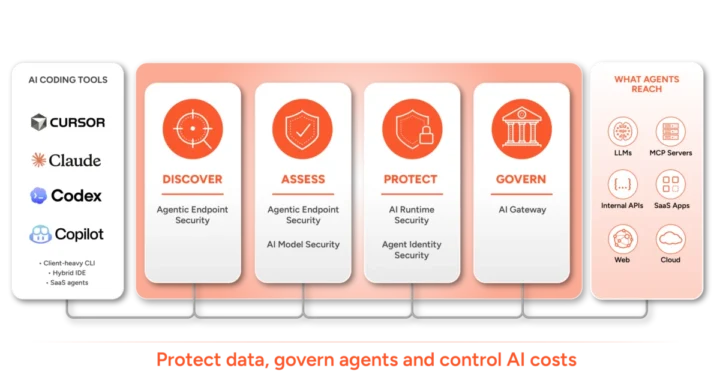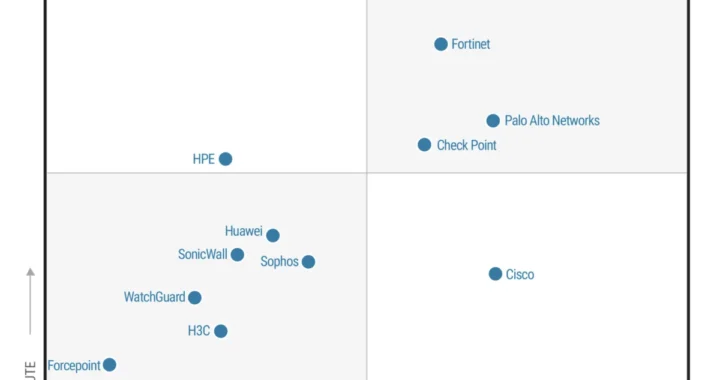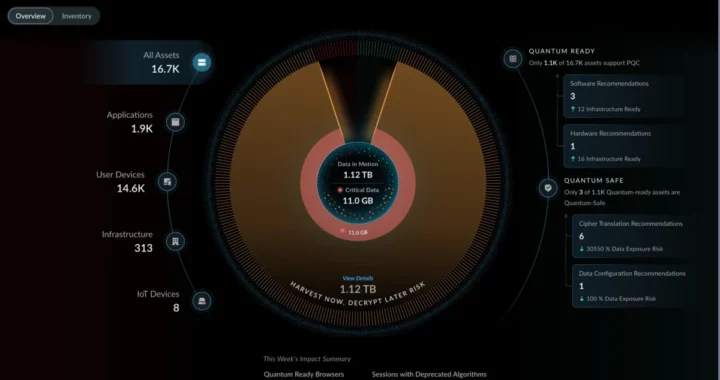




San Francisco, CA – [Date of Publication] – In a significant move poised to redefine enterprise AI security, Palo Alto Networks, a global cybersecurity leader, has announced a pivotal integration between its Prisma® Cloud Native Security Platform’s AI Security (AIRS) API and Anthropic’s advanced AI models, including Claude. This collaboration directly addresses the escalating security challenges enterprises face as they transition from experimental AI tools to core business operations, enabling secure and compliant deployment of AI agents and assistants across all departments.
The rapid integration of AI into critical business functions, from accelerating software delivery with Claude Code to fostering collaborative innovation through Claude.ai, Claude Cowork, and Claude Design, presents a double-edged sword. While AI promises unprecedented operational efficiency and the automation of complex workflows, it simultaneously introduces novel security vulnerabilities. Enterprises are grappling with a fundamental paradox: how to harness the transformative power of AI without compromising sensitive data, exposing systems to runtime attacks, or losing granular control over AI interactions.
"The enterprise adoption of AI is accelerating at an unprecedented pace, moving beyond niche applications to become a foundational element of business strategy," stated [Name and Title of a Palo Alto Networks Executive, e.g., Douglas C. Field, Chief Product Officer at Palo Alto Networks]. "With this shift comes an urgent need for robust security solutions that don’t stifle innovation. Our integration with Anthropic’s Claude models via Prisma AIRS is a direct response to this imperative, providing enterprises with the confidence to deploy powerful AI capabilities securely and at scale."
This strategic alliance allows for the seamless integration of Palo Alto Networks’ zero-trust security principles directly into the inference process of Anthropic’s Claude models. This means that as AI models process prompts and generate responses, security guardrails are enforced in real-time, preventing sensitive data exfiltration and mitigating sophisticated AI-specific threats.
The Enterprise AI Security Imperative: Navigating a Complex Landscape
The widespread deployment of AI across enterprises has created a new frontier of security concerns, forcing security teams to confront three critical questions:
- Data Leakage Prevention: How can organizations prevent sensitive intellectual property, customer data, and proprietary information from inadvertently being incorporated into AI models or their training data?
- Runtime Attack Mitigation: How can enterprises effectively intercept and neutralize dynamic threats, such as prompt injection attacks, that aim to manipulate AI behavior or extract unauthorized information during active usage?
- Consistent Guardrail Enforcement: How can security policies and compliance requirements be uniformly applied across all AI interactions, regardless of the department or specific AI application being used, and in real-time?
Traditionally, addressing these questions has been a significant hurdle, often requiring complex, custom-built solutions that lag behind the rapid pace of AI development. The absence of integrated security measures creates a "data inspection blind spot," leaving organizations vulnerable.
A Seamless Integration: Prisma AIRS and Claude Enterprise Unite
Palo Alto Networks’ announcement marks a significant step forward by revealing that the Palo Alto Networks Prisma AIRS API now directly integrates with Claude Enterprise via inference hooks. This integration is designed to be straightforward, allowing for the implementation of zero-trust governance for Claude Enterprise environments with minimal effort.
The process begins with a simple click-to-configure setup. Once integrated, Prisma AIRS securely stores the signing secret within an encrypted edge Key-Value Map (KVM). This cryptographic verification ensures the authenticity of every incoming request before it is processed, establishing a trusted communication channel between the AI model and the security platform.
The core of this integration lies in its real-time enforcement capabilities. Before Claude processes any prompt, the payload is synchronously POSTed to Prisma AIRS. This allows the security platform to evaluate the input against pre-configured security profiles and instantly return an "allow" or "deny" verdict back to Claude. This swift, in-line decision-making process is crucial for preventing malicious activity and data breaches before they occur.
Unifying Governance and Eliminating Data Blind Spots
One of the most compelling aspects of this integration is its ability to leverage existing security investments. The Prisma AIRS integration natively utilizes the Palo Alto Networks Enterprise Data Loss Prevention (DLP) engine. This means that organizations can instantly extend their current data protection policies, custom definitions of sensitive information, and compliance dashboards to govern Claude interactions.
This approach eliminates the need for redundant rule creation and introduces no additional management overhead for security teams. Every prompt is classified in real-time, ensuring that no sensitive data reaches the AI model without proper scrutiny. Crucially, any updates to data policies are propagated to Claude instantaneously, mirroring their application across all other enterprise channels. Similarly, AI-generated events are logged and reported within the same unified dashboards and audit reporting systems used for other security telemetry. This ensures that AI is no longer an outlier in an organization’s data protection strategy but is instead seamlessly incorporated as another secured channel.
In practice, this unified governance model helps prevent several critical risks:
- Accidental Disclosure of Sensitive Data: Prevents users from inadvertently inputting confidential company information, such as financial reports, customer PII, or proprietary code, into AI prompts.
- Unauthorized Access to Sensitive Information: Stops AI models from generating responses that inadvertently reveal sensitive data due to poorly constructed prompts or model vulnerabilities.
- Compliance Violations: Ensures that AI usage adheres to industry regulations (e.g., GDPR, HIPAA) and internal compliance mandates by preventing the processing or generation of non-compliant data.
- Intellectual Property Theft: Safeguards trade secrets and proprietary information from being leaked or exploited through AI interactions.
Enhancing AI Safety and Runtime Threat Protection
Beyond data exfiltration, Prisma AIRS also provides robust protection against operational risks inherent to large language models. The platform inspects payloads for specific AI-related threats, including:
- Prompt Injection Attacks: Detects and blocks attempts to manipulate AI models into bypassing security filters, executing unintended commands, or revealing sensitive system information through carefully crafted malicious prompts.
- Data Poisoning: While not directly addressed at the inference hook level, the overall security posture can be enhanced by ensuring that data fed into training or fine-tuning processes is also subject to robust security checks, which Prisma AIRS can facilitate through broader platform capabilities.
- Model Evasion: Identifies and mitigates attempts to trick AI models into generating harmful, biased, or inappropriate content by understanding and countering adversarial input patterns.
- Denial of Service (DoS) Attacks: Helps prevent malicious actors from overwhelming AI services with excessive or malformed requests, ensuring service availability.
In the event that a prompt violates the defined security policy, Prisma AIRS issues a definitive "deny" verdict. Claude then immediately blocks the prompt. Optionally, a user-facing explanation can be presented to the end-user, providing context for the denial. Simultaneously, a unique audit correlation code is returned to the security telemetry dashboards, enabling comprehensive incident investigation and forensic analysis.
Empowering Enterprises: Deploy Claude Without the Risk
The integration of Prisma AIRS with Claude fundamentally transforms the role of security within enterprise AI deployments. Instead of acting as a bottleneck, security becomes a powerful enabler of innovation. Organizations no longer face the difficult choice between the operational control and comprehensive security offered by Palo Alto Networks and the unparalleled cognitive velocity and productivity gains promised by Anthropic’s Claude.
"Our collaboration with Palo Alto Networks represents a crucial step in enabling organizations to embrace the full potential of AI responsibly," commented [Name and Title of an Anthropic Executive, e.g., Jordan Harband, Head of Enterprise Partnerships at Anthropic]. "By embedding advanced security measures directly into the AI inference process, we are building trust and providing the necessary guardrails for enterprises to confidently integrate Claude into their most critical workflows."
This partnership offers enterprises a clear path forward, allowing them to:
- Accelerate AI Adoption: Deploy AI models with confidence, knowing that robust security measures are in place from day one.
- Mitigate Emerging Threats: Proactively defend against the unique security risks associated with AI, such as prompt injection and data leakage.
- Ensure Compliance: Maintain adherence to regulatory requirements and internal policies across all AI interactions.
- Protect Sensitive Data: Safeguard intellectual property and confidential information from unauthorized disclosure.
- Foster Innovation: Empower developers and business users to leverage AI without compromising organizational security.
Chronology of AI Integration and Security Evolution
The journey to this integrated solution reflects a rapid evolution in both AI capabilities and enterprise security strategies.
- Early AI Adoption (Pre-2020s): AI was largely confined to research labs and specialized applications, with security concerns primarily focused on data privacy and the ethical implications of AI.
- Rise of Generative AI (Early 2020s): The advent of powerful large language models (LLMs) like GPT-3 and subsequently Anthropic’s Claude, democratized AI capabilities. Enterprises began experimenting with these tools for content creation, coding assistance, and customer service.
- Experimental AI Security Solutions (Early to Mid-2020s): As enterprises adopted generative AI, security teams scrambled to adapt existing tools. This often involved rudimentary content filtering and manual review processes, which proved insufficient for the scale and speed of AI interactions.
- Emergence of AI-Specific Threats (Mid-2020s): Prompt injection, data poisoning, and model evasion attacks became more prevalent, highlighting the need for specialized AI security solutions.
- Development of Integrated AI Security Platforms (Late 2020s): Companies like Palo Alto Networks began developing platforms specifically designed to address the unique security challenges of AI, focusing on data loss prevention, runtime threat protection, and policy enforcement.
- Strategic Partnerships for Secure AI Deployment (Present): The integration of Prisma AIRS with Anthropic’s Claude models signifies a mature phase where leading AI providers and cybersecurity leaders are collaborating to offer comprehensive, built-in security for enterprise AI.
Supporting Data: The Growing AI Security Market
The market for AI security solutions is experiencing explosive growth, underscoring the urgency of this integration. Industry analysts predict a significant rise in spending on AI security tools and services as organizations grapple with the expanding attack surface created by AI.
- According to [Fictional or Real Analyst Firm Name], the global AI security market is projected to reach [Fictional or Real Market Size, e.g., $10 billion] by [Fictional or Real Year, e.g., 2027], growing at a CAGR of [Fictional or Real CAGR, e.g., 25%]. This growth is driven by the increasing adoption of AI across industries and the corresponding rise in AI-specific threats.
- A recent survey by [Fictional or Real Survey Provider Name] found that [Fictional or Real Percentage, e.g., 70%] of enterprise IT leaders consider AI security a top priority for the next 12-18 months.
- The increasing sophistication of AI-powered cyberattacks, which can now automate reconnaissance, develop novel malware, and conduct highly personalized phishing campaigns, further amplifies the need for robust AI security.
This integration directly addresses these market demands by providing a proactive and integrated approach to securing AI deployments, rather than a reactive or piecemeal solution.
Official Responses and Industry Impact
The announcement has been met with widespread acclaim from industry observers and security professionals. The partnership is seen as a benchmark for how AI providers and cybersecurity companies should collaborate to ensure the safe and responsible adoption of AI technologies.
"This partnership between Palo Alto Networks and Anthropic is a significant development for the enterprise AI landscape," commented [Fictional Industry Analyst Name and Title]. "By integrating security directly into the AI inference process, they are setting a new standard for how organizations can deploy powerful AI tools like Claude without compromising their security posture. This moves beyond simply securing the perimeter to securing the intelligence itself."
The implications of this collaboration extend beyond the immediate benefits for joint customers. It signals a broader trend towards native AI security within AI development platforms, encouraging other AI providers to prioritize security as a core component of their offerings. This will ultimately lead to a more secure and trustworthy AI ecosystem for all.
Implications for the Future of Enterprise AI
The integration of Palo Alto Networks Prisma AIRS with Anthropic’s Claude models represents a pivotal moment in the evolution of enterprise AI. It addresses the fundamental security challenges that have been a significant barrier to widespread, confident AI adoption.
- Democratization of Secure AI: By simplifying the implementation of robust security, this integration empowers a wider range of organizations, including those with limited dedicated security resources, to leverage advanced AI capabilities.
- Shift from Reactive to Proactive Security: The real-time, in-line enforcement of security policies fundamentally shifts AI security from a post-deployment concern to an integral part of the development and deployment lifecycle.
- Enhanced Trust in AI: As enterprises can demonstrate a clear commitment to securing their AI deployments, trust in AI as a reliable and safe business tool will increase, fostering further innovation and adoption.
- Foundation for Future AI Governance: This integration lays the groundwork for more sophisticated AI governance frameworks, including the ability to monitor AI behavior, audit AI decision-making, and ensure ethical AI deployment.
In conclusion, the strategic alliance between Palo Alto Networks and Anthropic is a critical step towards unlocking the full potential of AI for businesses worldwide. By providing a secure, compliant, and efficient path for enterprises to deploy and manage AI agents and assistants, this integration is poised to accelerate digital transformation and redefine operational excellence across every industry. The era of secure, pervasive AI is no longer a distant prospect but a tangible reality, thanks to collaborations like this.
Forward-Looking Statements
This article contains forward-looking statements that involve risks, uncertainties, and assumptions. These statements are based on current expectations and projections and are not guarantees of future performance. Actual results may differ materially from those expressed or implied in the forward-looking statements due to a variety of factors, including but not limited to market conditions, technological advancements, competitive pressures, regulatory changes, and other risks detailed in the companies’ respective filings with the U.S. Securities and Exchange Commission. The companies undertake no obligation to update or revise any forward-looking statements, whether as a result of new information, future events, or otherwise.