





The global telecommunications and information technology landscape is undergoing a profound metamorphosis. As the digital economy expands, the physical constraints of data centers and enterprise IT environments have reached a critical juncture. The mantra for modern infrastructure has shifted from simple expansion to the rigorous optimization of space: "do more with less." Driven by the exponential growth of IoT ecosystems, the surge in high-speed network demands, and the critical nature of modern cloud applications, the industry is pivoting toward ultra-compact, high-density solutions that do not sacrifice performance for footprint.
Lightera, a leader in connectivity solutions, has positioned itself at the vanguard of this shift, unveiling a portfolio of cables and accessories designed to navigate the complexities of modern network management. By emphasizing smaller diameters, increased port density, and superior mechanical performance, Lightera is providing the building blocks for an era of sustainable, scalable infrastructure.
The Core Challenge: Space Constraints in a Data-Driven World
The Evolution of Density
Historically, IT infrastructure growth was linear; if a business needed more capacity, it added more racks, more floor space, and more cabling. However, real estate costs in urban data centers and the logistical complexity of managing massive cable bundles have rendered this model unsustainable. Today, organizations face a paradoxical challenge: how to increase throughput and port density while simultaneously reducing the physical volume of the cabling plant.
The Role of IoT and Edge Computing
The rise of the Internet of Things (IoT) has added a new layer of complexity. With billions of devices requiring low-latency connectivity, edge computing has become the standard. These edge environments—often smaller, repurposed spaces—cannot accommodate the bulky, traditional infrastructure of a decade ago. Consequently, the industry is demanding components that offer "high density by design," allowing for massive scalability in environments where every square inch is at a premium.
Retrofitting: A Strategic Imperative
Redefining the "Modernization" Narrative
Often, the term "retrofit" is misunderstood as a purely corrective measure—a "band-aid" for outdated systems. In the current industry context, however, retrofitting is being elevated to a primary business strategy. Modernization involves the strategic replacement of obsolete equipment to unlock hidden capacity within existing structures.
By leveraging existing pathways, cabinets, and conduits, organizations can "renew" their networks to meet contemporary standards of security and speed without the exorbitant costs and operational downtime associated with building new facilities from scratch.
Scalability as a Design Principle
Lightera advocates for a proactive approach: viewing retrofits as part of the initial project lifecycle. When infrastructure is planned with modularity in mind, the process of upgrading becomes seamless. By choosing high-density solutions today, companies ensure that future expansions will not require massive structural overhauls, thereby protecting their capital investment and ensuring long-term operational resilience.
Chronology of the High-Density Shift
- 2015–2018: The Rise of 10G and Initial Congestion. As 10Gbps networking became the standard for enterprise backbones, the volume of Cat 6A cabling began to overwhelm existing cable management systems, leading to airflow obstructions and overheating.
- 2019–2021: The Compact Revolution. Manufacturers began experimenting with thinner wire gauges and reduced-diameter jackets to facilitate better air circulation. During this period, the industry recognized that cooling efficiency was directly linked to cabling density.
- 2022–2023: The Integration of Intelligent Infrastructure. Companies like Lightera moved beyond simple hardware to integrated solutions. The focus shifted to "High Density Ready" environments, where patch panels, cable management, and high-performance cabling were engineered to function as a unified ecosystem.
- 2024 and Beyond: The Era of Modular Sustainability. Current trends focus on "Green" connectivity—materials that are not only compact but environmentally optimized, supporting long-term, energy-efficient scalability.
Supporting Data: The Efficiency Gains
Industry benchmarks consistently demonstrate that moving to high-density, reduced-diameter infrastructure yields measurable benefits:
- Thermal Management: Reducing cable diameter by 20–30% significantly improves airflow within racks. Independent studies have shown that improved rack airflow can reduce cooling energy costs by up to 15%.
- Cable Management Efficiency: High-density patch panels, such as those offering 48 ports in 1U, effectively double the connectivity density compared to traditional panels. This allows for a 50% reduction in rack space usage for patching, freeing up valuable U-space for active equipment.
- Deployment Speed: Using flexible, smaller-diameter cables significantly reduces the time required for technicians to dress cables, perform moves, adds, and changes (MACs), and troubleshoot connectivity issues.
Lightera’s Technical Portfolio: A Practical Application
Lightera’s latest product rollout is a direct response to the market’s demand for high-performance, space-saving technology.
GIGALAN GREEN CAT.6A U/UTP and F/UTP
The GIGALAN GREEN line represents a breakthrough in electrical and mechanical engineering. By refining the internal construction of the cables, Lightera has achieved:
- Reduced Diameter: Facilitates tighter bend radii and more efficient cable routing.
- High Performance: Exceeds CAT.6A requirements, ensuring future-proof reliability for high-bandwidth applications.
- Environmental Responsibility: Designed with sustainable materials to meet modern ESG (Environmental, Social, and Governance) corporate requirements.
The Angular HD Patch Panel (48 Ports in 1U)
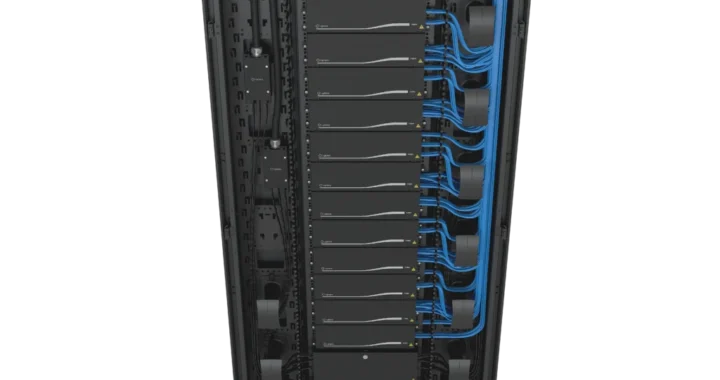
The centerpiece of Lightera’s recent development is the 48-port, 1U angular patch panel. This innovation addresses the physical challenges of high-density patching:
- Space Optimization: By utilizing an angular design, the panel eliminates the need for horizontal cable managers, saving additional rack space.
- Enhanced Organization: The angled orientation guides patch cords directly into vertical management channels, reducing stress on the ports and simplifying cable identification.
- Scalability: Allows IT departments to double their port density within existing cabinets, providing a rapid path to network expansion without the need for additional floor space.
Official Perspectives: The Value of Strategic Infrastructure
Industry experts emphasize that the hardware is only one part of the equation. According to senior systems architects, the "intelligence" of an infrastructure lies in its ability to adapt.
"The industry has moved past the point where we can simply throw more cable at a problem," states a representative from the networking sector. "When Lightera engineers a 48-port panel that fits in a single unit, they aren’t just selling a piece of metal; they are selling a business continuity strategy. By reducing the physical clutter in the rack, you are effectively reducing the human error rate during maintenance. That is the true value of high-density design."
Lightera’s leadership echoes this sentiment, noting that their development efforts are driven by the specific pain points of the modern data center manager. "Our customers need agility," says a Lightera spokesperson. "Whether they are retrofitting a legacy site or commissioning a new facility, they need the confidence that their physical layer will not become a bottleneck as their throughput requirements double or triple in the coming years."
Implications for the Future of IT
Operational Cost Reduction
The long-term implication of adopting high-density infrastructure is a significant reduction in total cost of ownership (TCO). Lower power consumption (through better cooling), reduced footprint (lower facility costs), and faster deployment times create a compounding effect that bolsters the bottom line.
Security and Reliability
In a high-density environment, cable management is synonymous with security. A well-organized, compact cabling system is easier to monitor, audit, and secure. Conversely, the "spaghetti" cabling often found in legacy, low-density environments is a major liability, as it masks unauthorized connections and makes physical troubleshooting nearly impossible.
The Sustainability Mandate
As companies strive to meet carbon-neutrality goals, the physical infrastructure of the data center is under the microscope. Compact cabling uses less plastic, creates less waste during installation, and improves the energy efficiency of the entire facility. Lightera’s commitment to "Green" solutions aligns with this broader shift toward responsible technological growth.
Conclusion
The transformation of the telecommunications and IT market is not merely a trend—it is a necessary evolution. As we move further into an era defined by high-speed data, AI, and ubiquitous connectivity, the physical infrastructure supporting these services must become more intelligent, more efficient, and more compact.
Through innovations like the GIGALAN GREEN cabling series and high-density angular patch panels, Lightera is providing the essential tools for organizations to modernize their networks. By embracing the principles of high density and proactive retrofitting, businesses can build a foundation that is not only capable of handling today’s massive data demands but is also resilient, scalable, and ready for the challenges of tomorrow. The future of IT is not just in the cloud; it is in the optimized, high-density physical architecture that makes that cloud possible.