





In the modern retail landscape, store managers are caught in a relentless tug-of-war between two competing mandates: the need to fortify assets against an unprecedented surge in organized retail crime (ORC) and the pressure to cultivate an immersive, frictionless customer experience. As profit margins tighten under the weight of an uncertain economy, legacy infrastructure—often characterized by cumbersome electrical wiring and siloed security systems—is proving insufficient.
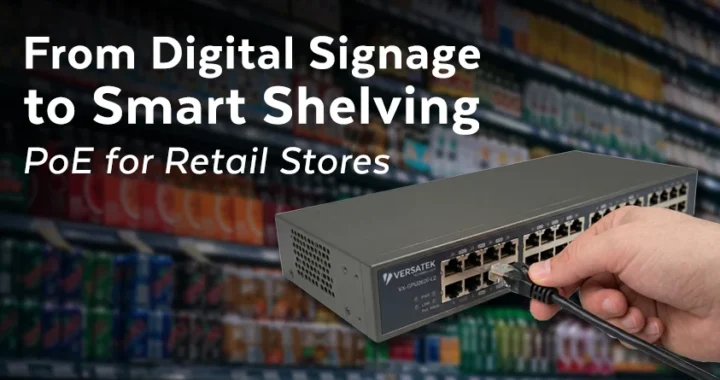
Enter Power over Ethernet (PoE) technology. By consolidating power delivery and data transmission into a single cable, retailers are finding a way to slash infrastructure costs while simultaneously deploying a high-performance, AI-ready surveillance and engagement ecosystem.
The Core Challenge: A Dual Crisis in Retail
Retailers today are operating in a climate of high stakes. According to a 2024 survey by the National Retail Federation (NRF), the industry is facing a dual threat of increased theft and heightened physical risk. Shoplifting incidents have skyrocketed by 93% compared to pre-pandemic levels, with corresponding revenue losses rising by 90% since 2019. Perhaps more alarmingly, the nature of these incidents has shifted: 90% of retailers report an increase in violence associated with retail crime, making the safety of both staff and shoppers a primary concern.

Organized Retail Crime (ORC) is the most potent manifestation of this shift. These multi-person theft rings, which cost the retail sector approximately $100 billion annually, have impacted 62% of stores. For the modern merchant, security is no longer an optional back-office expense; it is a critical component of the customer experience. A shopper who witnesses a violent theft is unlikely to return, and the presence of inadequate security creates an environment of anxiety that erodes brand loyalty.
Understanding PoE: The Backbone of Modern Retail
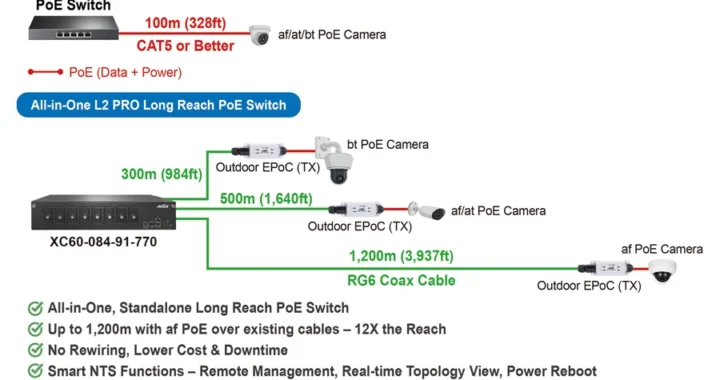
At its most fundamental level, PoE technology enables power and data to be transmitted over a single Ethernet cable. This innovation effectively eliminates the necessity for separate, expensive electrical conduits for every camera, sensor, or access point.
Chronology of PoE Advancement
- The Early Phase: Initially, PoE was limited to low-power devices like standard IP phones.
- The Expansion Phase: As standards evolved, the wattage capacity increased, allowing for basic surveillance cameras.
- The Current Standard: Modern PoE technology now supports devices requiring up to 90W of power. This leap allows for the deployment of high-performance Pan-Tilt-Zoom (PTZ) cameras, multi-sensor arrays, and advanced AI-enabled edge devices that require gigabits of data throughput to function in real-time.
By shifting to a unified PoE infrastructure, retailers can place security assets—cameras, motion sensors, and card readers—exactly where they are needed most, rather than where an electrical outlet happens to be available.

Technical Superiority: Versa’s D62-084-MX-DCP Managed Switch
To effectively manage this sophisticated ecosystem, retailers are turning to industrial-grade solutions such as the Versa D62-084-MX-DCP managed PoE switch. This hardware serves as the nerve center for modern retail security, offering a suite of features designed to simplify operations for IT departments and store managers alike.
Key Operational Features:
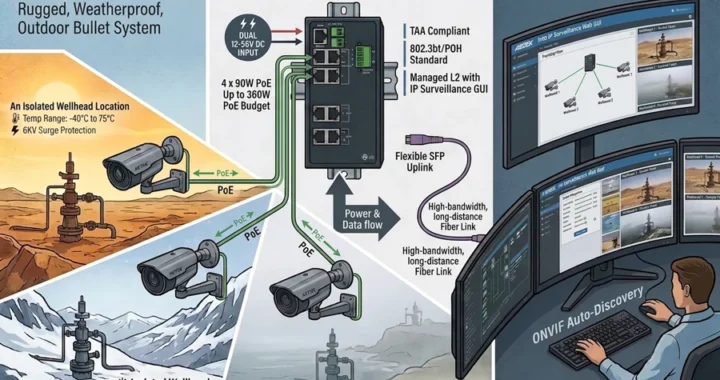
- Auto Discovery: Utilizing the Open Network Video Interface Forum (ONVIF) protocol, the switch automatically identifies and classifies connected devices. This ensures that cameras, AI software, and virtual machines integrate without complex manual configuration.
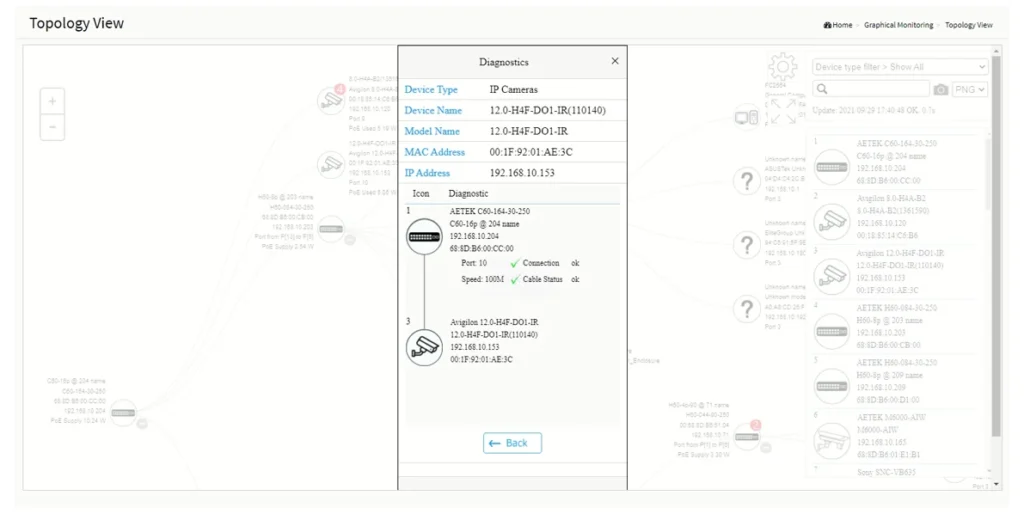
- E-MAP Visualization: The D62 switch provides an electronic mapping interface that allows retailers to overlay surveillance assets onto floor plans, topographic maps, or satellite views. This provides a "bird’s-eye" view of the store, allowing managers to identify blind spots in real-time.
- Advanced Device Management: The web-based interface allows for remote monitoring of individual ports. If a camera becomes unresponsive, managers can view its power consumption, identify it by its MAC address, and perform a remote power cycle to reboot the device without leaving their office.
- Cable Diagnostics: When connectivity issues arise, the switch performs real-time diagnostics on the physical cabling. This significantly reduces downtime, as maintenance teams can pinpoint whether a failure is due to a faulty cable or a hardware malfunction.
Strategic Implications: Beyond Surveillance
While the primary driver for PoE adoption is security, the long-term strategic advantage lies in its versatility. Once a robust PoE network is established, the same infrastructure can support customer-facing technologies that directly impact revenue.
Enhancing the Customer Experience
- Dynamic Price Checking: PoE-enabled scanners allow customers to verify pricing independently, reducing friction at the shelf edge.
- Intelligent Inventory Management: PoE-powered kiosks provide real-time stock information. If an item is out of stock, these kiosks can suggest alternatives or trigger an immediate backorder, turning a potential lost sale into a completed transaction.
- Personalized Customization: Interactive kiosks allow shoppers to explore product variations—such as colors or fabrics—and access their purchase history to make informed decisions. By providing this digital concierge service, retailers can bridge the gap between physical and digital shopping.
Official Perspectives: The Industry Response
Industry experts note that 73% of store managers are actively seeking cost-effective ways to bolster security. The shift toward PoE is a direct response to this need. By integrating access control—such as door locks and card readers—with surveillance systems, retailers create a "closed-loop" environment.

When a PoE-based system is paired with an Uninterruptible Power Supply (UPS), the security apparatus remains functional even during power outages, a time when stores are historically at their most vulnerable. This level of reliability is essential for mitigating the risks associated with modern ORC.
Implications for Future Growth
The integration of PoE technology represents a fundamental shift in retail operations. It transforms the "dumb" infrastructure of the past into a "smart," data-driven ecosystem.
Summary of Benefits:
- Cost Reduction: Elimination of dedicated electrical wiring significantly reduces installation and ongoing maintenance costs.
- Scalability: Expanding a security or retail-tech network is now as simple as adding an Ethernet cable and configuring the switch remotely.
- Sustainability: PoE energy management capabilities allow for more efficient power usage, contributing to corporate ESG (Environmental, Social, and Governance) goals.
- AI Readiness: The high bandwidth capability of modern PoE switches is the prerequisite for deploying AI-driven analytics, which can detect suspicious behavior patterns, count foot traffic, and optimize store layouts.
As retail continues to evolve, the "smart store" is no longer a futuristic concept—it is a competitive necessity. By leveraging PoE, retailers can create a protective perimeter that guards against the rising tide of retail crime while simultaneously delivering the seamless, tech-enabled experience that modern consumers demand.

Versa Technology remains at the forefront of this transition, providing the industrial-grade switches required to power the retail environments of tomorrow. As stores continue to face the complexities of the 21st-century marketplace, those who adopt a unified, PoE-driven infrastructure will be best positioned to balance security, profitability, and customer satisfaction.
For more information on how to optimize your store’s infrastructure with managed PoE switches, please contact the Versa Technology team to discuss your specific security and networking requirements.