






The landscape of American infrastructure is undergoing its most significant transformation in decades. Driven by the confluence of the Bipartisan Infrastructure Law (BIL) of 2021—also known as the Infrastructure Investment and Jobs Act (IIJA)—and the stringent mandates of the Build America, Buy America (BABA) Act, the United States is embarking on a mission to revitalize its industrial core. By tethering federal investment to domestic production, the government is effectively incentivizing a "Made in the USA" renaissance. For companies like NSI Industries, this legislative shift is not merely a compliance hurdle; it is a strategic alignment with a national mission to secure the supply chain and bolster economic sovereignty.
The Core Mandate: Understanding the BABA Act
At its heart, the Build America, Buy America (BABA) Act represents a paradigm shift in how federal taxpayer dollars are deployed. Historically, federal infrastructure funding was often agnostic toward the origin of raw materials, prioritizing the lowest immediate cost. BABA flips this script, mandating that any infrastructure project receiving federal financial assistance must prioritize products and materials manufactured domestically.
The scope of this legislation is vast, covering an array of critical sectors including, but not limited to, highway and bridge construction, water systems, public transit, and the massive expansion of broadband infrastructure. Under BABA, federal agencies are required to ensure that iron, steel, manufactured products, and construction materials are produced within the United States. This move is designed to mitigate the risks associated with global supply chain volatility—a lesson learned painfully during the global disruptions of 2020 and 2021—and to ensure that the economic benefits of federal spending circulate within the domestic economy.
A Chronology of Legislative Action
To understand the current climate of manufacturing, one must look at the timeline that led to the current regulatory environment:
- November 2021: President Joe Biden signs the Infrastructure Investment and Jobs Act (IIJA) into law. This $1.2 trillion legislative package earmarks unprecedented funding for the nation’s physical infrastructure.
- May 2022: The Office of Management and Budget (OMB) issues guidance (M-22-11) for the implementation of the BABA Act, providing the first clear roadmap for agencies to apply domestic content preferences to federal awards.
- Late 2022–2023: Federal agencies began integrating BABA requirements into Notice of Funding Opportunities (NOFOs). This forced contractors, distributors, and manufacturers to audit their supply chains for compliance.
- 2024 and Beyond: As projects transition from the planning phase to the construction phase, the "rubber is meeting the road." Contractors are now tasked with sourcing compliant materials, placing the burden of proof on manufacturers to demonstrate domestic origin.
Supporting Data: The Economic Multiplier Effect
The rationale behind BABA is supported by strong economic data. When a dollar is spent on domestic manufacturing, it generates a "multiplier effect" that far exceeds the value of imports. According to industry analysis, every job created in domestic manufacturing supports approximately 3.4 jobs in other sectors of the economy, including logistics, engineering, and raw material extraction.
For the electrical and HVAC sectors—areas where NSI Industries operates—the demand for high-quality, compliant components has skyrocketed. With the IIJA allocating billions toward energy grid modernization and building efficiency, the demand for domestically produced electrical connectors, conduits, and ventilation components has reached an all-time high.
Industry reports indicate that firms that invested early in domestic manufacturing capacity have seen a significant competitive advantage. While global competitors struggle with shipping delays, tariffs, and fluctuating international logistics costs, stateside manufacturers offer a level of reliability that is becoming the new currency of the infrastructure market.
The NSI Perspective: Aligning Quality with Sovereignty
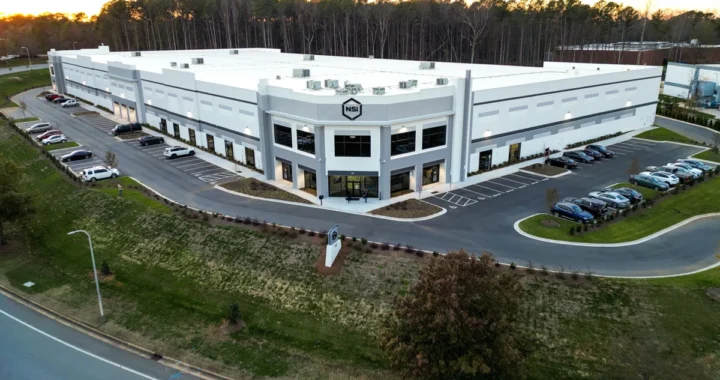
For NSI Industries, the transition toward BABA compliance was not a reaction to a new rule, but rather the acceleration of a long-standing philosophy. Over the past several years, NSI has systematically refined its supply chain to ensure that its catalog of electrical and HVAC parts meets the rigorous standards of the BABA Act.
"By producing goods domestically, we create jobs, support local businesses and strengthen the American supply chain," a spokesperson for NSI noted. This focus on "Made in the USA" is more than a marketing slogan; it is an operational imperative. By keeping production stateside, NSI minimizes the risk of international supply chain shocks, ensuring that materials are readily available when contractors need them most.
The CEO’s Stance: A Commitment to the Customer
G.R. Schrotenboer, Chief Executive Officer of NSI Industries, views the legislative shift as a catalyst for better business practices. "One of our top priorities is always putting our customers first and thinking of ways we can make it as easy as possible to do business with us," Schrotenboer stated.
He emphasizes that BABA compliance is ultimately about reliability. "By making a large portion of our products here in the U.S. to meet BABA guidelines, our distributors know and trust that we’ll have a consistent inventory for their customers’ needs. It’s one of our competitive advantages, and the right way to do business."
This executive commitment reflects a broader industry trend where transparency in the origin of goods is now a key factor in procurement decisions. Distributors, often caught in the middle of project delays, are increasingly favoring manufacturers who can provide the documentation and the physical product necessary to satisfy federal auditors.
Implications for the Future of American Manufacturing
The long-term implications of the BABA Act are profound. We are witnessing a fundamental restructuring of the U.S. industrial base.
1. Innovation in Manufacturing Processes
The pressure to meet domestic content requirements is forcing manufacturers to innovate. With labor costs in the U.S. higher than in some international markets, companies are investing in advanced automation, robotics, and Lean manufacturing techniques to remain cost-competitive while maintaining high quality. This is driving a "smart factory" revolution that will keep American manufacturing at the global forefront for decades.
2. Supply Chain Resilience
The era of "just-in-time" global supply chains is being supplemented—and in some cases replaced—by "just-in-case" domestic capacity. The BABA Act forces companies to diversify their sourcing and prioritize domestic vendors. This creates a more robust, decentralized, and secure network of suppliers capable of weathering geopolitical storms.
3. Strengthening Global Leadership
By proving that the U.S. can rebuild its own infrastructure using its own resources, the nation is signaling its intent to re-establish its dominance in industrial capacity. This "infrastructure-first" approach provides a template that other nations may follow, positioning the U.S. as a leader in the development of sustainable, secure, and high-quality infrastructure solutions.
4. Workforce Development
The surge in domestic manufacturing demand is creating a ripple effect in the labor market. There is a renewed focus on vocational training and specialized manufacturing skills. As companies like NSI expand their domestic footprint, they are also investing in the local workforce, providing high-skilled jobs that form the backbone of a healthy middle class.
Navigating the Complexity
Despite the benefits, compliance with BABA can be complex. Contractors and distributors must navigate the intricate definitions of "manufactured products" and "construction materials," ensuring that every component—down to the smallest screw or connector—is accounted for.
To assist in this navigation, resources such as www.IIJABuyersGuide.com have become essential tools for the industry. These platforms serve as a bridge, connecting the legislative requirements of the federal government with the practical realities of the job site. They allow stakeholders to identify which products are compliant, reducing the risk of project delays or federal funding clawbacks.
Conclusion: A Sustained Commitment to Excellence
The Build America, Buy America Act is not merely a temporary legislative trend; it is the blueprint for a new era of American industrialism. By prioritizing domestic production, the U.S. is investing in its own future, ensuring that the infrastructure of tomorrow is built with the expertise and quality of today’s American workforce.
For manufacturers like NSI Industries, the path forward is clear: double down on quality, maintain a consistent and reliable supply chain, and put the customer’s needs at the center of the manufacturing strategy. As the nation continues to modernize its bridges, roads, and power grids, the companies that embrace these standards will be the ones that build the foundation of the 21st-century American economy. Through consistent inventory, rigorous quality control, and a deep-seated commitment to domestic production, NSI continues to prove that "Made in the USA" is not just a standard—it is a promise of reliability in an uncertain world.