



In a landmark initiative that signals a dramatic shift in how the United States manages its aging federal industrial footprint, the U.S. Department of Energy (DOE) has unveiled a transformative plan to repurpose a significant portion of the former Paducah Gaseous Diffusion Plant in Kentucky. The massive undertaking—a $100 billion private investment led by Brookfield Corp. and NextEra Energy—aims to convert a scarred site of Cold War-era uranium production into a state-of-the-art nexus for artificial intelligence (AI) and high-performance computing.
This project represents more than just a real estate transaction; it is a blueprint for the "reindustrialization" of federal lands, leveraging existing utility-scale infrastructure to meet the voracious power demands of the burgeoning AI economy.
Main Facts: A New Silicon Valley in the Bluegrass State
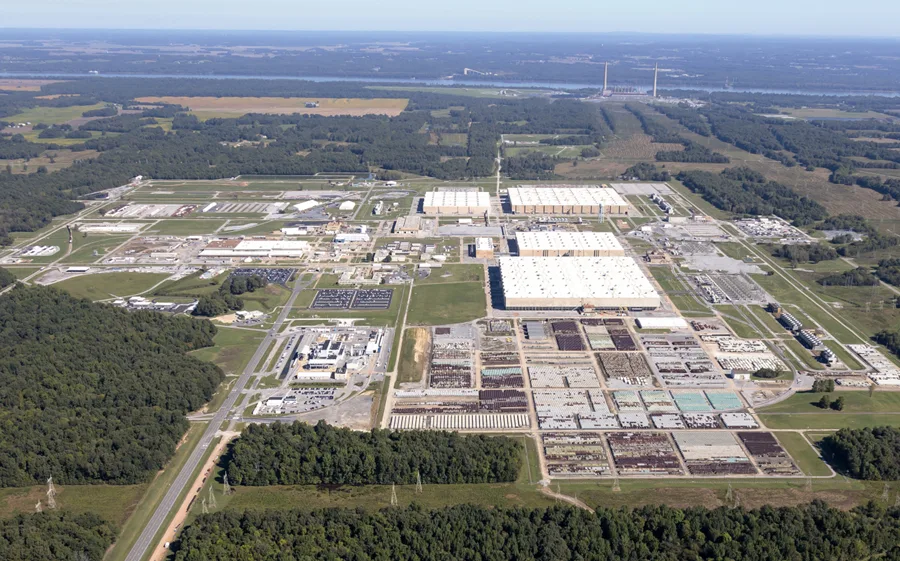
The core of the project involves the development of a 1.8-gigawatt (GW) data center campus situated on an 1,100-acre tract within the larger 3,500-acre federal property. To support this massive computational load, the consortium is planning a gargantuan power infrastructure project, including 2 GW of new natural gas-fired generation and 2.6 GW of battery energy storage systems (BESS).
The consortium, spearheaded by the infrastructure giant Brookfield and the renewable energy powerhouse NextEra, was selected following a competitive request for offers initiated by the DOE. While the project carries a staggering price tag exceeding $100 billion, it is important to note that the DOE has confirmed there will be no direct federal funding or subsidies provided to the developers.
The site will be divided by function:
- Data Center Campus: Occupying approximately 600 acres, this facility will house high-density clusters of GPUs and specialized AI hardware.
- Power Generation: Roughly 200 acres will be dedicated to the gas-fired plants, essential for providing the "always-on" baseload power required by AI infrastructure.
- Energy Storage: 300 acres will host utility-scale battery arrays to manage grid stability and peak demand.
The project has garnered the support of local utility providers, including Big Rivers Electric Power Corp., Jackson Purchase Energy Cooperative, and Paducah Power System, which will handle the distribution of energy to the site and the regional grid.
Chronology: A Century of Evolution
The site’s history is a microcosm of American industrial and geopolitical evolution over the last 75 years.
The Nuclear Age (1952–2013)
The Paducah facility was established in 1952, primarily to enrich uranium for national defense and nuclear weapons programs. In the 1960s, as the geopolitical landscape shifted, the plant transitioned its output to support the growing commercial nuclear power sector. This era of production lasted until 2013, leaving behind a massive industrial footprint characterized by highly specialized transmission lines, industrial-grade water systems, and expansive road networks.
The Remediation Phase (2013–Present)
Following the cessation of uranium enrichment in 2013, the DOE launched an extensive environmental remediation and decontamination program. This long-term cleanup effort is projected to continue through 2065, ensuring that the land is safely managed while allowing for the "repurposing" of non-contaminated or remediated zones for commercial use.
The Rebirth (2024–2031)
- 2024: DOE issues request for offers to redevelop federal land.
- 2025: Selection of the Brookfield/NextEra consortium.
- July 30, 2026: Official announcement of the $100 billion redevelopment plan.
- 2026–2031: Construction phase, focusing on infrastructure upgrades and phased deployment of power and computing capacity.
- 2031: Targeted completion of the project.
Supporting Data: Infrastructure and Economic Impact
The sheer scale of the Paducah project is difficult to overstate. By consolidating power, data, and storage in one location, the developers are creating a "power-dense" environment that is becoming the gold standard for large-scale AI deployment.
Power Requirements
AI training models require a consistent, high-voltage power supply that standard urban grids struggle to accommodate. By building 2 GW of gas-fired capacity directly on-site, the project circumvents potential grid congestion issues. The inclusion of 2.6 GW of battery storage allows the campus to act as a buffer for the regional grid, absorbing excess power when demand is low and discharging it during peak usage times.
Labor and Economy
According to the DOE, the construction phase will create approximately 8,000 jobs. Once operational, the campus is expected to support 600 permanent high-tech positions. While the number of permanent roles may seem small relative to the capital investment, these positions represent high-value, specialized technical labor that could revitalize the regional economy.
Concurrent Initiatives
The data center project is only one part of the Paducah site’s second life. Other major developments include:
- General Matter: A $1.5 billion investment in a new uranium enrichment facility focused on next-generation reactor fuel.
- Global Laser Enrichment: A $1.76 billion project designed to repurpose over 200,000 metric tons of depleted uranium into viable fuel for commercial nuclear reactors.
Official Responses and Strategic Implications
The DOE’s strategy is clear: "Asset Recycling." The federal government owns vast tracts of land that were formerly military or nuclear production sites. These sites are often "grid-ready," possessing the heavy-duty infrastructure that would take a decade to permit and build from scratch in an undeveloped location.
"We are turning the liabilities of the Cold War into the assets of the AI revolution," said a DOE representative during the announcement. By inviting private entities to take over these brownfield sites, the government effectively offloads maintenance costs while stimulating massive private capital inflows.
However, the project is not without its hurdles. The power service agreement must still navigate the Kentucky Public Service Commission. Local utility providers have expressed cautious optimism, emphasizing that the project’s success hinges on the technical integration of the new generation capacity with existing transmission lines.
Implications: The New Model for Federal Redevelopment
The Paducah project serves as a template for future federal-private partnerships. Earlier this year, the DOE signaled this shift with a similar deal in Portsmouth, Ohio, involving SoftBank and AEP Ohio, aimed at creating 10 GW of capacity.
1. The Power-Data Nexus
The trend of placing AI data centers next to dedicated power plants (gas or nuclear) is becoming the dominant strategy for hyperscalers like Amazon, Google, and Microsoft. Paducah proves that this strategy is even more effective when applied to abandoned federal industrial sites.
2. Brownfield Redevelopment
By utilizing brownfield sites, developers bypass the typical environmental and permitting bottlenecks associated with "greenfield" sites. While the cleanup at Paducah continues until 2065, the phased approach allows for simultaneous development and remediation, maximizing the utility of every acre.
3. Economic Diversification
For the Paducah region, the transition from uranium enrichment to AI signifies a leap into the digital economy. The presence of such a massive facility will likely attract secondary tech companies and logistics providers, potentially creating a "tech hub" effect that extends well beyond the boundaries of the original DOE site.
4. Regulatory and Environmental Vigilance
Despite the enthusiasm, the project will be subject to intense scrutiny. Critics of data center expansion often point to the high water usage for cooling and the carbon footprint of natural gas generation. The consortium will be under pressure to demonstrate that their energy strategy aligns with modern environmental, social, and governance (ESG) standards, even as they provide the raw power necessary for the AI race.
Conclusion
The transformation of the Paducah Gaseous Diffusion Plant is a testament to the changing priorities of the American industrial landscape. By aligning the needs of the tech industry with the surplus assets of the federal government, the Brookfield-NextEra consortium is embarking on an unprecedented project. If successful, the Paducah campus will stand as a symbol of the 21st-century economy—a fusion of legacy industrial strength and the high-speed, high-demand future of artificial intelligence. As construction gears up for the 2031 deadline, the world will be watching to see if this massive bet on Kentucky’s soil pays off.