





The monolithic grandeur of Stonehenge, silhouetted against the dawn sky, evokes a profound sense of resilience. Its ancient stones have weathered millennia of natural forces and human intervention, standing as a testament to enduring strength. This remarkable longevity, as highlighted in a recent conversation with the Chief Information Officer (CIO) of a prominent healthcare technology firm, offers a potent and surprisingly relevant metaphor for the challenges and evolution of modern cybersecurity.
In an era defined by rapid technological advancement, escalating threat landscapes, and an increasingly complex digital ecosystem, the principles of robust architectural design are paramount. Just as Stonehenge’s builders meticulously engineered a structure capable of withstanding the test of time, so too must organizations today forge cybersecurity architectures that are resilient, adaptable, and built for the long haul. This article delves into the critical importance of cybersecurity architecture, drawing parallels with the enduring monument to illuminate a path toward safeguarding digital assets in an AI-driven future.
The Fragmented Reality: A Mosaic of Risk
The digital landscape of contemporary enterprises, particularly across EMEA and multinational organizations, is often characterized by a pervasive pattern of vendor fragmentation. This has led to the proliferation of "micro-platforms" – specialized, vendor-specific technologies that, while offering targeted solutions, contribute to the creation of entrenched data silos. The cumulative effect is an IT architecture that no single solution can adequately address on its own.
This growing heterogeneity extends to hardware, operating systems, and cloud environments, creating a dizzying array of cybersecurity tools and services. Many of these solutions are optimized for specific vendor platforms, leading to a situation where large organizations often deploy upwards of 30 individual cybersecurity point solutions to protect their digital assets. The recent integration of Artificial Intelligence (AI) into this complex mix further compounds the challenge, making the design of an effective cybersecurity solution an exercise in both necessity and considerable confusion.
Stonehenge: A Blueprint for Resilience
It is within this context of complexity and burgeoning risk that the enduring strength of Stonehenge emerges as a compelling analogy. Its deceptively simple yet elegant lintel-and-joinery design stands as a monument to long-term resilience. Just as Stonehenge has withstood the relentless forces of nature and the unpredictable impacts of human activity, so too must organizations strive to build cybersecurity architectures capable of enduring a revolutionary pace of change and a diverse range of threats. These threats now encompass not only traditional cyberattacks but also geopolitical turbulence and the profound implications of AI’s integration into the value chain.
For Chief Information Security Officers (CISOs), CIOs, board members, C-suite executives, and line-of-business leaders who are ultimately accountable for operational resilience, the design of their cybersecurity architecture is not merely a technical consideration; it is a strategic imperative of the highest order.
The Data-Centric Foundation: Fueling Security Intelligence
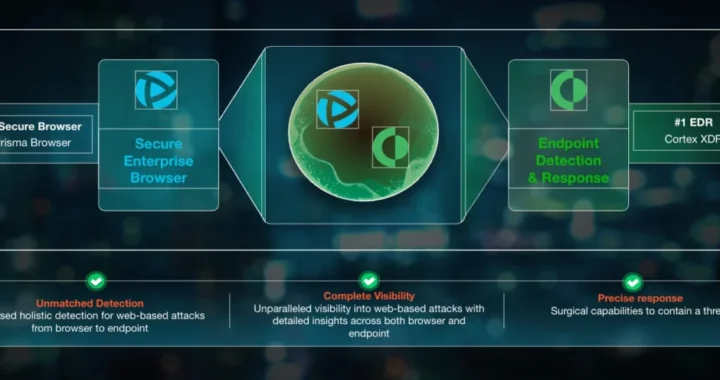
At its core, cybersecurity is fundamentally a data problem. The more comprehensive and relevant telemetry data an organization possesses, the more effectively it can deploy security algorithms and safeguard its critical digital assets across all its IT pillars. These pillars encompass a broad spectrum, including Information Technology (IT), Operational Technology (OT), cloud environments, networks, the workplace, and endpoints. Palo Alto Networks, for instance, emphasizes its capability to aggregate pertinent telemetry data from networks, firewalls, clouds, browsers, endpoints, and the broader internet.

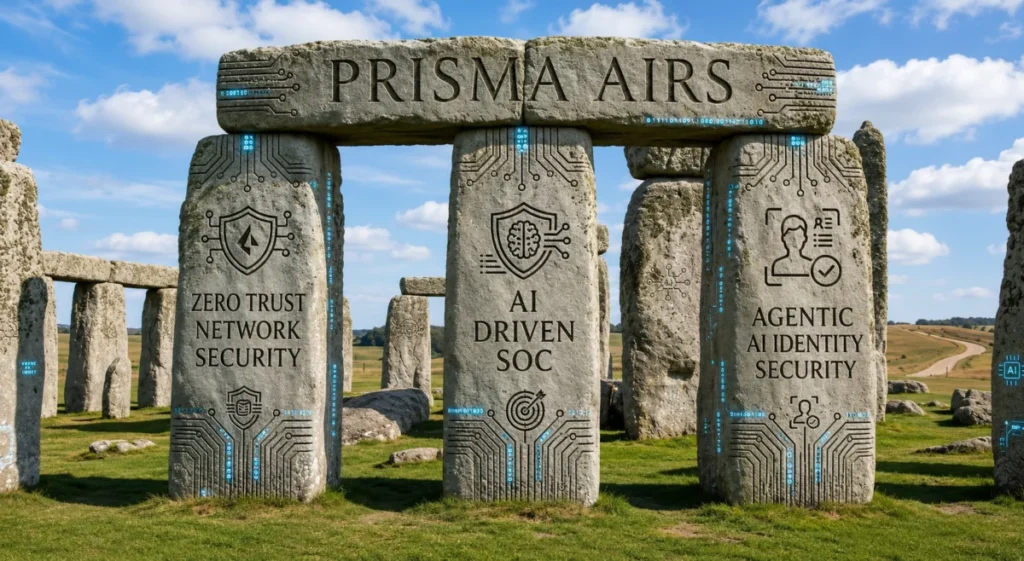
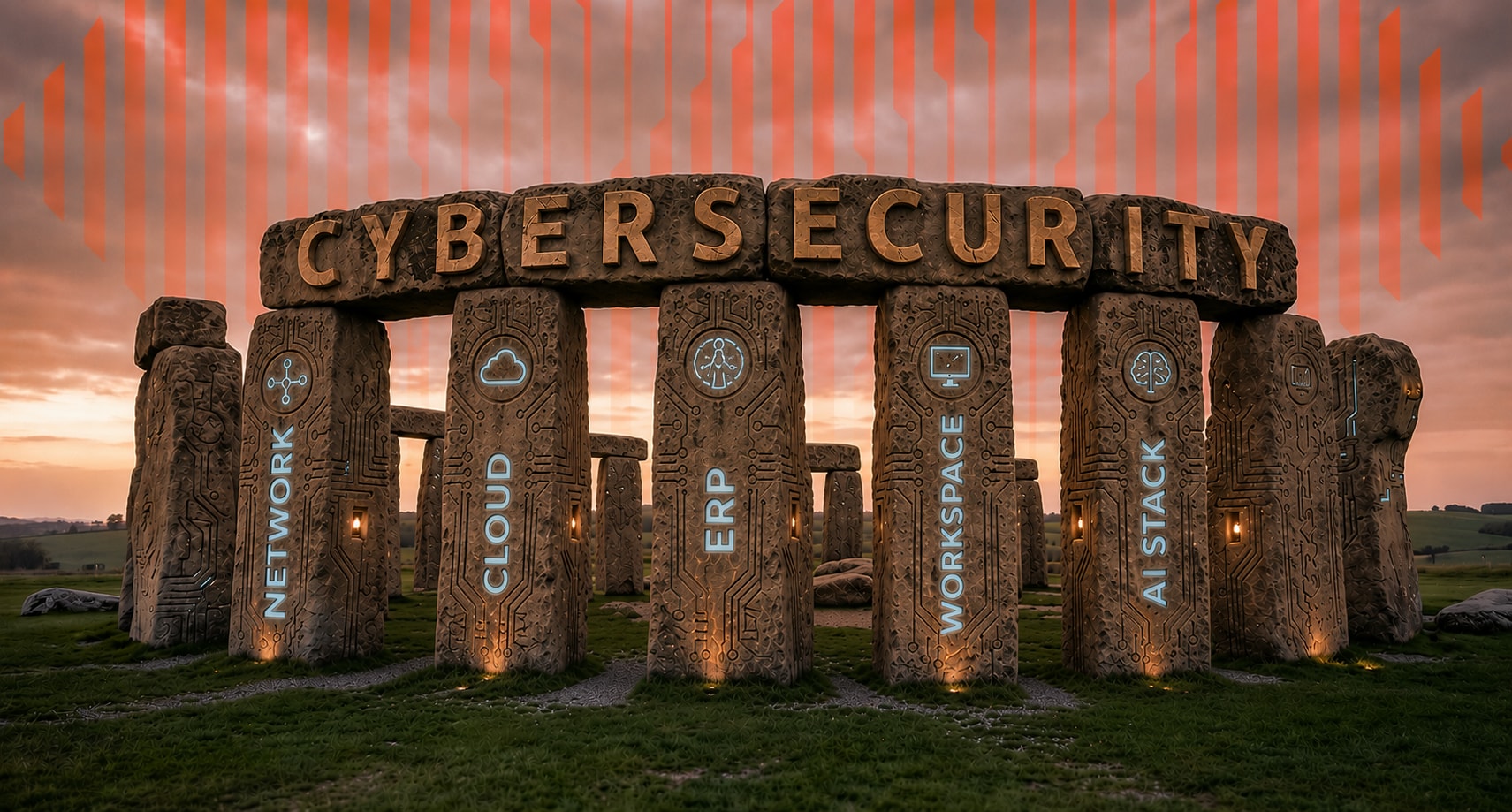
The structural integrity of Stonehenge, built from massive, self-reinforcing pillars and platforms of stone, offers a visual parallel to how modern IT architects are conceptualizing cybersecurity. The vertical pillars of Stonehenge can be likened to the specialized, vendor-specific IT domains within an organization, each potentially equipped with its own security tools and capabilities. However, this approach often falls short of a strategically integrated, zero-trust cybersecurity framework that spans the entire enterprise IT landscape.
Evolution Towards Platformization: Embracing Modular Strength
Stonehenge’s enduring resilience, and indeed its very construction, offers a model for contemporary cybersecurity architecture. The evolution towards modular platformization, deliberately and assuredly implemented over time, spans all key domains of cybersecurity. This includes network security, cloud security, AI security, identity security, and the foundational building blocks for an AI-driven Security Operations Center (SOC), which serves as the critical last line of defense and must operate in real-time. This holistic approach forms the linchpin of a comprehensive enterprise security strategy, built upon key areas such as Identity, the Autonomous SOC, and Network Security.
The lintels of Stonehenge are analogous to the burgeoning trend of cybersecurity platformization, a paradigm shift rapidly supplanting the outdated "best-of-breed" point solution mindset. This modular approach bestows flexibility and control upon security architects, enabling them to integrate new security domain capabilities as evolving needs dictate. The mortise-and-tenon joinery of Stonehenge, where interlocking parts create a cohesive whole, mirrors the principle of embedded functionality in modern cybersecurity frameworks, rather than solutions being haphazardly bolted on.
A prime example of this philosophy in action is Palo Alto Networks’ decision to embed Precision AI at the core of its cybersecurity platform, rather than offering it as an add-on tool. This integration allows Precision AI to power data analysis, workflows, and decision-making, becoming an omnipresent resource for more intelligent and rapid prevention, detection, and response.
The Unifying Data Layer: Stability in a Turbulent Environment
A critical element of any enduring architecture is its ability to provide stability to the overall framework. In cybersecurity, this translates to the all-important cyber data layer, integrated within a zero-trust framework. As organizations grapple with persistent data silos across networks, cloud environments, SOCs, and edge systems, the cybersecurity data lake assumes paramount importance for the resilience of the entire cyber ecosystem. Reaffirming the core tenet, cybersecurity is a data problem, a distinct domain that must be addressed across all vertical IT pillars.
The remarkable resilience of Stonehenge can be attributed, in part, to its integrated construction. Similarly, modern cybersecurity architectures are evolving towards modular platformization, deliberately and assuredly over time. This evolution encompasses all key domains of cybersecurity, including network, cloud, AI, endpoints, and identity security, as well as the essential components for an AI-driven SOC. This integrated approach is vital for real-time defense, forming the bedrock of enterprise security strategies centered on Identity, the Autonomous SOC, and Network Security/SASE.
Securing the Future: The AI Frontier and Agentic Threats
While Stonehenge faced the challenges of natural elements and human endeavors, modern cybersecurity architectures must confront an unprecedented challenge: securing AI itself, particularly the dual opportunity and threat presented by agentic AI. AI security must be an intrinsic part of platform design and implementation. Platforms like Palo Alto Networks’ Prisma AIRS (AI Runtime Security) are designed to ensure that an organization’s growing AI portfolio remains a valuable asset, rather than an attractive attack vector.
Agentic AI represents a new class of identity, characterized by a significant mismatch in speed between AI decision-making and human governance. Malicious agents employing inside-out attack paths pose a major threat to under-protected AI supply chains. This pressure is amplified by geopolitical dynamics and the integration of AI into core value chains, such as in "Factories of the Future."
The acquisition of CyberArk by Palo Alto Networks, for instance, has bolstered the industry’s identity security capabilities with the Idira platform, positioning it as another critical vertical pillar connected to the overarching cybersecurity platform. Cortex XSIAM, with its expansive security data lake, is deliberately designed to be open, ingesting and correlating over 17 petabytes of telemetry data daily from both internal and third-party sources. This data fuels Precision AI, enabling the detection and blocking of potentially catastrophic attacks. Palo Alto Networks currently identifies approximately 9.6 million new attacks daily, underscoring the accelerating pace of evolving threats. The use of automated AI in attack vectors has drastically reduced the time to data exfiltration. Whereas data was once exfiltrated over several days, this timeframe has now compressed to less than a day, and in many cases, less than an hour.
The Autonomous SOC: Real-Time Defense in a Shrinking Window
In this rapidly evolving threat landscape, the Autonomous SOC pillar emerges as a critical component. The contracting compliance reporting windows, shrinking from days to mere hours, necessitate real-time, highly automated defense mechanisms. Mean-time-to-detect (MTTD) and mean-time-to-respond (MTTR) are now board-level imperatives, commanding significant attention at the highest echelons of organizations. The Autonomous SOC is instrumental in achieving even faster detection and remediation, ideally within minutes. The integration of existing enterprise SIEM systems further simplifies SOC operations and offers substantial financial benefits through platformized security data.
The Supply Chain: A Virtual Backbone for Digital Fortresses
The construction of any platform, whether physical or digital, relies on a robust supply chain. For Stonehenge, this involved an impressive physical undertaking, with bluestones transported hundreds of kilometers from Wales. In the realm of cybersecurity, the supply chain is increasingly virtual, facing threats to third-party interdependencies such as SaaS applications, APIs, and, in the context of Frontier AI models, open-source components.
Enduring Principles for a Digital Age
Like the pyramids, the Great Wall of China, and the Roman road system, the enduring legacy of Stonehenge lies not only in its engineering prowess but also in its capacity to withstand changing conditions and threats over time. For leaders across all disciplines – CEOs, board members, CIOs, CISOs, and security engineers – the decisions made regarding cybersecurity architecture carry profound and far-reaching implications. To achieve Stonehenge-like resiliency, technical and business leaders must commit to an architectural model designed not only for current needs but also for the anticipated demands of the long term.
Therefore, cybersecurity must be architected as a horizontal, dedicated platform that spans all IT domains and business units. This approach enables the provision of real-time, platformized cybersecurity solutions for the future, a future that will be increasingly defined by AI-driven business operations. The enduring lessons of Stonehenge offer a powerful framework for building digital fortresses that can stand the test of time.
Helmut Reisinger is CEO for Europe, Middle East, and Africa at Palo Alto Networks.