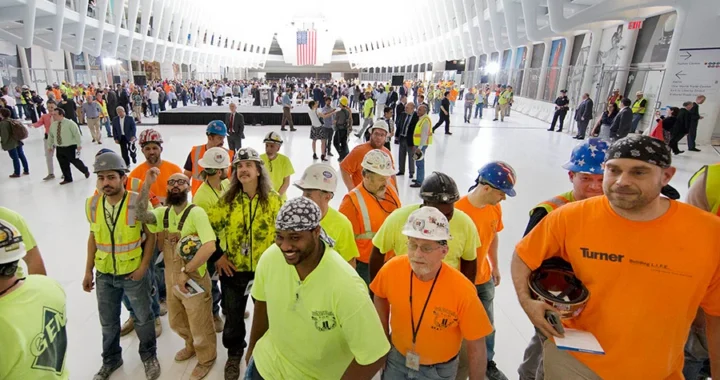







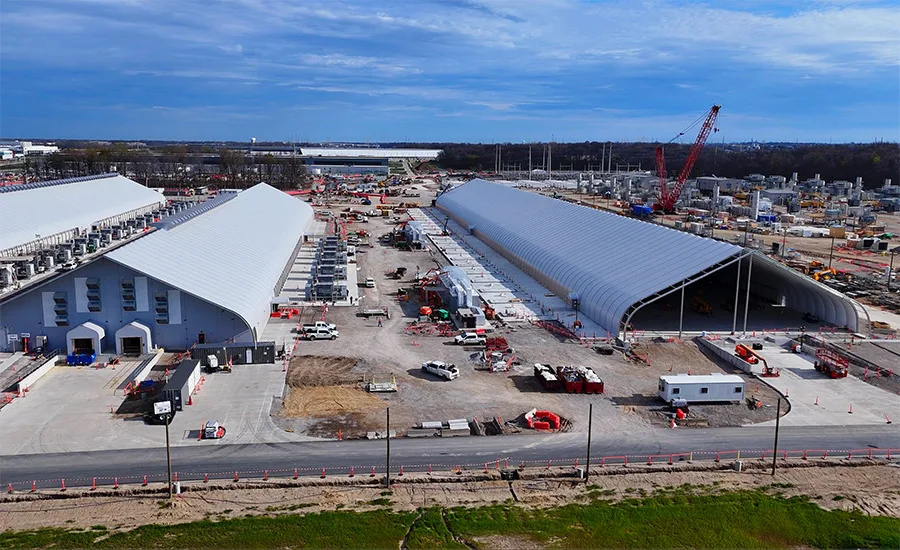
The explosive growth of artificial intelligence and cloud computing has triggered an unprecedented construction boom across the United States. As hyperscale technology firms scramble to secure capacity, general contractors are being pushed to deliver massive data center projects at lightning speed. However, this high-pressure environment is creating a collision between aggressive production schedules and the fundamental requirements of site safety. As labor shortages intensify and the complexity of these megaprojects reaches new heights, the industry is finding that traditional "check-the-box" safety protocols are no longer sufficient to protect the workforce.
The Anatomy of a Construction Crisis
The current data center build-out is not merely a matter of scale; it is a shift in the fundamental mechanics of construction. Where a $200-million hospital project might see roughly $15 million in work-in-place per month, a hyperscale data center can demand $60 million to $70 million in monthly billings. This accelerated tempo, compounded by a transient labor force and the participation of dozens of subcontractors, creates a fragmented environment where accountability often becomes blurred.
Marc Hutson, senior vice president and director of construction operations at JE Dunn, acknowledges the intensity of the current landscape. "We have been very involved in hyperscale data centers, and there’s been an increase in tempo," he notes. "If you approach that with an old-school mentality, you will continue to come up short on preventing injuries. It’s very reactionary."
The challenge for firms like JE Dunn is maintaining a cohesive safety culture across hundreds, sometimes thousands, of workers from dozens of different companies. When the primary focus is on the "Recordable Incident Rate" (RIR)—a metric often prioritized by clients—the industry risks overlooking the subtle, early-warning signs of catastrophe.
Chronology of an Industry Pivot
The industry’s reckoning with safety in the data center sector began in earnest as projects ballooned in size and duration over the past 24 months.
- 2022-2023: As AI investment surged, general contractors reported a growing disconnect between client expectations for speed and the practical reality of site safety.
- Early 2024: Industry leaders began identifying "error precursors"—near-misses, communication breakdowns, and fatigue-induced slips—that were not being captured by traditional reporting metrics.
- Mid-2024: Major contractors began formalizing partnerships with specialized consultants, moving away from purely internal safety oversight to integrated, culture-driven models.
- Late 2024 to Present: The adoption of the "Stuff That Can Kill You" (STCKY) philosophy has gained traction, marking a shift from tracking minor injuries to identifying and mitigating high-consequence hazards.
This shift has been supported by the entry of unlikely players into the consulting space, most notably Caterpillar Safety Services. While historically associated with heavy machinery, the firm has leveraged its operational expertise to provide agnostic safety assessments that operate independently of equipment sales.
Supporting Data and the "Error Precursor" Phenomenon
The data backing this shift is compelling. According to industry surveys, including recent findings from the Associated Builders and Contractors (ABC), contractors with over $100 million in annual revenue are managing the lion’s share of data center work. However, these firms are reaching a critical threshold of operational capacity.
Justin Ganschow, business development manager for Caterpillar Safety Services, highlights that when firms operate at maximum capacity, their ability to detect early-stage hazards diminishes. "In our conversations with contractors representing six of the biggest data center companies, all of the intel that has flowed in over the last two years has similar themes—around error precursors and near-misses," Ganschow says.
These precursors include:
- Communication Silos: Misunderstandings between trade crews that lead to wasted time and workers entering hazardous zones.
- The "Speed Trap": Pressure to meet aggressive milestones, which leads to workers bypassing safety protocols to remain on schedule.
- Management Disconnect: A perception among craft workers that safety is secondary to schedule, evidenced by project managers who spend hours discussing timelines but only minutes on safety.
The data suggests that focusing solely on RIR is a "lagging" strategy. By the time a recordable injury occurs, the opportunity to prevent it has long since passed. The industry is now pivoting toward "leading" indicators—measures of training efficacy, supervisor engagement, and worker sentiment—to stop incidents before they manifest.
Official Responses and the Leadership Imperative
The consensus among top-tier contractors is that safety cannot be delegated to a separate "safety department." It must be embedded within operations.
"If the operations leadership is not bought in on safety, you’re gonna have safety cops," says Hutson. "And all they get is a bad reputation. You become an enforcement arm without recognized authority."
JE Dunn has pioneered a strategy where project managers and superintendents take ownership of the safety narrative. By leveraging the respect craft workers hold for their site leads, the company has transformed safety from an external requirement into a core operational value. This involves:
- Mandatory Training: Implementing day-long workshops for all craft workers and intensive three-day courses for site superintendents.
- Bilingual Integration: Ensuring all training materials and on-site communication bridge language gaps common in the current labor market.
- Cultural Audits: Utilizing external consultants to conduct anonymous surveys, allowing workers to rate their leadership on safety performance without fear of retribution.
Caterpillar’s approach, which emphasizes "Speak Up and Listen Up," encourages this feedback loop. By training frontline supervisors in root-cause analysis, they are equipped to dismantle the hierarchy that often prevents a worker from calling a "stop-work" moment.
Implications for the Future of Data Center Construction
The implications of this shift are profound. As the U.S. continues to build the infrastructure for the digital age, the construction industry is realizing that the "old way" of doing business is incompatible with the demands of hyperscale projects.
Collaboration Over Competition
One of the most significant takeaways from this period is the erosion of "safety silos." Traditionally, contractors might keep their proprietary training modules secret to maintain a competitive advantage. However, in the high-stakes world of data centers, that philosophy is dying.
"We don’t really have trade secrets when it comes to safety," says Hutson. "We share openly and willingly if it works. With where it’s going with the strain on the labor market and pressure on materials and equipment, we’re all going to have to collaborate more and more."
The "STCKY" Philosophy
The transition toward prioritizing "Stuff That Can Kill You" over simple injury statistics represents a maturation of the construction industry. By identifying the specific tasks or environmental factors that present a life-safety risk, companies are shifting their resources to where they are needed most. This represents a fundamental change in how insurance premiums, worker compensation, and site management are calculated.
The Role of Technology and AI
While the current crisis is driven by the physical demands of building AI capacity, the industry is also looking toward technology to assist in safety. From wearable sensors that monitor worker fatigue to AI-driven site monitoring that detects PPE non-compliance in real-time, the future of data center construction will be as technologically advanced as the facilities themselves.
Conclusion: A New Standard for Megaprojects
The data center boom is testing the limits of the U.S. construction industry. The pressure to build faster, cheaper, and at a scale never seen before is real. Yet, the industry’s response—marked by a move toward radical transparency, cultural accountability, and the prioritization of life-safety over superficial metrics—is a testament to its resilience.
The lessons learned by JE Dunn and others in this space serve as a blueprint for the future of megaproject management. Safety is no longer a peripheral concern; it is the foundation upon which the success of the entire project rests. As long as contractors remain willing to share knowledge, challenge their own internal cultures, and listen to the workers on the ground, the industry can continue to meet the demands of the AI revolution without sacrificing the lives of those who build it.
The path forward is simple in theory but difficult in execution: leadership that lives by the same standards it sets for its workers, and a commitment to ensuring that every person on a jobsite returns home as safely as they arrived. In the race to build the future, that remains the most important metric of all.