





As the global push for smarter, more sustainable, and highly efficient urban environments accelerates, the underlying infrastructure of our buildings is undergoing a radical transformation. At the heart of this evolution lies the integration of Internet of Things (IoT) devices, which automate everything from climate control to security. However, these sophisticated systems require more than just data; they require a robust, reliable, and scalable power source. Enter Type 4 Power over Ethernet (PoE)—the high-performance standard that is fast becoming the backbone of the modern smart building.
Main Facts: The Power of Convergence
At its core, Type 4 PoE (governed by the IEEE 802.3bt standard) represents the pinnacle of current PoE technology. It allows for the simultaneous transmission of high-speed data and substantial electrical power over a single, standard Ethernet cable.
Traditionally, building systems required separate, redundant wiring for data networks and electrical power. This dual-infrastructure approach was not only costly and complex to install but also limited the agility of building management. Type 4 PoE eliminates this friction by utilizing all four twisted pairs of copper wires within a category cable to deliver up to 71.3W of power at the device end, with potential peaks reaching 90–100W.
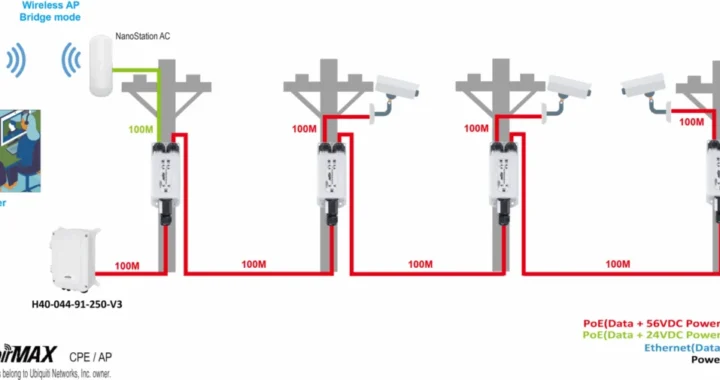
This leap in power delivery means that devices previously tethered to AC power outlets—such as high-end security cameras, automated lighting, advanced environmental sensors, and interactive displays—can now be managed, powered, and monitored through the network switch itself.
Chronology: The Evolution of PoE Standards
The journey toward Type 4 PoE has been marked by a steady progression in power capacity, driven by the increasing energy demands of digital infrastructure.

- 2003 (IEEE 802.3af): The initial PoE standard, providing up to 15.4W of DC power. This was sufficient for early VoIP phones and basic wireless access points.
- 2009 (IEEE 802.3at): Known as PoE+, this standard increased power delivery to 30W, enabling the rise of PTZ (pan-tilt-zoom) cameras and dual-radio wireless access points.
- 2018 (IEEE 802.3bt): The arrival of Type 3 and Type 4 PoE. Type 4 marked a massive milestone, moving from two-pair power delivery to four-pair delivery, enabling the "High Power" era required for modern IoT.
- 2020–Present: Massive adoption of Type 4 in commercial real estate, driven by the demand for "intelligent buildings" that prioritize energy efficiency and occupant comfort.
Supporting Data: Why Type 4 is a Technical Imperative
The technical superiority of Type 4 PoE is evidenced by its ability to consolidate complex building operations. In a typical modern office, Type 4 PoE supports:
- High-Efficiency Lighting: LED systems can now be daisy-chained and powered directly via Ethernet, allowing for individual control, dimming, and occupancy-sensing capabilities that reduce energy consumption by up to 30%.
- Advanced HVAC Integration: Sensors that monitor CO2, humidity, and temperature can be deployed in every corner of a building, feeding real-time data back to central HVAC controllers to optimize airflow and temperature without the need for localized AC circuits.
- Unified Management: With Type 4, every device is an IP-addressable node. This allows for centralized oversight, where a building manager can monitor the power draw of an entire floor from a single dashboard.
Official Perspectives: The Industry Shift
Industry experts and infrastructure providers, such as those at Versa Technology, emphasize that Type 4 PoE is not merely a convenience—it is a financial and operational strategy.
"The transition to Type 4 PoE is effectively the transition from ‘dumb’ buildings to ‘living’ buildings," says one industry lead. "When you remove the dependency on electrical contractors for every small sensor or light fixture, you gain immense flexibility. You can reconfigure a workspace or deploy a new security protocol in hours rather than weeks."
The shift is further supported by green building certifications, such as LEED and WELL, which reward energy-efficient designs. Because Type 4 PoE allows for granular control over energy consumption, it is increasingly seen as a critical component in achieving carbon-neutral building targets.
Implications for Modern Infrastructure
The adoption of Type 4 PoE has profound implications for how we design, maintain, and upgrade our built environment.

Simplified Installation and Agility
In traditional construction, the installation of an electrical outlet is a permanent, high-cost decision. With PoE, the network is the outlet. If a business needs to move a sensor or add a camera, they simply plug it into the nearest wall jack. This agility is vital for businesses that require frequent office reconfigurations or rapid technology deployments.
Centralized Intelligence and Troubleshooting
Perhaps the most significant implication is the ability to perform "remote power cycling." In the past, if a device became unresponsive, a technician had to be dispatched to manually reset the unit. With managed Type 4 PoE switches, administrators can power-cycle individual ports, troubleshoot connection issues, and update firmware remotely. This reduces operational downtime and slashes maintenance costs.
Heat and Load Management: The Technical Frontier
As power density increases, so does the heat generated within cable bundles. A critical part of Type 4 implementation is adherence to rigorous standards regarding cable management. Engineers must ensure that cable bundles are not packed too tightly to allow for heat dissipation. Furthermore, the selection of high-performance switches is essential; managed switches with advanced power allocation algorithms ensure that the network does not overload during peak demand periods.
Long-Term Maintenance: Future-Proofing Your Investment
Implementing Type 4 PoE is a forward-looking decision that requires a structured maintenance lifecycle.
- Proactive Monitoring: By leveraging SNMP (Simple Network Management Protocol) or modern cloud-based dashboards, IT managers can monitor the power budget of their switches in real-time. This prevents outages before they happen by identifying devices that are drawing unusual amounts of power.
- UPS Integration: Because smart buildings now rely on the network for both power and data, the importance of Uninterruptible Power Supplies (UPS) cannot be overstated. A robust UPS system ensures that security, communication, and environmental controls remain active even during a grid power failure.
- Backward Compatibility: One of the most attractive aspects of the 802.3bt standard is its backward compatibility. Organizations do not need to replace their existing lower-wattage devices; they can mix and match, upgrading to high-power devices as budgets allow.
The Future Outlook: AI and 5G Convergence
Looking ahead, the integration of Type 4 PoE with AI and 5G is the next frontier. AI-driven building management systems will use the granular data provided by PoE-connected sensors to predict maintenance needs—for example, sensing a motor failure in an HVAC unit before it actually breaks.

Furthermore, as 5G small cells (which require high power) become common in indoor environments to improve connectivity, Type 4 PoE will be the natural choice to power these units, further cementing the role of Ethernet as the ultimate utility for the 21st-century building.
Conclusion: A Financial and Operational Asset
For stakeholders, the transition to Type 4 PoE is a clear win. It lowers the barrier to entry for smart technology, reduces labor costs associated with traditional electrical wiring, and provides a centralized command center for all building assets.
As you evaluate your next infrastructure project, consider the long-term benefits of a high-power, network-integrated system. Whether you are retrofitting a legacy office or designing a new facility from the ground up, the foundation you lay today will determine your building’s efficiency for decades to come.
To learn more about implementing high-performance networking and to explore advanced solutions like the C2-084-91-770 L2 Managed PoE Switch, reach out to industry experts at Versa Technology. Building the future starts with the right connection.