



The modern sports fan is no longer satisfied with merely watching a game. Today’s spectators demand an immersive, high-tech experience that begins long before the first whistle and continues well after the final buzzer. From instant replays on personal devices to frictionless biometric ticketing and real-time concessions ordering, the stadium of the 21st century has evolved into a hyper-connected, data-driven ecosystem.
However, delivering these experiences at the scale of 50,000 to 100,000 concurrent users requires more than just high-speed public Wi-Fi. It requires a robust, invisible architecture. Increasingly, venue operators are turning to a powerful synergy of Power over Ethernet (PoE) technology and private cellular networks to form the backbone of modern stadium operations.
Main Facts: The Infrastructure Behind the Spectacle
At the core of the modern "smart stadium" is the challenge of device density. When tens of thousands of smartphones attempt to access a network simultaneously, public cellular infrastructure often buckles, leading to the dreaded "no service" icon, dropped payments, and frustrated fans.
To combat this, venues are deploying Private Networks, often utilizing the Citizens Broadband Radio Service (CBRS) spectrum. Established by the FCC in 2015, CBRS provides a shared wireless spectrum (3550-3700 MHz) that allows organizations to build their own dedicated LTE or 5G networks.
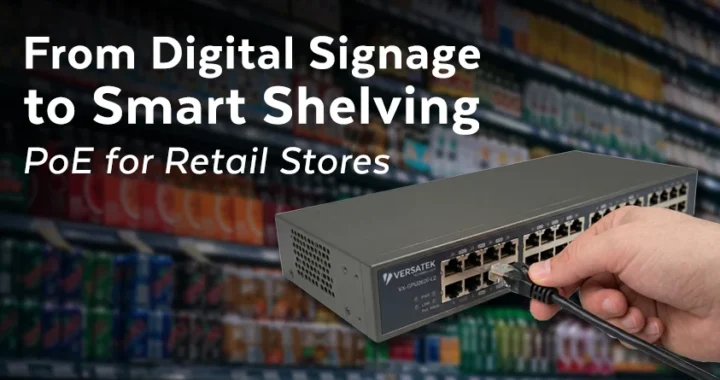
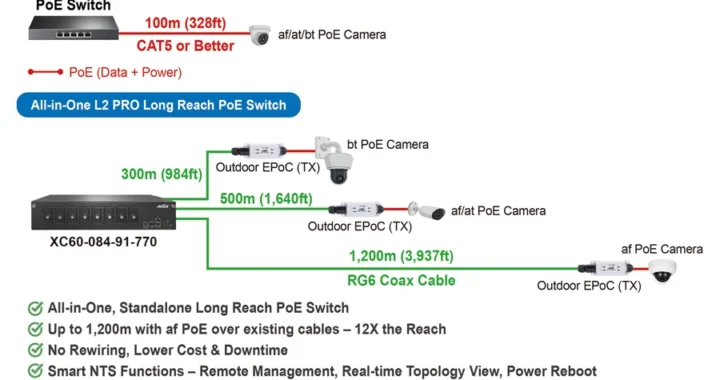
Complementing these private wireless signals is Power over Ethernet (PoE). PoE allows data and electrical power to travel over a single Ethernet cable. This eliminates the need for proximity to traditional AC power outlets, allowing IT teams to place high-performance wireless access points, surveillance cameras, sensors, and digital signage in optimal locations throughout the stadium, regardless of building constraints. Together, these technologies ensure that mission-critical systems—such as play-calling, stadium security, and point-of-sale (POS) systems—remain isolated from the congestion of fan-generated traffic.

A Brief Chronology: The Evolution of Stadium Connectivity
The trajectory of stadium technology has moved rapidly from basic analog scoreboards to the complex integrated systems of today:
- Pre-2010s: The Analog/Basic Era. Stadiums were largely "dumb" structures. Connectivity was limited to basic PA systems and hard-wired internal communications. Fans were largely disconnected once they entered the gates.
- 2010–2015: The Wi-Fi Explosion. As smartphones became ubiquitous, stadiums rushed to install massive public Wi-Fi deployments. While this solved some connectivity issues, it quickly became overwhelmed by the sheer volume of data demand.
- 2015–2018: The Rise of Private Spectrum. The FCC’s authorization of the CBRS band marked a turning point, enabling private enterprises to operate their own "mini-cellular" networks, bypassing the limitations of carrier-dependent public networks.
- 2019–Present: The Integration Era. We are now in the age of the Smart Stadium. PoE and private 5G are integrated into the initial architectural design of new arenas. Modern venues like SoFi Stadium and Allegiant Stadium serve as "test beds" for AI-driven security, augmented reality (AR) fan engagement, and fully automated operations.
Supporting Data: The Cost of Connectivity
The demand for bandwidth is not merely a convenience; it is an economic necessity. Data suggests that fans who are connected to a high-quality stadium network spend more on concessions and merchandise. Conversely, a network failure during a transaction can lead to massive losses in revenue and significant merchant chargebacks.
Consider the following requirements for a modern stadium:
- Latency-Sensitive Operations: Coaches require real-time access to play diagrams and biometric player data. A latency spike of even a few milliseconds can disrupt a team’s tactical advantage.
- High-Density Requirements: A single 50,000-seat stadium can generate terabytes of data during a four-hour event.
- Efficiency Gains: By utilizing PoE-powered surveillance and sensor arrays, venues reduce the cabling overhead by roughly 30% compared to traditional power-plus-data deployments. This translates into significant capital expenditure (CapEx) savings for stadium operators.
Official Perspectives: Industry Experts on Infrastructure
Leading technology integrators and venue architects emphasize that the transition to private networks is not optional—it is a competitive requirement.
"The modern stadium is essentially a small city," says one lead infrastructure consultant. "You have the power requirements of a hospital, the security needs of a government facility, and the connectivity demands of a massive music festival. If you rely on a single, public-facing network, you are setting yourself up for failure. By segmenting traffic via PoE private networks, we ensure that a fan’s Instagram post never interferes with a security team’s ability to monitor a crowd, nor does it affect a coach’s ability to pull up a digital playbook."

At the University of Washington, the renovation of their athletic facilities serves as a prime case study. By implementing a private network underpinned by PoE-managed switches, the university was able to unify their POS systems, ticketing kiosks, and real-time coaching tools into a single, cohesive fabric. The result was a dramatic reduction in system downtime and a marked increase in fan satisfaction scores.
The Implications: Security, Intelligence, and Future-Proofing
The integration of PoE and private networks carries profound implications for the future of live events.
1. Hardened Security
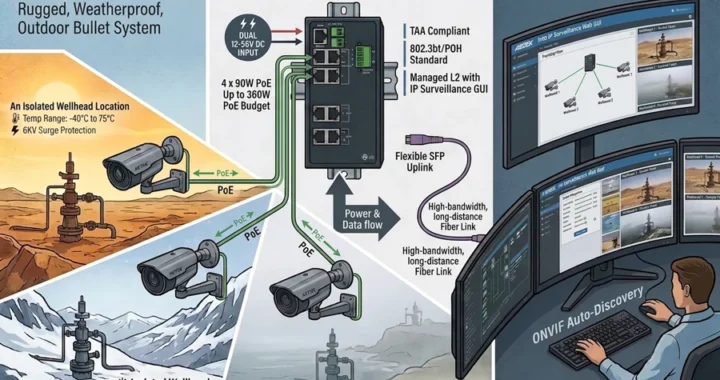
Physical security is no longer just about guards at the gate. With PoE, stadiums can deploy AI-enabled cameras that detect anomalies, such as abandoned bags or unauthorized access to restricted zones, in real-time. Because these devices are on a private network, they are shielded from the public internet, significantly reducing the risk of a cyberattack.
2. Operational Intelligence
The "Smart Stadium" is a goldmine of data. By monitoring traffic patterns, concession demand, and restroom wait times, management can optimize staffing levels on the fly. If a sensor indicates a long line at a specific concession stand, the system can automatically push notifications to fans via the stadium app, suggesting an alternative location with a shorter wait.
3. The Fan Journey
The future of the fan experience is "frictionless." Imagine arriving at a stadium where your digital ticket is scanned via facial recognition, your seat is found through an AR-overlay on your phone, and your food is ordered and paid for before you even leave your seat. This level of service is only possible when the underlying infrastructure—the private 5G network and the PoE-powered access points—can handle the concurrent load of tens of thousands of users without hesitation.

Conclusion: Building for the Next Generation
As we look toward the future, the integration of AI, IoT, and high-speed wireless connectivity will only accelerate. Venues that fail to modernize their underlying infrastructure risk becoming obsolete, unable to meet the operational demands of high-tech coaching or the expectations of a digital-native fan base.
Organizations such as Versa Technology are at the forefront of this shift, providing the managed PoE switches and networking infrastructure required to build these sophisticated environments. By prioritizing a secure, scalable, and high-performance foundation, stadium operators can ensure that their venues remain at the center of the entertainment world for decades to come.
The smart stadium is no longer a vision of the future; it is the current standard. Whether it is the 360-degree halo board at Mercedes-Benz Stadium or the AI-driven security of SoFi Stadium, the message is clear: the strength of the game is now measured by the strength of the network.