





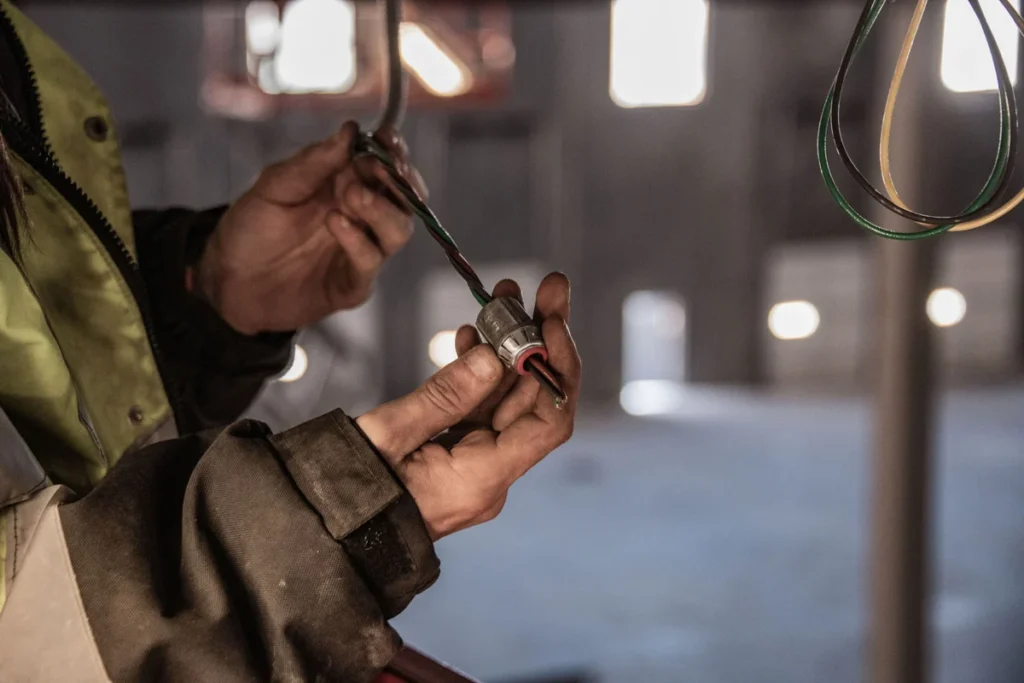
In the high-stakes world of electrical contracting, where project timelines are increasingly compressed and labor shortages remain a persistent hurdle, the efficiency of every small component is magnified. For decades, the electrical trade has operated under a binary choice: the absolute reliability of the traditional locknut connector or the perceived convenience—and historical skepticism—surrounding snap-in fittings.
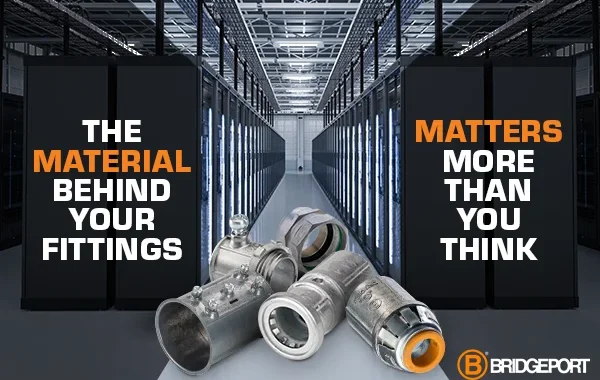
Bridgeport Fittings, a name synonymous with industrial-grade reliability for nearly a century, is actively challenging this industry narrative. By engineering its E-Z Lock® line, the company is bridging the gap between legacy security and modern speed, effectively rehabilitating the reputation of the snap-in connector.
The Traditional Dilemma: Locknuts vs. Innovation
The Reign of the Locknut
For generations, the locknut connector has been the "gold standard" in electrical installations. Its design is deceptively simple: a threaded body paired with a physical nut that is tightened against the interior of an electrical box. This creates a mechanical bond that is universally recognized by inspectors and seasoned veterans alike as secure, grounded, and permanent.
However, the "king of connectors" comes with a significant tax: time. In large-scale commercial or industrial projects involving hundreds, if not thousands, of cable runs, the cumulative time spent hand-threading locknuts is substantial. Furthermore, the human element introduces risk; if a locknut is not tightened with the proper torque, the bond may fail to meet rigorous National Electrical Code (NEC) standards, potentially leading to ground-fault issues or mechanical failure.
The Snap-In Stigma
Conversely, snap-in connectors were historically marketed as "budget-friendly" alternatives. In the early days of their introduction to the market, many of these products suffered from flimsy construction, unreliable spring-steel clips, and a tendency to loosen over time. This led to a pervasive skepticism among master electricians who viewed snap-in technology as an inferior "shortcut" that could jeopardize the integrity of an electrical system.
Bridgeport Fittings recognized that the problem wasn’t the concept of the snap-in connector, but the engineering behind it. By applying their 95-year history of metallurgical expertise to the challenge, they developed E-Z Lock®—a product designed not just to snap into place, but to hold with the tenacity of a traditional threaded fitting.
Chronology: A Century of Evolution
The evolution of electrical fittings is a reflection of the changing needs of the construction industry.
- The Early Era (1920s–1950s): The electrical infrastructure of the mid-20th century relied heavily on rigid conduits and threaded fittings. Reliability was the primary goal, and labor costs were a smaller fraction of the total project budget compared to the cost of raw materials.
- The Mid-Century Shift (1960s–1990s): As the construction industry grew more complex, the need for faster installation methods emerged. Bridgeport began refining its catalog to include more specialized fittings, maintaining its reputation for heavy-duty cast and stamped components.
- The Modern Acceleration (2000s–Present): The rise of complex commercial electrical systems—incorporating sophisticated data cabling, fire alarms, and LED lighting—demanded a higher density of connections. Simultaneously, the labor market began to tighten, making installation speed a critical differentiator.
It was during this period that Bridgeport pivoted its research and development toward high-performance snap-in technology. The E-Z Lock® platform was engineered to satisfy the dual requirements of modern electrical engineering: the speed required for profitable project delivery and the electrical bond integrity required for safety and compliance.
Supporting Data: Why Engineering Matters
The performance of an electrical connector is measured by its ability to maintain a consistent ground path and mechanical stability under stress. Unlike early iterations of snap-in fittings that relied on thin-gauge materials, the E-Z Lock® system utilizes specialized alloys and precise manufacturing tolerances.
Mechanical Bond Integrity
The core of the E-Z Lock® system is its tensioning mechanism. In testing, these connectors provide a superior bond to the knockout of an electrical box. By utilizing a high-tension internal spring design, the connector maintains constant pressure against the interior and exterior of the box, ensuring that the electrical continuity remains intact even when subjected to vibration or cable pull-force.
Versatility in Application
Data provided by Bridgeport indicates that the E-Z Lock® ecosystem is designed for a broad spectrum of cable types, including:
- MC-PCS Cable: Specifically designed to accommodate the growing demand for lighting control systems.
- Flexible Metal Conduit (FMC): Providing ease of routing in tight spaces.
- Armored Cable (AC/MCI-A): Ensuring consistent bonding in high-traffic commercial environments.
The system is engineered to fit standard ½” and ¾” knockouts, which represent the vast majority of electrical box configurations in North American construction. This universal compatibility simplifies inventory management for contractors, who no longer need to stock multiple variations of fittings for a single job site.
Official Responses and Industry Impact
Bridgeport’s leadership maintains a firm stance on the role of their products in the modern workplace. "At Bridgeport, we build every fitting to exceed expectations," a company spokesperson stated. The philosophy is simple: an installer should never have to choose between speed and safety.
The Human Factor
The "ease-of-use" argument for E-Z Lock® is not just a marketing slogan; it is an ergonomic solution. Hand-winding hundreds of locknuts daily leads to fatigue, which in turn leads to a decrease in accuracy. By replacing a multi-turn threading process with a single, intuitive "snap" action, Bridgeport is directly addressing installer fatigue.
Furthermore, the "remove-and-reuse" capability of the E-Z Lock® series allows for corrections during the rough-in phase without damaging the connector or the knockout. In a traditional locknut scenario, removing a tightened nut often involves pliers or specialized tools that can scratch the finish of the box, potentially exposing the metal to corrosion. The E-Z Lock® design minimizes this risk, preserving the integrity of the electrical enclosure.
Implications for the Future of Electrical Contracting
The shift toward high-performance snap-in technology has profound implications for the construction industry at large.
Economic Efficiency
For a general contractor or electrical subcontractor, the largest variable cost is labor. When a project is calculated in "man-hours," any technology that shaves seconds off a repetitive task translates to thousands of dollars in savings over the course of a project. As E-Z Lock® continues to gain market share, the industry is seeing a shift in how electrical systems are estimated and bid.
Standardization of Quality
By providing a product that is "idiot-proof" (or more accurately, "error-proof"), Bridgeport is effectively raising the floor for industry standards. When even less-experienced apprentices can achieve a code-compliant, high-performance connection every single time, the overall safety profile of a building project improves. This reduces the number of failed inspections and costly rework scenarios that plague many large-scale commercial developments.
The Path Ahead
As building codes become more stringent and the complexity of electrical systems continues to increase, the tools used by electricians must evolve in tandem. Bridgeport’s commitment to innovation suggests that the next generation of fittings will likely focus on even greater integration—potentially including smart-fittings that can communicate connectivity status.
However, for now, the E-Z Lock® series stands as a testament to the idea that classic problems—like the inefficiency of the locknut—do not require complex, over-engineered solutions. They require thoughtful, reliable, and high-performance engineering that respects the craft of the electrician while acknowledging the realities of the modern job site.
Conclusion
The narrative that snap-in connectors are inherently "cheap" is a relic of the past, effectively dismantled by the engineering rigor behind Bridgeport’s E-Z Lock® line. By focusing on mechanical bond integrity, ease of installation, and a broad range of cable compatibility, Bridgeport has successfully rehabilitated the snap-in category.
For the modern contractor, the choice is no longer between quality and speed. With the right technology, they can achieve both. As the industry continues to push toward higher efficiency and tighter project deadlines, the role of reliable, high-performance components like E-Z Lock® will only become more vital. Bridgeport Fittings has not just created a product; they have provided a solution that allows the electrical trade to move faster, work smarter, and build safer.
For those looking to optimize their workflow, the transition to modern snap-in technology is no longer a risk—it is a competitive necessity. Whether you are working on a small-scale residential renovation or a massive commercial skyscraper, the engineering behind E-Z Lock® ensures that your connections remain as solid as your reputation.