







The city of Xi’an, the ancient capital of China and the eastern terminus of the Silk Road, has long been a sanctuary for historians and a pilgrimage site for millions of travelers. As the home of the world-renowned Terracotta Army and the seat of power for 13 different dynasties spanning over a millennium, Xi’an carries a historical weight that few cities on earth can match. However, in the 21st century, the challenge for this cultural titan has been to translate its static stone and clay heritage into the dynamic, digital language of the modern traveler.
The answer has arrived in the form of BoGuan, the world’s first commercial multimodal large language model (LLM) dedicated specifically to cultural tourism. Developed through a strategic partnership between Huawei and the Shaanxi Culture Industry Investment Group (SCG), BoGuan is not merely a chatbot; it is a sophisticated AI ecosystem designed to eliminate "hallucinations" in historical data and provide a seamless, high-tech interface for the 330 million visitors who descend upon Shaanxi province annually.
Main Facts: A New Paradigm for Vertical AI
The BoGuan LLM represents a significant departure from general-purpose AI models like ChatGPT or Claude. While general models are adept at creative writing or coding, they often lack the specialized, verified knowledge required for museology, archaeology, and specific historical chronologies. For a city like Xi’an, where historical accuracy is the foundation of its "brand," the stakes of AI-generated misinformation are high.
Key Components of the BoGuan Initiative:
- Multimodal Integration: BoGuan processes and generates text, images, audio, and video, allowing for a diverse range of applications from AI-generated short dramas to real-time multilingual tour guides.
- Data Sovereignty and Accuracy: The model is built upon a massive 1.2 Petabyte dataset, meticulously curated over two years to ensure that every "fact" delivered to a tourist is historically verifiable.
- Infrastructure Synergy: The project is supported by a "trinity" of technologies: Huawei’s PanGu model architecture, high-performance computing (SuperPoD), and China Telecom Shaanxi’s 5G-Advanced (5.5G) network.
- Economic Impact: Since its pilot launch in September 2023, the platform has reached over four million users and contributed to a 30–40% revenue increase for SCG.
Chronology: From Raw Data to Digital Renaissance
The journey toward BoGuan began long before the current "AI boom" reached its fever pitch. The development followed a rigorous timeline of data engineering and infrastructure deployment.
2021–2023: The Foundation of Data
For two years, Huawei and SCG worked in the shadows to compile what is now one of the world’s most comprehensive cultural datasets. This involved digitizing archives, scanning artifacts, and transcribing historical texts. The result was a 1.2 Petabyte repository consisting of:
- 31 million high-resolution images.
- 4.4 million minutes of historical and cultural video footage.
- 960 million pieces of structured text.
September 2023: The Pilot Launch
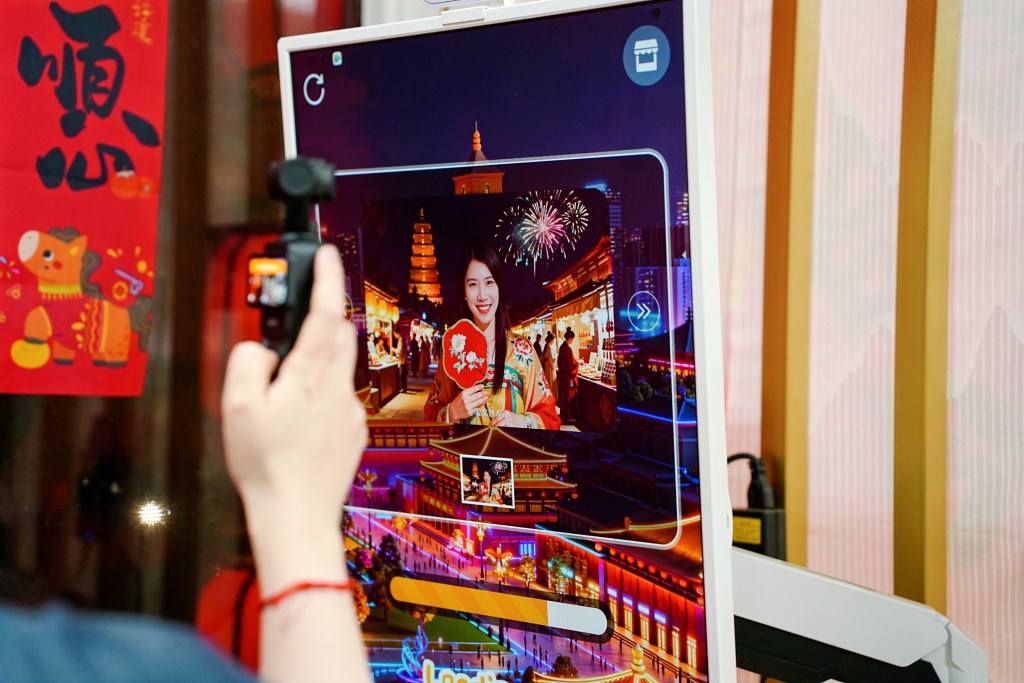
The BoGuan model was officially introduced to the public in a pilot phase. It was integrated into the GO-SHAANXI app via "Xiaoqi," an AI travel companion. Simultaneously, the Zhiying Camera mini-program was launched, allowing tourists to use generative AI to "place" themselves in historically accurate Tang Dynasty settings in real-time.
Early 2024: Scaling and Monetization
By the first half of 2024, the results were quantifiable. SCG reported that the model was not only improving the visitor experience but also creating new revenue streams through the sale of digital collectibles and AI-driven creative products, which exceeded 2 million Chinese yuan ($300,000) in a matter of months.
Future Outlook: National Expansion
Following the success in Shaanxi, SCG and Huawei have confirmed that they are already collaborating with tourism authorities in the Xinjiang and Guizhou provinces. The goal is to create a standardized "BoGuan framework" that can be exported nationwide, providing a template for how Chinese provinces can monetize their unique cultural identities through AI.
Supporting Data: The Technical Architecture of BoGuan
The success of an LLM in a high-traffic environment like Xi’an’s Grand Tang Mall is as much a feat of civil and electrical engineering as it is of software development.
The Computing Powerhouse
To handle thousands of concurrent AI queries, SCG utilizes an on-premise 48P (Petaflops) computing platform. This platform is built on Huawei’s SuperPoD architecture, which utilizes UnifiedBus technology. This protocol allows multiple physical servers to act as a single logical entity, dramatically reducing latency during complex reasoning tasks.
The 5G-Advanced Network
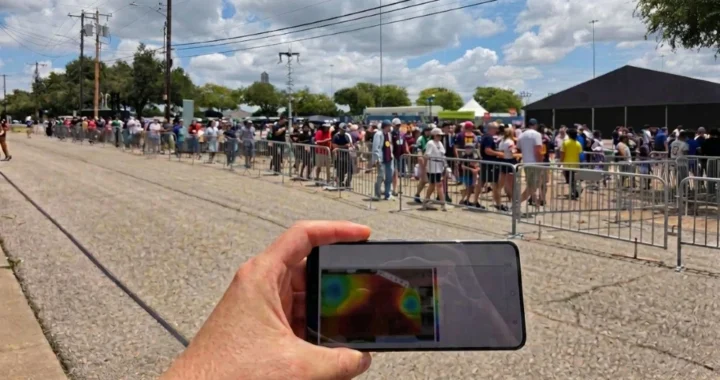
In the Grand Tang Mall, a high-density tourist area, the network requirements are staggering. China Telecom Shaanxi deployed 46 base stations in a compact area—a density unheard of in standard urban planning.
- Downlink Speeds: 3.5 Gbps
- Uplink Speeds: 600 Mbps
- Concurrency: The network is designed to support 23,000 concurrent users during peak holiday surges, such as the Lunar New Year.
Data Engineering
Huawei Cloud Data Engineering was employed to process and label the raw resources. The platform adheres to three major standards: collection, management, and circulation. This ensures that the data is not just a "blob" of information but a verifiable "asset" with clear ownership, which is crucial for the commercialization of cultural heritage.
Official Responses: Insights from the Architects
The leadership behind the project emphasizes that BoGuan is a bridge between the "niche" requirements of historians and the "mass" requirements of the tourism market.
Edric Chu, General Manager of Huawei’s Shaanxi Rep Office, highlighted the limitations of existing AI:
“General large models lack specialized knowledge in museology, archaeology, and history, making it difficult to meet the nuanced demands of niche scenarios. We completed 12 high-quality cultural tourism datasets… transforming raw data resources into data assets with verifiable ownership.”
Jin Yan, Chairman of the Digital and Intelligent Culture Technology Group at SCG, focused on the tangible business benefits:
“With the same team size, thanks to these technologies… from last year to this June our revenue has increased by roughly 30–40%. The sales of related digital collectibles and creative products have exceeded 2 million Chinese yuan.”
Wang Hao, Director of Mobile Communications Network Business at China Telecom Shaanxi, discussed the "unseen" infrastructure:
“The Grand Tang Mall is a textbook example of a high-traffic, high-concurrency scenario. We have deployed 46 base stations… The embedded AI intelligently and dynamically allocates network resources to match real-time demands.”
Implications: The Future of Vertical AI and the Talent Gap
The success of BoGuan carries deep implications for the global tourism industry and the telecommunications sector. It marks the transition from "General AI" to "Vertical AI"—models built for specific industries where accuracy is non-negotiable.
1. The End of the "Dumb Pipe" Era for Telcos
For years, telecom operators have struggled to move beyond being "utility providers" (the so-called "dumb pipes"). The BoGuan project proves that by combining 5G-Advanced connectivity with cloud computing and industry-specific AI, telcos can become "platform providers." They are no longer just selling data; they are selling "intelligence-as-a-service."
2. The Critical Talent Bottleneck
Despite the technological triumphs, a significant human hurdle remains. Edric Chu noted a massive "interdisciplinary talent gap." To run an AI-powered museum, one needs workers who understand both the nuances of Ming Dynasty pottery and the complexities of prompt engineering.
- Shaanxi’s Gap: 30,000 to 50,000 professionals.
- National Gap: Predicted to exceed 1 million by 2030.
In response, Huawei and SCG have established a talent training base to align vocational certificates with AI certifications, aiming to train 3,000 people by next year.
3. Cultural Preservation and "Digital Immortality"
Beyond commerce, BoGuan offers a path toward the digital preservation of cultural heritage. By training AI on the minutiae of ancient architecture and language, these cultures are protected against the physical decay of time. Tourists are no longer just looking at ruins; they are interacting with a living, digital reconstruction of history.
4. Economic Diversification
The 30–40% revenue boost reported by SCG suggests that AI is a powerful tool for economic resilience. By diversifying revenue through AI-generated short-form videos, digital collectibles (NFTs), and personalized "smart" tours, cultural sites can reduce their dependence on physical ticket sales alone.
Conclusion
The BoGuan LLM is more than a technological novelty; it is a blueprint for the future of the "Intelligent Era." In the streets of Xi’an, where the ghosts of emperors and poets once walked, AI is now the medium through which their stories are told to a new generation. By solving the twin problems of historical accuracy and network congestion, Huawei, SCG, and China Telecom have demonstrated that when cutting-edge connectivity meets deep cultural data, the result is a sustainable, profitable, and profoundly enriching experience for the global traveler.
As the model expands to Xinjiang and Guizhou, the world will be watching to see if this "Xi’an Model" can become the global standard for how humanity preserves its past while embracing its digital future. In the words of Edric Chu, AI in Shaanxi has become "a key enabler that can activate thousands of years of cultural heritage… and inject new momentum into the industry."