






As North America undergoes a seismic shift in its electrical landscape—fueled by the rapid proliferation of hyperscale data centers, the aggressive modernization of aging utility grids, and a national pivot toward renewable energy—the physical components that hold this infrastructure together have moved from the background to the forefront.
In an era defined by hyper-accelerated project timelines and a chronic shortage of skilled labor, the humble compression connector has become a linchpin of operational success. However, for distributors, contractors, and project managers, the challenge is no longer just selecting the right component; it is ensuring that the product is physically present when the cable is ready for termination.
Polaris Compression, a brand synonymous with reliability for over four decades, is addressing this challenge head-on. By significantly expanding its manufacturing capacity, the company is signaling a shift in industry priorities: in today’s volatile market, availability is not just a logistical detail—it is the bedrock of project profitability.
The Electrical Infrastructure Boom: A Contextual Analysis
The surge in demand for electrical distribution products is not a localized trend; it is a systemic expansion. Across the United States and Canada, three primary drivers are placing unprecedented pressure on supply chains:
- The Digital Infrastructure Explosion: Hyperscale data centers, driven by the global demand for cloud computing and artificial intelligence, are consuming massive amounts of power. These facilities require heavy-duty, high-integrity connections that can withstand 24/7 operation under heavy loads.
- Grid Modernization: Utility providers are engaged in multi-billion-dollar initiatives to harden the grid against extreme weather and to integrate distributed energy resources (DERs).
- The Energy Transition: Renewable energy projects, including utility-scale solar and wind farms, require miles of high-voltage cabling and thousands of reliable termination points.
These applications are unforgiving. They demand code-compliant, high-performance electrical connections that must perform in environments ranging from sub-zero field conditions to high-heat industrial manufacturing plants. As project scales increase, the margin for error—and the margin for delay—has virtually evaporated.
The High Cost of "Out-of-Stock"
For the electrical professional, a missing box of compression connectors is rarely just a minor inconvenience. In modern construction, it is a catalyst for a cascading failure. When critical components are unavailable, the consequences are severe:
- Labor Inefficiency: Skilled electricians are the most expensive resource on a job site. When crews are forced to stand down due to a lack of parts, the cost-per-hour burn rate continues, but productivity drops to zero.
- Project Scheduling Disruptions: Construction is a game of dependencies. A delay in the installation of switchgear or transformers can push back commissioning dates, triggering penalty clauses in contracts and impacting the bottom line for developers and general contractors alike.
- Safety and Inspection Risks: In desperation, some might be tempted to use non-compliant or mismatched components to keep a project moving. This introduces long-term safety risks and potential failures during municipal or utility inspections, leading to expensive rework.
For distributors, the situation is equally high-stakes. Inventory availability is the primary currency of trust. When a distributor can provide the right product at the right time, they become an indispensable partner. Conversely, recurring stockouts force contractors to switch suppliers, eroding long-term business relationships.
Polaris’ Strategic Response: Scaling for the Future
Recognizing that market conditions had shifted, Polaris Compression made a strategic, long-term commitment to infrastructure investment. Rather than relying on sporadic, reactive manufacturing runs, the company has undertaken a comprehensive expansion of its compression connector production capabilities.
This expansion is a multi-faceted initiative designed to stabilize the supply chain for electrical professionals across North America. By increasing manufacturing throughput, Polaris is effectively de-risking the project lifecycle.
Key Pillars of the Manufacturing Expansion:
- Inventory Resilience: By bolstering production, Polaris ensures that standard and high-demand compression connectors remain available in distribution centers, mitigating the risk of supply shocks.
- Scalability for Mega-Projects: Larger manufacturing capacity allows Polaris to support massive infrastructure projects that require consistent, large-volume shipments over extended durations.
- Maintaining Quality Standards: Crucially, this expansion is built upon the same engineering rigor that has defined the Polaris brand for 40 years. Increased volume has not compromised the metallurgical integrity or precision engineering of the connectors.
Technical Superiority: Installation Confidence
Availability is the prerequisite, but performance is the deliverable. A connector that is available but fails under load is worse than a delayed shipment. Polaris Compression connectors are engineered to address the specific pain points of modern electricians.
Features That Drive Efficiency
Modern electrical work requires speed without sacrificing safety. Polaris connectors are designed with several "installer-first" features:
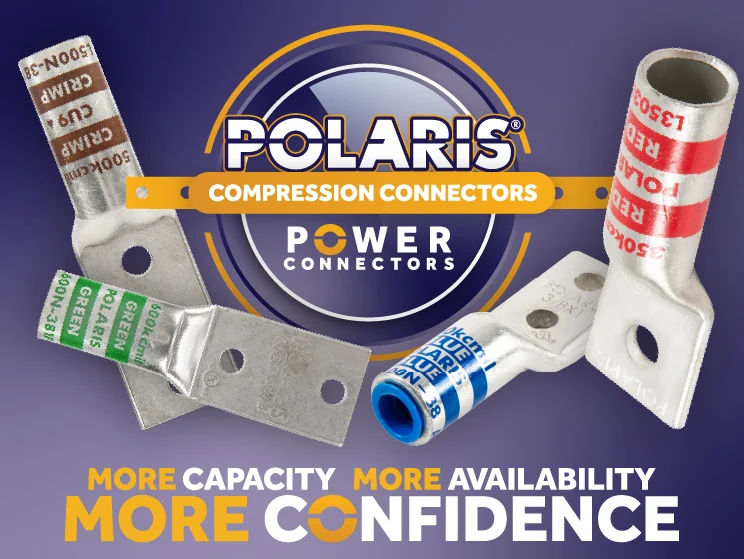
- Clear Color Coding: Utilizing industry-standard color schemes allows for quick identification, reducing the likelihood of installation errors during high-pressure jobs.
- Permanent Die Index Markings: These markings allow inspectors to verify that the correct crimp was performed using the appropriate tool, streamlining the inspection process and reducing the risk of "red-tagging" work.
- Chamfered Barrel Ends: These design elements allow for easier cable insertion, even when working in tight, cramped quarters within a panelboard or transformer box.
The Tooling Compatibility Advantage
One of the most significant barriers to productivity in the field is the requirement for proprietary tooling. Many connector manufacturers require the use of their own specific crimping tools, forcing contractors to invest in new equipment or risk violating UL compliance.
Polaris has taken a different, more pragmatic approach. Its compression connectors are UL Listed with over 35 major crimp tool models. This includes broad compatibility with industry-standard platforms, such as Milwaukee® Tool.
This "tool-agnostic" approach offers several tangible benefits:
- Capital Preservation: Contractors do not need to buy new, redundant tools for every project. They can continue to utilize the inventory they already own and trust.
- Training Efficiency: Because crews are already familiar with their existing tools, the learning curve for installing Polaris connectors is effectively zero, leading to faster, more consistent installations.
- Code Compliance: Despite the flexibility in tool choice, the end result is a UL-listed, inspection-ready connection that meets all relevant NEC (National Electrical Code) standards.
Implications Across the Supply Chain
The ripple effects of this manufacturing expansion are felt by every stakeholder in the electrical ecosystem.
For the Distributor:
Reliable inventory is the foundation of a robust service model. With expanded capacity, distributors can maintain deeper stock levels without the anxiety of long lead times. This enables them to pivot from being mere "order takers" to "supply chain partners," providing the reliability contractors need for both planned outages and emergency repairs.
For the Contractor:
The primary benefit is the reclamation of time. With the assurance that components will be available, contractors can commit to more aggressive schedules. They can optimize their crews’ time, knowing that the "waiting game" is no longer a factor. Furthermore, the broad tooling compatibility reduces the administrative and logistical burden of managing specialized equipment.
For the Engineer and Specifier:
For those designing the next generation of power infrastructure, the choice of components is a reflection of their own reputation. Specifying Polaris ensures that the infrastructure is built with components that have a proven history of performance and—critically—a supply chain that is built for longevity.
A Commitment to the Long Term
As we look toward the future of North American infrastructure, the demand for electrical capacity will only increase. Whether it is the electrification of transportation, the continued expansion of renewable energy, or the constant need for resilient commercial power, the demand for high-quality compression connectors is set to climb.
Polaris Compression’s commitment to expanding its manufacturing capacity is more than just a reaction to current market trends; it is a proactive stance. By investing in its own infrastructure, Polaris is demonstrating that it understands the core truth of the modern construction market: Quality is only as good as the availability of the product.
In an industry where every connection is critical, confidence begins with the knowledge that the materials will be there. By focusing on both product excellence and supply chain reliability, Polaris is ensuring that when the electrical industry builds for tomorrow, it does so with the confidence that today’s work will hold up for decades to come.
For those involved in the critical business of powering the future, the message is clear: the gap between design and installation is closing. With expanded capacity and a renewed focus on installer needs, the path to project success is becoming more reliable, more efficient, and more certain than ever before.