





Somewhere right now, in offices across the country, a contractor’s bidding window is quietly closing. An invitation to bid (ITB) sits stale in an estimator’s overflowing inbox, destined to expire unanswered. Elsewhere, a firm with a healthy backlog and a skilled crew is forced to decline a lucrative, qualified opportunity simply because no one on the team has the bandwidth to price it.
This is not a failure of field execution or a lack of talent on the job site. It is a failure of preconstruction capacity—a silent, pervasive drain on the construction industry’s potential. While the industry fixates on the "labor shortage" in the field, it is overlooking the fact that projects are dying on the vine long before a single shovel hits the dirt.
The Anatomy of Lost Output
According to the 2026 Engineering & Construction Industry Outlook by Deloitte, the construction sector faces a staggering $124 billion in potential lost output, driven largely by a workforce gap requiring nearly 500,000 additional workers. These figures are sobering, but they are also incomplete.
The traditional view of construction output assumes that constraints begin when a project is awarded and crews are mobilized. However, this perspective ignores the "upstream" bottleneck. Construction output does not begin when the crane arrives; it begins the moment an estimator translates complex drawings into quantities, converts those quantities into costs, and submits a competitive bid. If the estimating department lacks the capacity to process an opportunity, the project effectively ceases to exist for that firm.
In this light, preconstruction is not merely an administrative function—it is the strategic gatekeeper of revenue. When estimating teams hit their ceiling, the company’s growth is not just stalled; it is artificially capped.
A Chronology of the Estimating Bottleneck
For decades, the estimating workflow has remained stubbornly resistant to change. The process has historically followed a rigid, linear path:
- The Invitation: An ITB arrives, requiring an immediate "go/no-go" decision.
- The Quantification: Estimators manually comb through hundreds of pages of blueprints to extract materials and labor requirements.
- The Pricing: Costs are assigned based on fluctuating material prices and historical productivity data.
- The Submission: The bid is finalized and submitted.
This process is intensely manual and intellectually demanding. For years, the only way to scale this process was to scale the team. If a firm wanted to bid 20% more projects, they had to hire 20% more estimators. However, as the talent pipeline shrinks and the cost of overhead rises, this model has become unsustainable.
When a key estimator leaves a firm, the impact is immediate and visceral. One drywall and demolition contractor reported a precipitous drop in bid volume following the departure of a single staff member, despite the fact that their field operations remained perfectly stable. The bottleneck was never the field labor—it was the upstream capacity to process new business.
Supporting Data: The Cost of Manual Limitations
The math of the estimating bottleneck is unforgiving. Consider a masonry contractor in Wisconsin who, despite robust market demand, consistently capped their output at 25 takeoffs per month. For this firm, 25 was not just an operational metric; it was a revenue ceiling. Any qualified opportunity that arrived as the 26th, 27th, or 28th bid request was automatically discarded.
This represents a "shadow loss" that rarely appears on a balance sheet. Unlike a failed project or a safety incident, the cost of an unpursued bid is invisible. You cannot measure the profit of a job you never bid, but that doesn’t mean the loss isn’t real.
The industry has become adept at measuring field productivity—labor hours per square foot, equipment utilization, and schedule variance. Yet, there is a profound lack of parity in how we measure preconstruction. Few contractors ask the most critical question: How many qualified opportunities did we lose simply because we didn’t have the capacity to price them?
Artificial Intelligence: Shifting the Paradigm
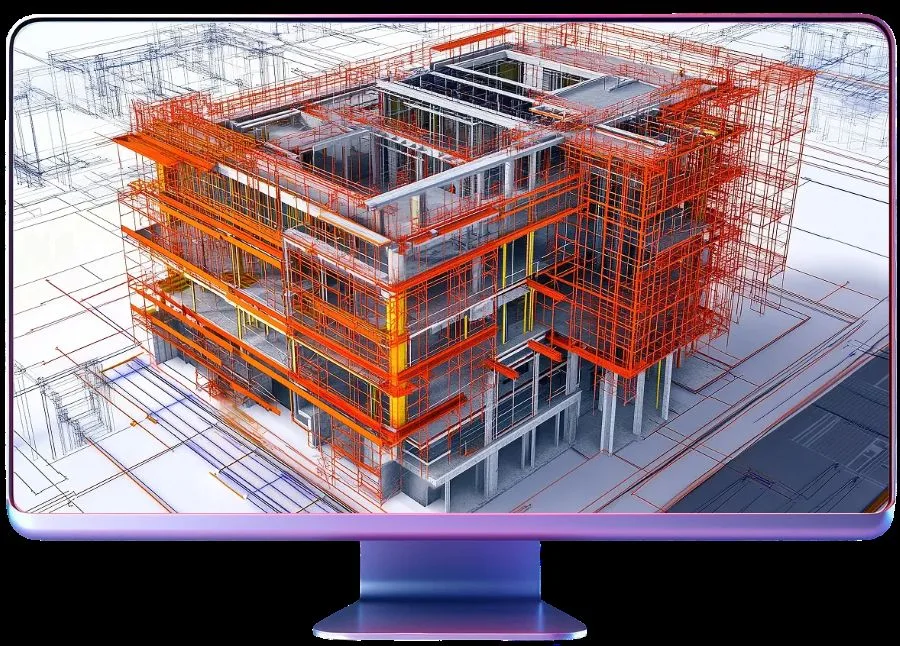
The introduction of AI into preconstruction workflows is fundamentally altering the equation. For the first time, firms are moving from asking, "How many estimators can we afford to hire?" to "How much capacity can we create?"
Modern preconstruction platforms are now capable of automating the repetitive, low-value tasks that consume up to 70% of an estimator’s day:
- Automated Takeoffs: AI algorithms can scan drawings to extract quantities with high precision, removing the need for manual counting.
- Document Organization: Intelligent sorting allows estimators to find critical project specs in seconds rather than hours.
- Review Cycles: AI can flag discrepancies in drawings or missing information in an ITB, allowing human experts to focus their judgment on the strategy of the bid rather than the tedium of data entry.
By offloading these repetitive tasks, firms have seen dramatic results. The same drywall and demolition contractor that previously struggled with staff turnover eventually doubled their bid volume after integrating AI—not by hiring a fleet of new employees, but by liberating their existing team to focus on high-value bidding strategy.
Official Perspectives and Industry Implications
Industry experts and analysts are increasingly acknowledging that the "labor shortage" narrative needs a nuance adjustment. Shiva Dhawan, CEO of Attentive.ai, notes that the industry’s next great competitive advantage will not come from more shovels, but from the digital augmentation of the existing workforce.
"The industry’s capacity to build is strictly limited by its capacity to bid," says Dhawan. "If we continue to rely on manual processes for preconstruction, we will continue to hit a revenue ceiling regardless of how many field workers we manage to recruit."
The implications for the industry are twofold:
- Competitive Advantage: Firms that adopt AI-driven preconstruction workflows will effectively "out-bid" their competition by being the first to respond to every qualified opportunity, regardless of market volume.
- Strategic Agility: In volatile markets, the ability to rapidly shift focus to different project types—based on a broader pool of bids—provides a critical hedge against downturns.
Measuring the "Work Not Pursued"
To thrive in this new environment, leadership teams must redefine their KPIs. If productivity begins in preconstruction, then efficiency must be measured from the moment an ITB is received.
Contractors should begin by tracking three core metrics:
- The "Unanswered" Ratio: What percentage of qualified ITBs go ignored due to lack of time?
- The "Repetitive Work" Load: How many hours per week are senior estimators spending on tasks that could be automated (e.g., manual quantification)?
- The "Lost Revenue" Estimate: Based on historical win rates, what is the estimated dollar value of the bids that were never submitted due to capacity constraints?
Once these metrics are quantified, the case for technology becomes an objective business decision rather than a speculative investment. By shifting the burden of repetitive tasks to AI, firms can protect the human element—the intuition, the relationship-building, and the strategic thinking—that remains the lifeblood of construction.
Conclusion: The Next Frontier of Productivity
The Deloitte projection of $124 billion in lost output is both a warning and an invitation. It warns of an industry struggling to find its footing in a tight labor market, but it also signals a massive, untapped opportunity for firms that learn to optimize their preconstruction workflows.
We are entering an era where the competitive edge will not be found in the field alone, but in the office, where estimators act as the vanguard of growth. By expanding the capacity of every estimator on the team, contractors can break through the revenue ceilings that have held them back for decades.
Long before the first crew mobilizes on-site, the fate of a project is sealed in the estimator’s inbox. The companies that succeed in the next decade will be those that recognize this reality and act to ensure that no qualified opportunity ever goes to waste. The labor shortage may be a challenge, but the capacity to bid is a choice. It is time for the industry to choose growth.