





The intersection of traditional agriculture and cutting-edge telecommunications has reached a significant milestone in the United Kingdom. As the agricultural sector faces the dual pressures of climate change and economic volatility, West Sussex County Council has emerged as a leader in "smart farming" through its ambitious Growing Sussex programme. By integrating private 5G networks with advanced Internet of Things (IoT) sensors, the initiative is providing farmers with unprecedented, near real-time insights into the micro-climates of livestock buildings—a move that promises to redefine animal welfare standards and operational resilience.
Main Facts: The Convergence of 5G and Agritech
At the heart of this development is a tripartite partnership between West Sussex County Council, global communications infrastructure provider Boldyn Networks, and the agritech innovator Pneumonitor. Together, they have successfully connected Pneumonitor’s specialized environmental monitoring devices to a private 5G network, specifically utilizing 5G Reduced Capability (RedCap) technology.
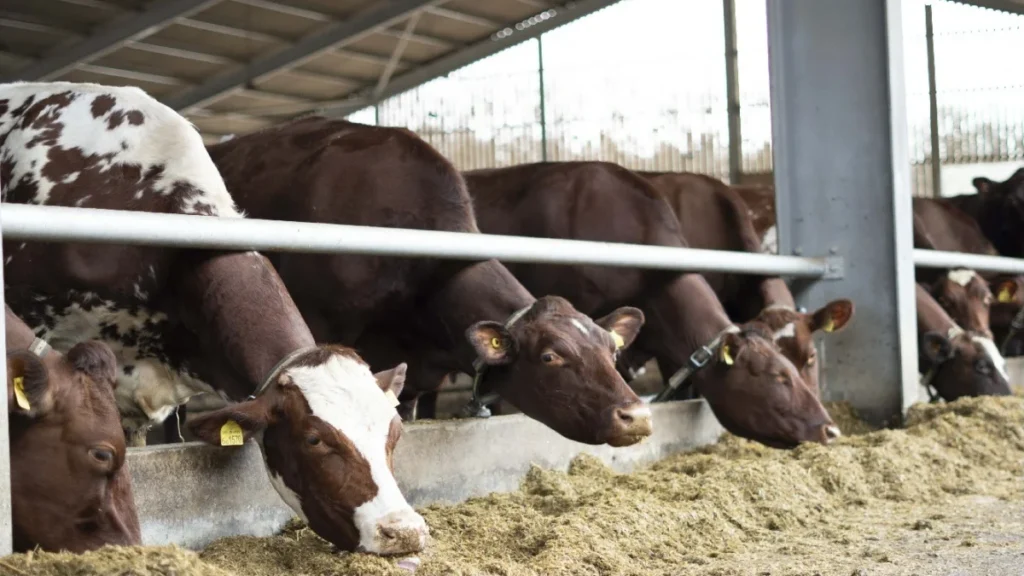
Unlike traditional environmental sensors, which are typically mounted on the walls of agricultural buildings, the Pneumonitor system is designed to operate within the pens themselves—the exact location where livestock spend their time. This distinction is critical; temperatures and air quality at the perimeter of a building often vary significantly from the conditions at the center of a crowded pen. By capturing data from the animals’ immediate environment, the system allows farmers to monitor:
- Heat Load: Identifying when temperatures reach thresholds that cause physiological stress.
- Air Quality: Detecting stagnant air or high humidity that facilitates the spread of respiratory diseases.
- Animal Behavior Patterns: Using data to infer health status before physical symptoms become visible to the naked eye.
The deployment is a cornerstone of the Growing Sussex programme, a public sector-led initiative designed to showcase how 5G, AI, and IoT can be applied practically to food and drink production.
Chronology: From Concept to a Live 5G Ecosystem
The journey toward a fully connected agricultural landscape in West Sussex has been a multi-year endeavor characterized by strategic planning and rapid technological integration.
Early 2024: The Strategic Foundation
West Sussex County Council officially established the Growing Sussex programme. The council recognized that while the region’s agricultural sector was robust, it was vulnerable to the "digital divide"—the gap in high-speed connectivity that often plagues rural areas. In early 2024, the council announced a landmark partnership with Boldyn Networks to deploy four private 5G networks across key agricultural sites.
Mid-2024: Technical Integration and Testing
Throughout the middle of the year, engineers from Boldyn Networks and Pneumonitor worked to integrate 5G RedCap technology into the monitoring hardware. This phase was crucial for testing the durability of sensors in the harsh environments of livestock pens, where dust, moisture, and physical interference from animals are constant challenges.
Late 2024 – 2025: Deployment and Scaling
The rollout gained momentum as the private 5G infrastructure was commissioned. By December 2025, the Growing Sussex programme reached its major milestone: all four partner sites were live and operational. The integration of Pneumonitor’s devices served as the final piece of the puzzle, moving the project from infrastructure installation to actionable data collection.
Present Day: Operational Maturity
The system is now providing a continuous stream of data to farmers, marking the transition from a pilot project to a permanent digital foundation for the county’s rural economy.
Supporting Data: Addressing the Crisis of Heat and Disease
The necessity for such technology is underscored by the changing climatic conditions in the UK and Europe. The agricultural sector is currently grappling with several data-backed challenges:
1. The Rising Threat of Heat Stress
Recent summers have seen record-breaking heatwaves across the UK. For livestock, particularly pigs and cattle, heat stress is not merely a matter of discomfort; it is a significant economic drain. Studies show that heat stress can lead to a 10-25% reduction in feed intake, directly impacting growth rates and milk yields. By the time a farmer notices an animal is lethargic, the "heat load" has often already caused physiological damage. The 5G-enabled sensors provide the "near real-time" alerts necessary to trigger cooling systems or ventilation adjustments before these thresholds are crossed.
2. Respiratory Health and Economic Loss
Respiratory diseases remain one of the most significant causes of mortality and reduced productivity in UK livestock. Poor air circulation and high humidity in buildings create breeding grounds for pathogens. Traditional wall-mounted sensors often fail to detect "dead zones" of air in the center of a building. The Pneumonitor system’s in-pen placement provides a more accurate representation of the air the animals are actually breathing, potentially reducing veterinary costs and antibiotic usage through early environmental intervention.
3. The Efficiency of 5G RedCap
A pivotal technical detail in this deployment is the use of 5G RedCap (Reduced Capability). Standard 5G is designed for massive data throughput (like 4K video streaming), which is power-intensive and expensive for small sensors. RedCap offers a "middle ground." It provides the low latency and reliability of 5G but with:
- Lower Power Consumption: Extending battery life for sensors to several years.
- Reduced Hardware Complexity: Lowering the cost per unit, making it feasible to deploy hundreds of sensors across a large farm.
- Enhanced Coverage: Better penetration through the metal and concrete structures common in agricultural buildings.
Official Responses: A Vision for Rural Innovation
The leaders behind the project emphasize that this is about more than just technology; it is about the long-term viability of the rural economy.
Cllr Yvonne Gravely, Cabinet Member for Economy and Skills at West Sussex County Council, highlighted the local impact:
"Agriculture plays a vital role in West Sussex, but periods of extreme weather are creating new challenges for the sector. Through Growing Sussex, we’re helping growers and food producers use technology to better understand changing conditions, protect animal welfare and build resilience for the future. That’s good for local businesses, good for our rural economy and good for West Sussex."
Gearoid Collins, Commercial Director at Boldyn Networks, focused on the scalability of the infrastructure:
"As the connectivity partner for Growing Sussex, we’re committed to helping shape a new era for agriculture and deploy technologies that bring a welcome boost to the West Sussex economy. Connecting Pneumonitor through RedCap shows how private 5G can support practical agritech and provide the digital foundation for many more connected applications across the farming sector."
Isaac Orr, CEO of Pneumonitor, provided the perspective of the innovator on the ground:
"With heatwaves becoming more frequent, conditions inside livestock buildings can deteriorate faster than they can be spotted by eye. Pneumonitor measures conditions in the pen itself… This project showed when heat load was building and what could be done before yields were affected. The connectivity behind the deployment now allows us to bring this monitoring to far more sites than before."
Implications: The Future of the "Connected Farm"
The successful integration of 5G RedCap in West Sussex has implications that reach far beyond the borders of the county. It serves as a blueprint for the future of British agriculture in several ways:
1. Data-Driven Welfare Standards
As consumer demand for high animal welfare standards increases, the ability to provide "proof of condition" through data logs will become a competitive advantage for British farmers. Retailers and regulators may eventually require the kind of granular environmental data that Growing Sussex is currently pioneering.
2. Overcoming the Rural Connectivity Gap
One of the greatest barriers to agritech adoption has been the lack of reliable internet in remote fields and barns. By utilizing private 5G networks, farms are no longer dependent on the rollout schedules of major national mobile carriers. They can create their own "islands of connectivity" that are secure, high-speed, and tailored to their specific geographic needs.
3. The Multiplier Effect of the Digital Foundation
The private 5G network installed by Boldyn Networks is not limited to the Pneumonitor sensors. Once the "digital foundation" is in place, farmers can layer additional technologies onto the same network, including:
- Autonomous Machinery: GPS-guided tractors and harvesters.
- Security: AI-enabled CCTV to prevent livestock theft.
- Resource Management: Smart water meters and automated feed dispensers.
4. Environmental Sustainability
By optimizing the environment within livestock buildings, farmers can reduce waste. Healthy animals grow more efficiently, requiring less feed and water per kilogram of output. Furthermore, the early detection of disease reduces the need for pharmaceutical interventions, contributing to the broader goal of reducing antimicrobial resistance.
Conclusion
The milestone achieved by West Sussex County Council, Boldyn Networks, and Pneumonitor represents a shift in the agricultural narrative. It moves the conversation away from 5G as a purely urban or industrial tool and places it firmly in the hands of the British farmer.
As the "Growing Sussex" programme continues to evolve, it stands as a testament to the power of public-private partnerships. By investing in the digital infrastructure of the countryside, West Sussex is ensuring that its oldest industry—agriculture—is equipped with the newest tools to face an uncertain climatic and economic future. The in-pen sensors are just the beginning; the true harvest will be a more resilient, efficient, and humane agricultural sector for the decades to come.