





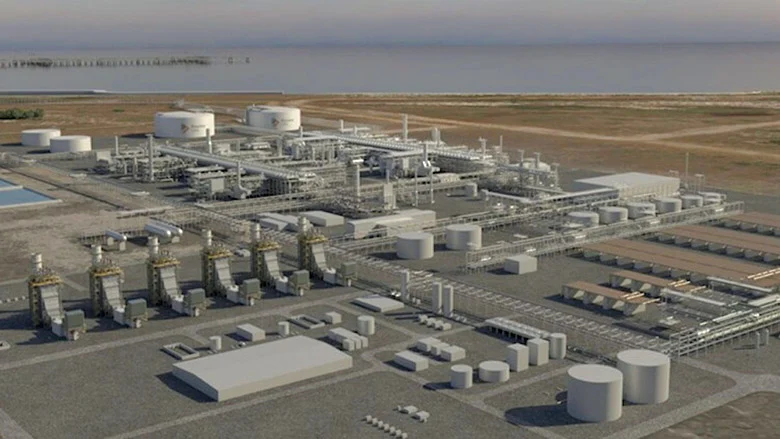
Executive Summary: A Multi-Billion Dollar Resurgence
The landscape of East African energy development is undergoing a seismic shift as the Rovuma LNG project—a colossal venture in Mozambique’s Cabo Delgado province—officially resumes momentum following a prolonged, security-induced hiatus. With an estimated capital investment reaching as high as $32 billion, the project stands as a cornerstone of Mozambique’s economic future.
The project consortium, led by ExxonMobil, has formally appointed a joint venture EPC (Engineering, Procurement, and Construction) team to spearhead the onshore gas liquefaction plant on the Afungi Peninsula. This development marks a pivotal moment for global energy security, as the plant is projected to produce 18.6 million metric tons of liquefied natural gas (LNG) annually once operations commence in 2031.
A Chronology of Conflict and Recovery
The journey of the Rovuma LNG project has been defined by both immense technical ambition and the harsh realities of geopolitical instability.
The Stagnation Period (2021–2025)
In 2021, the northern region of Mozambique, particularly Cabo Delgado, became the theater for a violent insurgency. The resulting security crisis forced major international energy players to declare force majeure, effectively halting construction and stalling billions of dollars in planned infrastructure. For nearly four years, the Afungi site remained in a state of suspended animation, leaving the regional economy and global investors in a precarious limbo.
The Turning Point (Late 2025–2026)
Following significant efforts by the Mozambican government and international security partners to stabilize the region, the force majeure status was finally lifted in November 2025. This move served as a green light for the consortium to begin re-evaluating their supply chains and engineering commitments. By August 2026, the progress accelerated as ExxonMobil announced the awarding of $1.1 billion in early-stage contracts, signaling to the global market that the project was once again "open for business."
The EPC Consortium and Global Integration
The engineering architecture of the Rovuma project is a testament to the globalized nature of modern industrial infrastructure. The consortium selected for the EPC work reflects a strategic blend of Western technical expertise and Asian manufacturing capacity:
- McDermott International (USA): Leading the project’s front-end engineering and management, with operations spanning the UK, India, and Italy.
- Saipem (Italy): A critical partner bringing deep-water and onshore expertise.
- Daewoo Engineering & Construction (South Korea): Contributing specialized construction capabilities.
- China Petroleum Engineering & Construction Corp (CPECC): Providing industrial scaling expertise.
Rob Shaul, McDermott’s head of low carbon solutions, noted, "Having successfully executed the front-end engineering and design (FEED) analysis for Rovuma LNG, we are well positioned to advance the project into its next phase." The design philosophy emphasizes modular, pre-fabricated construction, allowing for high-precision components to be manufactured in specialized overseas facilities before being transported to the Afungi Peninsula for assembly.
Supporting Data and Technical Scope
The technical requirements of the Rovuma project are immense, requiring a massive logistical effort to supply the necessary equipment to a remote part of East Africa.
Key Infrastructure Components:
- Production Capacity: 18.6 million metric tons of LNG annually.
- Plant Configuration: Two massive LNG trains supported by 12 individual liquefaction units.
- Pipeline Infrastructure: A $250-million contract awarded to Greece’s Corinth Pipeworks for the supply of 250 kilometers of submerged arc-welded linepipe.
- Subsea Assets: OneSubsea has been contracted for the fabrication of critical underwater components, with additional support from suppliers including Advanced Technology Valve, Sumitomo Corp. of America, and Zhejiang Jiuli Hi-Tech Metals.
The Economic Ripple Effect
The economic implications for Mozambique are profound. McDermott has cited independent economic studies projecting that the Rovuma project will contribute approximately $11 billion annually to Mozambique’s gross domestic product (GDP). This injection of capital is expected to catalyze local infrastructure development, job creation, and service-sector growth in the Cabo Delgado region.
The Broader Mozambique LNG Landscape
Rovuma does not exist in a vacuum. It is part of a wider ecosystem of energy projects that are collectively reshaping the East African coast.

Mozambique LNG (TotalEnergies)
Running parallel to the Rovuma development is the $20-billion Mozambique LNG project, led by France’s TotalEnergies. This project also faced a multi-year security halt and resumed operations roughly concurrently with Rovuma. Set to produce 13 million metric tons per year, it is slated for a mid-2029 operational start. The onshore work for this project is being handled by a separate EPC team consisting of Saipem, Chiyoda Corp., and McDermott.
Floating LNG Initiatives
Beyond the onshore plants, energy developers have selected a team led by France’s Technip Energies to pursue a $7.2-billion floating LNG (FLNG) project. This project serves as a hedge against land-based security risks, utilizing mobile offshore infrastructure to extract and process gas in deeper waters.
Industry Implications: A Global Gas Boom
The momentum in Mozambique reflects a broader, global surge in gas demand. Recent data indicates that 38 gigawatts (GW) of global gas turbine orders were reported in the second quarter of 2026—a 29% increase from the previous quarter and a 71% jump year-over-year.
Siemens Energy currently leads the market with 12.5 GW in turbine orders. A notable trend within this data is the influence of artificial intelligence and digital infrastructure: data centers now account for 20% of new global gas turbine orders, as the demand for energy-intensive computing forces tech giants and utility providers to secure reliable, baseload power sources.
Case Study in Domestic Expansion: Sabine Pass
While Mozambique represents a new frontier, the industry is also investing heavily in established markets. In the United States, Cheniere Energy Partners has awarded a $4.69-billion lump-sum, turnkey EPC contract to Bechtel for the expansion of the Sabine Pass LNG export terminal in Louisiana.
The "Train 7" expansion is designed to add 6 million metric tons of capacity per year. With potential for two additional trains in later phases, the site could eventually reach a peak output of 20 million metric tons annually. The Sabine Pass project serves as a mirror to Rovuma, proving that even in mature markets, the race for LNG capacity remains the defining feature of the mid-2020s energy economy.
Outlook and Final Investment Decisions
Despite the positive momentum, stakeholders remain cautious. The final investment decision (FID) for the Rovuma project is currently pending, with a timeline targeting late 2026 or early 2027.
The successful mobilization of capital for these multi-billion-dollar projects hinges on three factors:
- Sustained Security: Continued stability in Cabo Delgado is non-negotiable for insurance and equity partners.
- Regulatory Compliance: Navigating the complex regulatory environments of both the host nations and the international export markets.
- Supply Chain Efficiency: Ensuring the modular, pre-fabricated components arrive on schedule to meet the projected 2031 operational target.
As the industry pivots toward the finalization of these mega-projects, the global energy map is being redrawn. For Mozambique, the return of Rovuma represents not just a business transaction, but a fundamental building block for the nation’s future as a global energy exporter. For the engineering and construction sector, the next five years will be defined by the successful execution of these complex, high-stakes infrastructure feats.