





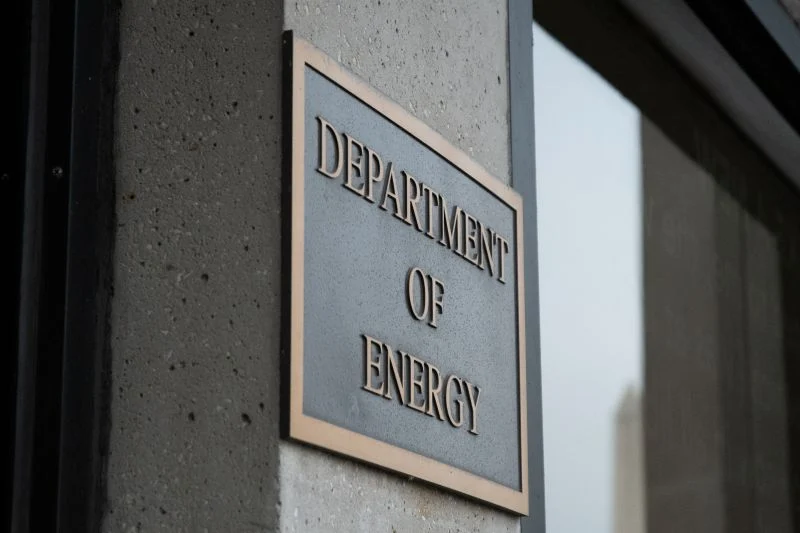
In a sweeping move aimed at fortifying the nation’s electrical backbone, President Donald Trump has declared a national emergency to address what the administration characterizes as critical vulnerabilities within the U.S. bulk-power system. The executive order, issued in late August 2026, imposes a rigorous prohibition on the acquisition, importation, and installation of high-voltage equipment and related software sourced from a expansive list of "covered foreign entities."
The directive, which seeks to decouple the U.S. power grid from reliance on foreign manufacturing—most notably from China—comes at a time when the domestic demand for electricity is surging. Driven by the explosive growth of artificial intelligence (AI), massive hyperscale data centers, and a renewed emphasis on domestic defense production, the fragility of the nation’s energy supply chain has moved to the forefront of the national security agenda.
The Mandate: A New Front in National Security
The presidential order explicitly targets the "bulk-power system"—the high-voltage transmission network that serves as the grid’s backbone. The prohibition extends beyond physical hardware, such as large-scale transformers, to include firmware, software, digital services, and remote-access capabilities that could potentially serve as a "backdoor" for cyber-espionage or physical grid disruption.
The administration’s order argues that as the U.S. accelerates its energy transition and industrial expansion, the consequences of a systemic supply-chain disruption have been "magnified." By restricting equipment from nations deemed hostile or high-risk, the White House aims to eliminate potential "kill switches" or vulnerabilities that foreign actors could exploit during times of geopolitical tension.
The list of "covered entities" is broad, spanning several continents and reflecting a wide range of geopolitical friction points. Beyond China, the order restricts equipment originating from a list that includes: Afghanistan, Belarus, the Democratic Republic of the Congo, the Central African Republic, Cuba, Cyprus (until September 30, 2026), Eritrea, Ethiopia, Haiti, Iran, Myanmar, Iraq, Lebanon, Libya, Nicaragua, North Korea, Russia, Somalia, South Sudan, Sudan, Syria, Venezuela, and Zimbabwe.
Chronology of Action: From 2020 to the Present
This executive action is not the first time the Trump administration has leveraged emergency powers to address grid security.
- May 2020: President Trump issued an initial executive order aimed at securing the bulk-power system, marking the first time the government explicitly linked grid hardware to national security concerns. This order established the legal framework for the Department of Energy (DOE) to identify and prohibit specific types of equipment.
- The Transition Period (2021–2025): Throughout the subsequent years, the policy landscape shifted as the focus moved toward balancing national security with the massive logistical requirements of the energy transition. Many developers, operating under the assumption that globalization would remain the status quo, continued to source high-voltage transformers and power electronics from global markets, particularly in Asia.
- August 2026: The new executive order effectively resets the clock, creating an immediate prohibition for any equipment installed after August 26, 2026. The DOE has been granted a 120-day window to draft and finalize the specific regulatory implementation plan, a period that industry leaders expect will be characterized by intense lobbying and technical deliberation.
Supporting Data: The Cost and Capacity of Domestic Production
While the policy has drawn criticism for its potential to delay projects, domestic manufacturers have largely cheered the move. The National Electrical Manufacturers Association (NEMA) reports that since 2019, the U.S. electrical manufacturing industry has invested more than $200 billion into domestic production capacity.
"The order elevates our shared goal of protecting America’s bulk-power system and the critical equipment and supply chains that enable it," says NEMA President and CEO Debra Phillips. According to NEMA, the objective is to build a self-sustaining ecosystem that supports not just the hardware, but the skilled workforce and the digital infrastructure required to manage a modern grid.
The data suggests a disconnect, however. While $200 billion is a significant investment, industry analysts note that the lead times for large-scale transformers—critical components for both renewable energy integration and grid modernization—can still stretch from two to four years. Replacing foreign-sourced components with domestic alternatives will require a massive ramp-up in specialized steel production and labor, potentially creating a bottleneck that could last well into the late 2020s.
Official Responses and Industry Sentiment
The reaction to the order has been bifurcated. Supporters view it as a necessary, if painful, step toward "energy sovereignty."
"Make It American is about more than where a product is made—it is about building the domestic manufacturing base, skilled workforce, and supply chains America needs to meet its needs," Phillips stated. The sentiment is that by forcing the market to prioritize American-made goods, the government is ensuring the long-term reliability of the grid against foreign digital intrusion.
Conversely, the legal and project-finance communities have expressed alarm regarding the immediate "regulatory shock." Attorneys specializing in energy infrastructure projects are already advising clients to brace for a period of extreme uncertainty. The order does not simply affect future procurement; it creates a risk profile for projects currently in the pipeline, particularly those that have already sourced components from the now-restricted list.
Implications for Construction, Finance, and Project Development
For developers and contractors, the executive order introduces a new, complex layer of risk that must be priced into every stage of project development.
Procurement and Construction Schedules
Ryan Last, an attorney at Troutman Pepper Locke, warns that developers must now factor "supply-chain uncertainty" into their construction timelines. With the possibility of government scrutiny or outright bans on existing contracts, the procurement process for transformers and digital grid components has effectively become a high-stakes legal negotiation. Developers must now conduct exhaustive "country-of-origin" audits to ensure that not only the final product but also the critical sub-components and software are in compliance with the new mandate.
Lender Covenants and Financing
The financial implications may be the most significant. Keith Martin, a partner at Norton Rose Fulbright, notes that the 2020 executive order set a precedent for how lenders view "grid risk." Many tax-equity investors and lenders have already begun requiring developers to include "replacement provisions" in their financing documents—legal clauses that mandate the developer fund the future replacement of any equipment the government deems a national security threat.
"Such provisions remain in many financing documents," Martin noted. The new 2026 order likely forces these developers to renegotiate those terms, as the risk of being forced to replace a multi-million-dollar transformer has shifted from a hypothetical concern to a regulatory reality.
The Rise of the Cybersecurity Audit
Beyond hardware, the software and firmware restrictions are pushing the industry toward a new standard of cybersecurity. Construction lenders are increasingly requiring that developers commission independent, third-party cybersecurity audits to verify that the digital services associated with their equipment do not provide unauthorized remote-access capabilities. These audits are becoming a standard prerequisite for securing project financing, adding to the total project cost and duration.
Looking Ahead: The 120-Day Implementation Window
The next four months will be critical. The Department of Energy faces the daunting task of defining the "covered entities" with enough specificity to provide legal certainty, while maintaining enough flexibility to prevent the total stalling of the nation’s energy transition.
The energy sector is currently at a crossroads. While the goal of securing the bulk-power system is universally acknowledged as a national priority, the methodology—a top-down prohibition—threatens to create a period of intense economic friction. As developers, contractors, and utility commissioners wait for the DOE’s final regulations, the industry is bracing for a new era where national security and energy infrastructure are inextricably, and often costly, linked.
For now, the message from the White House is clear: the era of relying on foreign supply chains for the backbone of the American power grid is coming to an abrupt end. Whether the domestic manufacturing sector can fill the void in time to meet the nation’s rapidly rising electricity demands remains the central question of the decade.