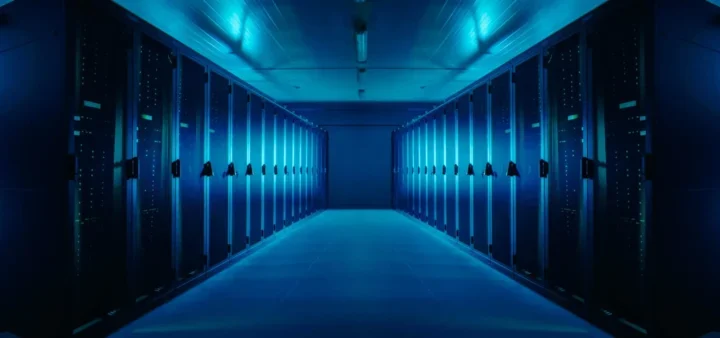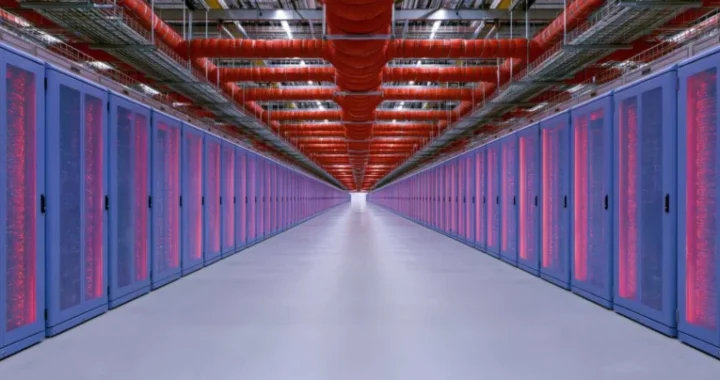






In an era defined by the rapid proliferation of artificial intelligence, hyperscale cloud computing, and the relentless digitization of the global economy, the data center has emerged as the most critical piece of infrastructure in the modern world. From streaming services that power our entertainment to enterprise applications that manage global logistics, virtually every digital interaction relies on the seamless operation of a data center.
As these facilities scale in both physical size and computational power, the margin for error has effectively evaporated. The industry is now facing a dual challenge: designing facilities that can withstand the most punishing operating conditions and ensuring that the global supply chain for critical hardware is not just fast, but fundamentally reliable. To meet this moment, the Telecommunications Industry Association (TIA) has championed two pillars of standardization: ANSI/TIA-942, which governs the architectural and structural integrity of the facility, and the Data Center Excellence Quality Standard (DCE 9000), which brings order to the complex ecosystem of equipment manufacturing.
Main Facts: The Pillars of Infrastructure Integrity
The stability of the digital economy rests on the premise of 99.999% uptime—or better. Achieving this requires a holistic approach that bridges the gap between the building’s shell and the components housed within.
The ANSI/TIA-942 Standard
Developed by TIA’s TR-42 engineering committee, ANSI/TIA-942 serves as the global blueprint for data center design. It is not merely a set of suggestions; it is a rigorous framework that dictates the minimum requirements for the core systems of a facility:
- Architecture & Site Selection: Ensuring the physical environment is conducive to long-term stability.
- Power & Cooling: Providing the redundancy necessary to prevent catastrophic failure.
- Telecommunications & Security: Protecting the flow of data and the physical assets of the facility.
Crucially, the standard provides a Rating System (1 through 4). Rated 1 represents a basic, single-path infrastructure, while Rated 4 represents a fault-tolerant, fully redundant architecture capable of surviving multiple concurrent failures without a single second of downtime.
The DCE 9000 Standard
While ANSI/TIA-942 guards the "house," DCE 9000 guards the "components." It is a Quality Management System (QMS) specifically tailored for the data center infrastructure supply chain. By adapting the high-level structure of ISO 9001 and drawing on the rigorous historical precedents of the aerospace (AS 9100) and automotive (IATF 16949) sectors, DCE 9000 ensures that power distribution units, cooling systems, and airflow management hardware meet the same level of predictability that operators demand from their facilities.
Chronology: The Evolution of Data Center Standards
The journey toward these standards was not instantaneous. It reflects the maturation of the data center industry from niche server rooms to the massive, globally distributed utility hubs we see today.
- Pre-2000s: Data centers were largely bespoke, built to individual corporate specifications with little cross-industry consistency.
- 2005 (The Genesis of TIA-942): TIA introduced the first iteration of the TIA-942 standard to provide a universal language for data center availability. This marked the shift from "best effort" to "engineered reliability."
- 2010s (Global Adoption): As the "Cloud Era" dawned, TIA-942 became the gold standard for global operators, enabling investors and tenants to verify the reliability of third-party colocation facilities.
- 2020s (The Supply Chain Crisis): With the explosion of AI-driven high-density racks, the industry realized that even the best-designed building could fail if the individual components (UPS systems, chillers) were not manufactured to a consistent, high-performance standard.
- 2024-2025 (The Introduction of DCE 9000): TIA launched the DCE 9000 initiative, effectively bridging the gap between facility design and manufacturing quality, creating an end-to-end reliability loop.
Supporting Data: Why Reliability is a Fiscal Imperative
The economic consequences of data center downtime are staggering. Industry reports indicate that the average cost of a single hour of downtime for a large-scale data center can exceed $300,000 to $1 million, depending on the sector (finance, healthcare, or retail).
| Metric | Rated 1 | Rated 2 | Rated 3 | Rated 4 |
|---|---|---|---|---|
| Redundancy | None | Partial | N+1 | 2N+1 |
| Uptime Target | 99.671% | 99.741% | 99.982% | 99.995% |
| Fault Tolerance | None | None | Concurrently Maintainable | Fault Tolerant |
The shift toward DCE 9000 is expected to reduce "infant mortality" rates in data center equipment—failures that occur shortly after deployment—by up to 30%. By harmonizing the audit processes for suppliers, the standard eliminates the need for redundant, custom testing protocols that currently cost suppliers and operators millions of dollars in administrative overhead annually.
Official Perspectives: Industry Leadership
The adoption of these standards is not merely a technical preference; it is a strategic business move. TIA leadership has emphasized that as the industry moves toward "AI-ready" infrastructure, the old ways of building are no longer sufficient.
"We are seeing a convergence of IT and mechanical engineering at a scale never before imagined," says a spokesperson for the TIA. "When you are deploying 50kW-per-rack systems for AI training, you cannot afford a loose connection or a faulty cooling valve. DCE 9000 is our way of ensuring that the quality of the component matches the ambition of the design."
Industry analysts have praised the initiative, noting that it brings a "disciplined manufacturing culture" to an industry that has historically been dominated by rapid, often reactive, growth. The move toward ISO-aligned structures allows for international interoperability, meaning a data center built in Singapore can expect the same quality of components from a supplier in Germany as one would expect in the United States.
Implications: The Future of the Digital Economy
The implementation of ANSI/TIA-942 and DCE 9000 signals a transition into a "mature infrastructure" phase for the digital economy.
1. Predictable Scalability
By removing the guesswork from infrastructure planning, developers can now scale facilities with greater confidence. Investors are increasingly demanding TIA-942 certifications as a prerequisite for funding, viewing the standard as a risk-mitigation tool that protects long-term asset value.

2. Supply Chain Harmonization
DCE 9000 is expected to become the "universal passport" for equipment vendors. Instead of navigating dozens of different quality management requests from different hyperscalers, suppliers can certify to a single, global standard. This reduces lead times and allows for more efficient global supply chain logistics.
3. Sustainability and Efficiency
Reliability is the ultimate form of sustainability. A data center that operates efficiently without unplanned downtime avoids the massive carbon footprint associated with emergency repairs, data migrations, and the premature disposal of failing hardware. Both standards emphasize efficient power distribution and cooling, directly supporting the industry’s goals to lower Power Usage Effectiveness (PUE) ratios.
4. The AI Imperative
Perhaps most importantly, these standards provide a stable foundation for the AI revolution. Artificial intelligence models require continuous, uninterrupted power and cooling to function. As racks become denser and heat rejection becomes more complex, the rigorous design guidelines of TIA-942 and the manufacturing discipline of DCE 9000 will be the difference between a facility that can handle the next generation of AI and one that becomes obsolete before its time.
Conclusion
As we look toward a future where the digital and physical worlds are increasingly indistinguishable, the importance of the "unseen" infrastructure cannot be overstated. By providing a common language for both the architectural design of the facility and the quality of the machinery within, ANSI/TIA-942 and DCE 9000 provide the framework necessary to ensure that our digital world remains standing.
These standards are more than just technical documentation; they are the safeguards of our modern way of life, ensuring that when we click "send," "stream," or "process," the infrastructure underneath is ready, capable, and resilient.