







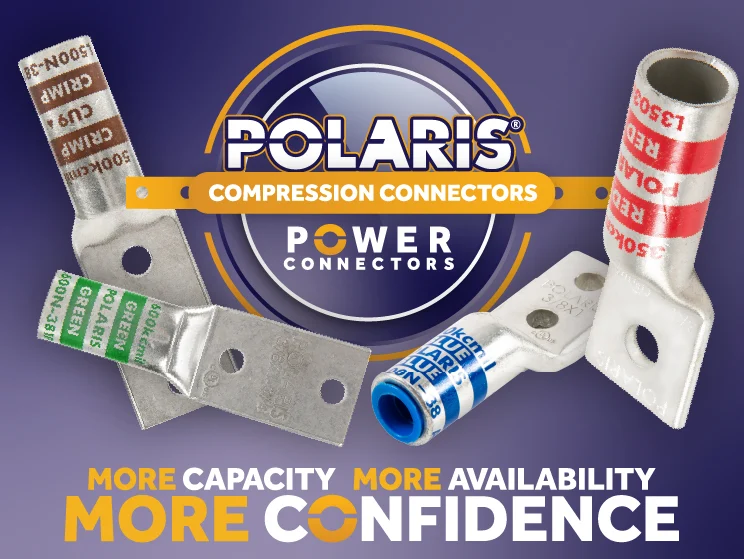
As North America undergoes a massive transformation in its electrical infrastructure, the silent engine behind this progress—the humble compression connector—has moved from a commodity item to a critical path component. From the sprawling footprints of hyperscale data centers to the intricate modernization of aging utility grids, the demand for high-performance electrical hardware is hitting record highs. In this climate, product availability is no longer just a logistical detail; it is a primary determinant of project success.
Polaris Compression, a leader in the electrical hardware space for over four decades, has recognized this shift. By undertaking a significant expansion of its manufacturing capacity, the company is aiming to solve the "availability bottleneck" that has plagued contractors and distributors in recent years. This article explores the convergence of market demand, the necessity of supply chain reliability, and how Polaris is positioning itself to support the massive infrastructure projects of the 21st century.
The Electrical Infrastructure Boom: A Contextual Overview
The modern electrical market is currently defined by an unprecedented confluence of industrial, commercial, and utility-scale investment. Several key drivers are responsible for this surge:
- Hyperscale Data Centers: The explosion of artificial intelligence and cloud computing has necessitated a rapid expansion of data processing facilities, all of which require robust, high-amperage power distribution systems.
- Utility Modernization: As aging grids across North America face the challenges of climate change and peak load increases, utilities are investing billions in "hardening" their infrastructure and transitioning to smart-grid technologies.
- Renewable Energy Integration: The transition to wind, solar, and battery energy storage systems (BESS) requires sophisticated electrical connections capable of handling complex power conversion and distribution.
- Commercial and Manufacturing Growth: Reshoring initiatives and the expansion of domestic manufacturing have spurred a wave of new industrial construction, each requiring massive electrical infrastructure upgrades.
These sectors share a common dependency: the need for code-compliant, reliable electrical connections that can withstand rigorous environmental and thermal stressors. However, as project scales grow and construction timelines become increasingly aggressive, the industry has realized that the "best" connector is useless if it is not on the job site when needed.
The Chronology of a Supply Crisis
To understand why Polaris has invested heavily in manufacturing capacity, one must look at the recent history of the construction supply chain.
2020–2022: The Global Disruption
The global pandemic triggered a series of unprecedented supply chain fractures. Raw material volatility, labor shortages, and logistical gridlock meant that electrical distributors—traditionally the safety net for contractors—faced empty shelves. Lead times for standard electrical components stretched from days to months.
2023: The Correction Phase
As the initial shock subsided, the industry faced a "new normal." Project managers began factoring "lead-time risk" into their initial planning phases. The industry moved away from just-in-time inventory strategies, which had failed under stress, toward more resilient, localized, or high-availability models.
2024–Present: The Strategic Response
Recognizing that the demand for infrastructure is not a temporary spike but a long-term structural shift, manufacturers began looking for ways to scale. Polaris Compression identified that the only way to insulate their customers from market volatility was to control more of the manufacturing lifecycle. By expanding domestic manufacturing capacity, the company moved to ensure that when a contractor’s crew arrives on-site, the hardware is already waiting for them.
Why Product Availability Is the New "Quality"
In the eyes of a project manager or a master electrician, product availability is functionally identical to product quality. A delay in the supply chain manifests as a delay in the construction schedule, which triggers a cascade of negative outcomes:
- Labor Inefficiency: When crews are forced to stand idle because a specific size of connector is backordered, the cost to the contractor is astronomical. The overhead of idle labor is often the single largest driver of budget overruns.
- Compliance Risks: In desperation, teams may be tempted to source non-compliant or inferior alternatives, risking failed inspections and long-term reliability issues.
- Distributor Strain: For distributors, the inability to provide key components undermines their role as trusted advisors. It forces them to spend more time managing backorders than providing value-added services.
Polaris Compression’s expansion is designed to mitigate these risks by creating a "buffer" of available inventory, ensuring that both distributors and contractors can maintain their momentum regardless of broader market fluctuations.
Official Perspective: The Commitment to Reliability
Polaris leadership emphasizes that this expansion is not merely about volume; it is about sustaining a 40-year reputation for engineering excellence. According to company spokespeople, the expansion supports three critical pillars:
- Scalability: The ability to ramp up production for large-scale utility and data center projects without sacrificing the consistency of the final product.
- Shortened Lead Times: By streamlining manufacturing processes, the company aims to move closer to the "off-the-shelf" availability that is required for emergency repairs and fast-track construction.
- Future-Proofing: By investing in the facility footprint today, Polaris is preparing for the projected growth in the electrification sector over the next decade.
"When projects are on the line," the company notes, "confidence begins with knowing the products you need will be available." This philosophy is woven into the manufacturing process, where every connector is built to perform in the most demanding environments, from switchgear and panelboards to complex transformer connections.
The Technical Advantage: Efficiency and Compatibility
While availability is the primary focus of this expansion, Polaris has not compromised on the technical features that electrical professionals demand. The company’s compression connectors are engineered to simplify the installation process while maximizing the integrity of the connection.
Tooling Compatibility: A Critical Differentiator
One of the most significant pain points for contractors is "tooling silos"—where a manufacturer requires a proprietary crimp tool to install their connectors. Polaris has deliberately avoided this path, focusing on UL-listed tooling compatibility.
By ensuring their connectors are compatible with over 35 major crimp tool models—including widely used platforms like Milwaukee® Tool—Polaris allows contractors to utilize the equipment they already have on their trucks. This approach offers several operational advantages:
- Reduced Capital Expenditure: Contractors do not need to buy new, specialized tools for every brand of connector.
- Field Versatility: Field technicians can switch between tasks without needing to swap out entire crimping kits.
- Compliance Certainty: Because these connectors are UL-listed across a wide range of industry-standard tools, the resulting crimps are inspection-ready, providing peace of mind to both the contractor and the inspector.
Implications for the Supply Chain
The ripple effects of this manufacturing expansion are felt at every level of the electrical supply chain.
For Distributors
Distributors are the front line of the electrical industry. Polaris’s increased capacity allows them to maintain leaner, more effective inventory levels while ensuring they have the "bread and butter" items ready for both planned and emergency projects. This reliability strengthens the relationship between the distributor and their contractor base, turning a simple transaction into a partnership.
For Contractors
For the men and women in the field, reliability is about project flow. By having a consistent, predictable supply of connectors, contractors can avoid the "hurry up and wait" cycle that plagues modern construction. They can bid on jobs with confidence, knowing that the material costs and timelines will remain stable.
For Engineers and Specifiers
Engineers require a product that they can specify with 100% confidence. By backing their product line with a robust supply chain, Polaris allows engineers to move from the design phase to the installation phase without fear that their specifications will be compromised by product availability issues.
Looking Ahead: The Future of Electrical Infrastructure
The trajectory of the electrical industry is clear: we are entering a long-term cycle of massive, sustained infrastructure investment. As the grid becomes more complex, the hardware that holds it together must be more reliable and more accessible than ever before.
Polaris Compression’s commitment to expanding manufacturing capacity is a strategic response to this reality. By focusing on the intersection of product performance and supply chain reliability, the company is setting a new standard for what professionals should expect from their suppliers.
As the industry continues to evolve, the ability to "connect with confidence" will remain the gold standard. Whether it is through the ongoing refinement of their compression connector portfolio, the maintenance of broad tooling compatibility, or the commitment to supporting every level of the supply chain, Polaris is positioning itself as a cornerstone of the next generation of North American infrastructure.
For electrical professionals—from the master electrician working on a local panelboard to the project manager overseeing a multi-million-dollar data center—this news offers a clear takeaway: the tools you need are ready when you are. In an industry defined by its complexity and its scale, that kind of certainty is invaluable.
Disclaimer: Milwaukee® is a registered trademark of Milwaukee Electric Tool Corporation. Polaris is not affiliated with or endorsed by Milwaukee Electric Tool Corporation.