





Technology is often celebrated for its transformative potential, but its true measure lies in its reliability. When a personal smartphone freezes, the result is mere irritation—a simple reboot fixes the issue. However, when the "brain" of an autonomous transportation system stumbles for even a nanosecond, the consequences move beyond inconvenience into the realm of life-safety.
In an era where we are increasingly delegating navigation, logistics, and public transit to autonomous systems, the margin for error has effectively vanished. If a train’s sensor suite fails to identify a fallen tree, or if a centralized traffic management system loses connectivity during a first responder dispatch, the fallout is catastrophic. As we pivot toward a future defined by self-driving cars, automated freight, and intelligent rail, it has become abundantly clear that these digital solutions are only as robust as the physical infrastructure supporting them.
The Foundation of Autonomous Networks
Autonomous transportation networks are not merely collections of self-driving vehicles; they are intricate, interconnected ecosystems. They rely on the synergy of Artificial Intelligence (AI), edge computing, 5G wireless connectivity, and the Internet of Things (IoT). These systems are designed to optimize traffic flow, reduce human-error accidents, and drive down operational costs.
However, as these technologies mature, the industry is realizing that the "intelligence" inside the vehicle is only half the battle. The other half is the "intelligence" of the road—the cameras, LiDAR arrays, wireless access points, and traffic controllers that must operate 24/7, regardless of weather, power fluctuations, or physical damage.
A Chronology of the Autonomous Shift
The journey toward fully autonomous transit has been a steady progression of integration and testing:

- 2010s: The Proof of Concept: Early autonomous efforts focused on passenger vehicles in controlled, sunny environments. Companies like Waymo began mapping urban corridors, proving that AI could navigate predictable traffic patterns.
- 2020–2023: The Logistics Pivot: As passenger vehicle progress faced regulatory hurdles, the logistics sector identified a massive opportunity in autonomous freight. By focusing on long-haul highway routes, the industry began to prove that self-driving trucks could operate safely under specific, repetitive conditions.
- 2024–2025: The Infrastructure Realization: The industry reached a consensus: onboard sensors are insufficient. The "Vehicle-to-Everything" (V2X) movement began, requiring roadside infrastructure to actively "talk" to vehicles, providing data on traffic lights, pedestrian movement, and emergency vehicle proximity.
- 2026 and Beyond: Industrial-Scale Integration: The current phase involves hardening the network. Projects like the Bosch Engineering Automated Train initiative are pushing the boundaries of what is possible, with full-scale automated rail operations targeted for 2026. This era marks the transition from "experimental" to "mission-critical" infrastructure.
Supporting Data: The Cost of Connectivity
The reliance on real-time data exchange is massive. An autonomous vehicle generates gigabytes of data every hour. This data must be processed via edge computing—keeping the latency low—and transmitted via robust fiber or high-speed wireless backbones.
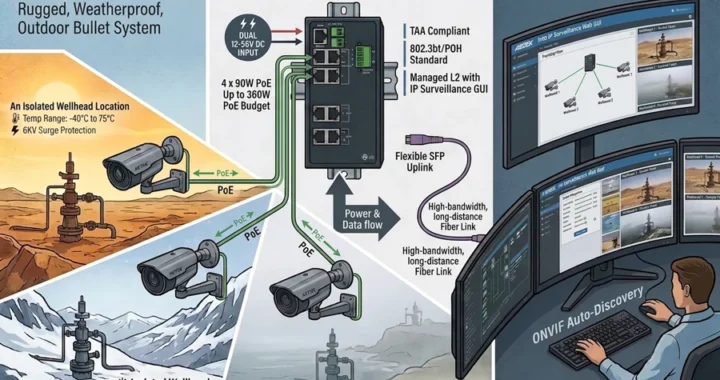
According to industry benchmarks, the reliability of a network in an autonomous environment must exceed "five-nines" (99.999% uptime). Even a millisecond of latency can mean the difference between a vehicle stopping for an obstacle and a collision. Furthermore, the environment for these networking devices is often extreme. Whether it is the vibration of a rail bed or the scorching temperatures of a desert highway, hardware must withstand operating ranges from -40°C to 75°C. Without industrial-grade switches that provide both power and data via Power over Ethernet (PoE), the infrastructure remains a "single point of failure."
Official Perspectives: The Role of Industrial Networking
Industry experts at firms like Versa Technology emphasize that the transition to autonomous transit is a hardware challenge as much as a software one. "We are moving from a world where networks were ‘nice to have’ to a world where they are the central nervous system of public safety," says one lead engineer.
The official stance from transportation departments globally is shifting toward mandating "smart infrastructure." This involves not just deploying sensors, but ensuring those sensors are backed by redundant power systems. Uninterruptible Power Supplies (UPS) integrated with smart PoE switches are no longer optional—they are the standard requirement for any project involving public safety, such as smart traffic signaling or automated railway crossing guards.
Implications for Public Safety and Urban Planning
The implications of this shift are profound, impacting how we design cities and manage emergency response:

1. The Death of Traffic Congestion
By using V2X connectivity, traffic signals can communicate directly with autonomous vehicles. Instead of waiting for a timer, vehicles can "request" green lights based on traffic flow, effectively eliminating the "stop-and-go" patterns that cause gridlock.
2. The Enhancement of First Responder Efficiency
When an ambulance or fire truck is dispatched, the surrounding traffic infrastructure can be automatically signaled to clear lanes and hold cross-traffic. This requires a network that is not only fast but also secure and immune to local power outages.
3. Increased Operational Complexity
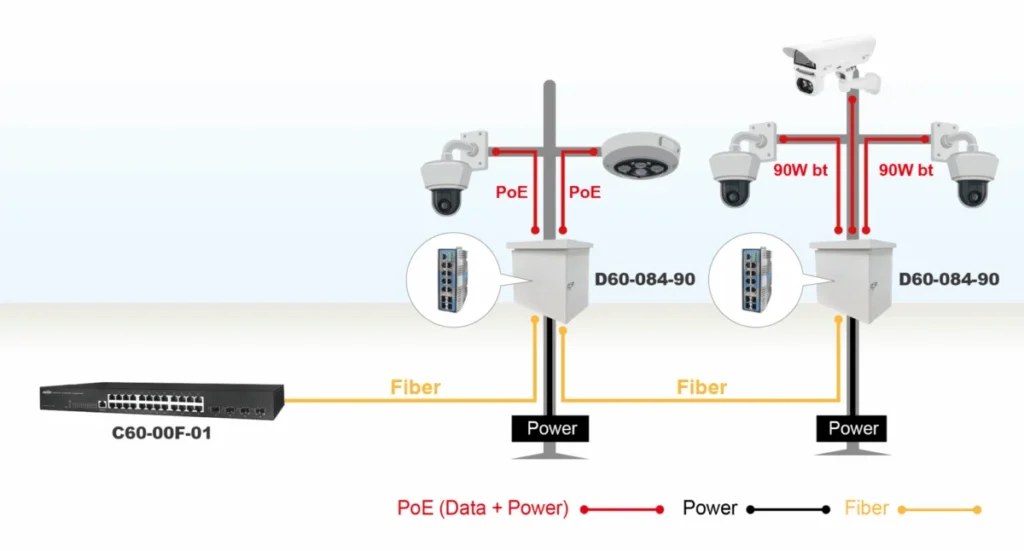
The move toward edge computing means that the "data center" is now physically located on the side of the road. This requires a new paradigm for maintenance. Technicians are no longer just fixing potholes; they are managing complex, managed L2/L3 PoE switches that act as the gatekeepers of local traffic data.
Why Reliable Network Infrastructure Matters: The Technological Core
Building a resilient network requires a multi-layered approach. The technologies currently driving this evolution include:
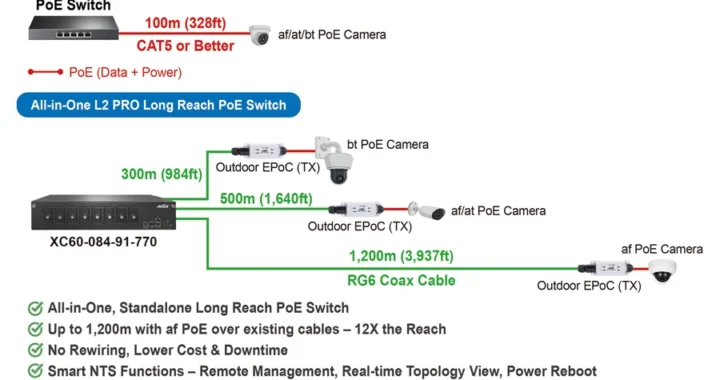
- PoE (Power over Ethernet): By combining power and data into a single cable, installation costs are reduced, and the complexity of the physical plant is simplified. This makes it easier to troubleshoot, as a single point of failure can be diagnosed remotely.
- Edge Computing: By processing data at the location of the sensor (e.g., a railyard or a busy intersection), we eliminate the latency inherent in sending all data to a central cloud server. This is critical for real-time decision-making in autonomous rail or trucking.
- Hardened Hardware: The D60 series of PoE switches, for example, represents the pinnacle of current industrial networking. These devices offer surge protection, wide-temperature operation, and advanced management features like network topology mapping. These features allow operators to see the "health" of their infrastructure in real-time, preventing failures before they occur.
Addressing the Risks: Security and Redundancy
As we delegate more control to autonomous systems, the cybersecurity surface area expands. A compromised traffic light controller could, in theory, cause gridlock or accidents. Consequently, modern infrastructure must incorporate not just physical resilience, but robust network security. Layer 2 and 3 security features within PoE switches allow for network segmentation, ensuring that if one camera or sensor is compromised, the breach cannot jump to the traffic signaling system or the vehicle-to-vehicle communication network.

Conclusion: The Path Forward
The dream of a fully autonomous transportation network—where traffic is fluid, accidents are a rarity, and transit is efficient—is closer than ever. However, we must stop viewing these vehicles as isolated machines. They are participants in a massive, real-time data exchange.
The success of this transition hinges on the "invisible backbone": the switches, sensors, and power systems that remain hidden beneath the asphalt and inside the signal boxes. By investing in industrial-grade infrastructure today, we are not just buying hardware; we are investing in the safety and reliability of tomorrow’s smart cities. As we move toward 2026 and beyond, the companies that prioritize resilient, high-speed, and secure connectivity will be the ones that define the future of how the world moves.
For those responsible for building the cities of the future, the message is clear: when it comes to autonomous systems, infrastructure is not just a support system—it is the system itself.