


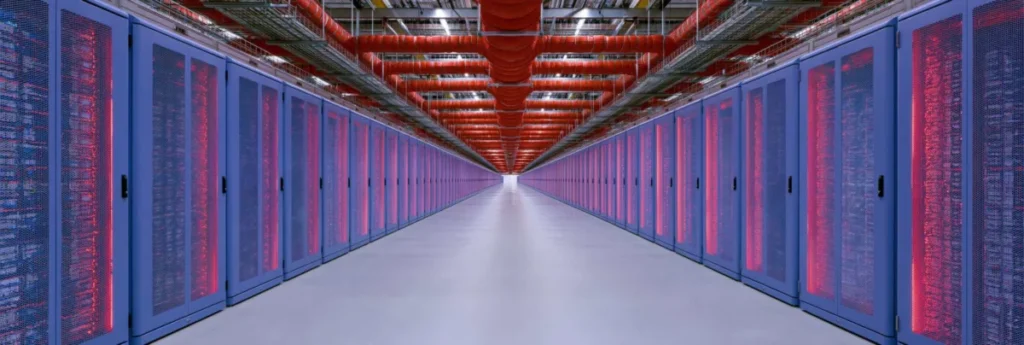
As the global digital economy pivots toward a future dominated by artificial intelligence and high-density computing, the physical infrastructure supporting these technologies has reached a critical inflection point. Data centers—the cathedrals of the modern internet—are no longer merely repositories for servers; they are becoming highly specialized, power-hungry, and thermally complex engines of innovation.
Amidst this rapid evolution, the Telecommunications Industry Association (TIA) has positioned its flagship standard, TIA-942, as the definitive framework for ensuring reliability, scalability, and trust. In a recent dialogue between Michelle Kang, TIA Board Member and TIF Chair, and Tom McGarry, VP of Standards at the TIA, the industry gained a window into how this foundational standard is adapting to the unprecedented demands of the AI revolution.
The Genesis and Evolution of TIA-942: A Chronology
To understand the current state of data center standards, one must first look at their history. TIA-942 was first published in 2005, a period defined by the initial, explosive growth of large-scale data storage and the early days of cloud computing.
- 2005: The TIA-942 standard is officially released, providing the first standardized, industry-wide consensus on data center design, cabling, and infrastructure redundancy.
- 2005–2015: The standard gains traction as the industry moves from fragmented, proprietary design practices to a unified ANSI-accredited consensus model.
- 2015–2020: The rise of edge computing and modular data centers prompts TIA to incorporate specific guidelines for these localized, high-speed facilities.
- 2023–2024: The emergence of generative AI and large language models forces a structural shift. The TIA initiates an AI-focused addendum to address the extreme power and cooling requirements of GPU-heavy workloads.
- Present Day: The launch of DCE 9000—a quality management system for the data center supply chain—marks a transition toward holistic operational excellence.
The Landscape of Modern Data Centers
Historically, the industry categorized facilities into two buckets: traditional enterprise/colocation sites and the emerging edge/modular segment. However, Tom McGarry notes that the advent of AI has necessitated a third, distinct classification: AI-Focused Data Centers.
Unlike general-purpose facilities designed for CPU-heavy tasks, AI-focused data centers are optimized for high-performance computing (HPC). These environments require massive power density to support racks filled with GPUs. As McGarry explains, the TIA-942 standard serves as the universal baseline, but the new AI addendum is designed to bridge the gap between traditional reliability and the specialized physical environment required by neural networks and machine learning clusters.
The TIA-942 Rating System: Defining Reliability
The core of the TIA-942 standard is its four-level rating system, which provides a common language for operators and clients to discuss uptime and risk mitigation.
Level 1: Basic Site Infrastructure
This level provides minimal protection against physical events. It is designed for small businesses or non-critical workloads where occasional downtime is acceptable.
Level 2: Redundant Site Infrastructure Capacity
This level includes redundant capacity components, such as UPS and cooling systems. It offers a higher degree of safety against equipment failure compared to Level 1.
Level 3: Concurrently Maintainable Site Infrastructure
This is the gold standard for many commercial and enterprise operators. It allows any component or distribution path to be shut down for maintenance or replacement without disrupting the IT operations of the data center.
Level 4: Fault-Tolerant Site Infrastructure
The highest tier, designed for mission-critical operations where even a single failure must not impact the load. This level requires multiple, independent, physically isolated systems that provide redundant capacity and distribution paths.
For the modern hyperscaler or enterprise giant, levels 3 and 4 have become the baseline expectations. These ratings serve as a form of "digital currency," allowing data center operators to prove their reliability to customers and regulators alike.
The Role of Independent Certification
One of the most powerful aspects of the TIA-942 ecosystem is its rigorous certification program. As McGarry points out, certification is not merely a marketing exercise; it is an independent validation of operational integrity.
TIA utilizes a global network of independent certification bodies. To ensure absolute impartiality, these bodies are prohibited from providing consulting services to the facilities they audit. This "firewall" between design/advisory services and compliance verification is what gives TIA-942 its global credibility.
Key Statistics of the TIA Program:
- Global Reach: Over 1,000 certification activities conducted.
- Footprint: Covering more than 800 data centers across 60+ countries.
- Governance: Annual audits of certification bodies to maintain strict consistency.
In many jurisdictions, this third-party verification is no longer optional. Governments are increasingly requiring TIA-942 certification for data centers handling sensitive public sector or national infrastructure workloads, making it a critical component of national security and digital sovereignty.
Implications of the AI Shift: Redesigning for Density
The move toward AI is not just a software evolution; it is a physical, architectural one. AI workloads rely on high-density computing that generates heat and power demands far exceeding the capabilities of traditional legacy data centers.
The Power and Cooling Paradox
- Extreme Density: GPU racks often require 50kW to 100kW or more per rack, compared to the 5kW to 10kW typical of traditional server racks.
- Thermal Management: Traditional air cooling is insufficient for the heat generated by modern AI chips. This is driving a rapid shift toward liquid cooling solutions.
- Redundancy Challenges: Maintaining the TIA-942 "concurrency" requirements becomes exponentially more difficult when dealing with the massive power draws required by AI clusters.
The upcoming AI addendum to TIA-942 will provide the industry with the necessary guidance to manage these complexities without sacrificing the reliability that stakeholders have come to expect.
Operational Excellence: The Introduction of DCE 9000
Infrastructure is only as reliable as the processes that govern it. Recognizing this, the TIA is expanding its scope beyond physical infrastructure into operational management through the DCE 9000 standard.
DCE 9000 is a quality management system specifically tailored for the data center industry. Inspired by the principles of ISO 9001, it focuses on:
- Process Consistency: Standardizing how maintenance and operations are executed.
- Supply Chain Management: Ensuring that the components and labor entering the data center meet the highest quality standards.
- Continuous Improvement: Building a culture of risk mitigation and proactive performance monitoring.
By pairing the hardware-centric TIA-942 with the process-centric DCE 9000, the TIA is creating a holistic framework that addresses both the "steel and concrete" of the facility and the "human and operational" elements that prevent downtime.
A Call to Action: Shaping the Future
As the TIA advances these standards, the organization is calling for a "grand coalition" of industry stakeholders to participate. The complexity of AI-era infrastructure is too great to be solved by any single entity.
Who Should Engage?
- AI Infrastructure Developers: Those building the next generation of GPU clusters.
- Cooling and Power Engineers: Specialists in liquid cooling and high-efficiency power distribution.
- Hyperscale Operators: Companies managing the largest footprints in the world.
- Telecom Providers: The backbone of the connectivity that fuels these centers.
The TIA’s TR-42 committee serves as the primary forum for this work. For organizations looking to influence the future of data center architecture, membership in the TIA or active participation in the TR-42 committee is the most direct pathway.
Conclusion: A Foundation for Trust
The evolution of TIA-942 is a microcosm of the broader digital industry. Just as the internet moved from an experimental tool to the central nervous system of society, data centers are moving from back-office support facilities to the primary hubs of global productivity. By standardizing these environments, the TIA is not just creating rules for hardware; it is building the foundation of trust upon which the next decade of AI-driven innovation will stand.
As McGarry emphasized, the goal remains the same today as it was in 2005: to provide a transparent, consensus-based framework that allows the industry to scale with confidence. For those interested in joining this effort, inquiries can be directed to the TIA membership team at [email protected].