




The rolling hills and fertile plains of West Sussex have long been the backbone of the United Kingdom’s agricultural heritage. However, as the 21st century progresses, the traditional image of the British farm is undergoing a radical technological transformation. At the heart of this evolution is a groundbreaking partnership between the public sector, telecommunications giants, and agritech innovators.
West Sussex County Council, leading the ambitious "Growing Sussex" program, has achieved a significant milestone in smart livestock monitoring. By integrating Pneumonitor’s advanced environmental sensors with Boldyn Networks’ private 5G infrastructure, the region is setting a global benchmark for how "Connected Agriculture" can safeguard animal welfare and ensure economic resilience in an era of climatic volatility.
Main Facts: A New Paradigm for In-Pen Monitoring
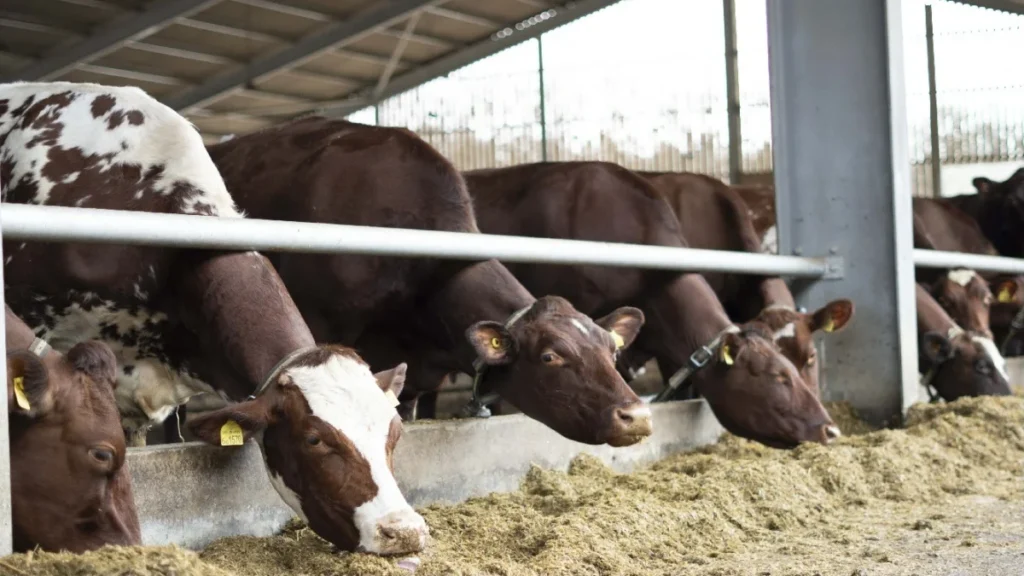
The core of this initiative lies in the deployment of near real-time environmental monitoring within livestock buildings. While the concept of agricultural sensors is not entirely new, the "Growing Sussex" project introduces two critical innovations that distinguish it from previous attempts at smart farming: the location of the data collection and the underlying connectivity protocol.
1. In-Pen vs. Wall-Mounted Sensing
Traditionally, environmental sensors in farms are mounted on walls or ceilings to protect them from animal interference. However, these locations often fail to reflect the actual conditions experienced by the livestock. A wall-mounted sensor might record a comfortable temperature, while the center of a crowded pen—where the animals are actually breathing and huddling—may be experiencing dangerous levels of ammonia, humidity, or heat.
Pneumonitor’s device is designed to measure conditions directly within the pen. This provides farmers with "micro-climate" data that is far more accurate than ambient room readings. By capturing data where the animals live, the system can identify "heat loads" and air quality issues before they manifest as clinical symptoms of respiratory disease or heat stress.
2. The Power of 5G RedCap
The connectivity backbone is provided by Boldyn Networks through a private 5G network utilizing 5G Reduced Capability (RedCap) technology. RedCap is a specialized 5G standard designed for Internet of Things (IoT) devices that require more robust connectivity than traditional low-power networks but do not need the massive bandwidth of a high-end smartphone. It offers the low latency and reliability of 5G with significantly lower power consumption and hardware costs, making it the ideal "middle ground" for large-scale agricultural deployments.
Chronology: From Vision to Full-Scale Implementation
The journey toward a digitally enabled West Sussex agricultural sector has been a multi-year endeavor characterized by strategic planning and public-private synergy.
2023: The Conception of "Growing Sussex"
The "Growing Sussex" program was established by West Sussex County Council as a proactive response to the dual challenges of Brexit-related labor shifts and the increasing frequency of extreme weather events. The goal was to create a "living lab" where 5G, IoT, and AI could be tested in real-world agricultural settings.
Early 2024: The Boldyn Partnership
In early 2024, Boldyn Networks and the West Sussex County Council announced a formal partnership to deploy four private 5G networks across the county. These networks were designed not just for general connectivity, but as bespoke infrastructure for food, drink, and agricultural production.
Mid-2024: The Integration of Pneumonitor
As the 5G infrastructure began to take shape, the program integrated Pneumonitor, an agritech specialist focused on animal respiratory health. The challenge was to move Pneumonitor’s existing technology away from intermittent Wi-Fi or 4G connections—which often struggle in the thick-walled, remote environments of livestock sheds—to the ultra-reliable private 5G RedCap environment.
December 2025: The Completion of the Ecosystem
By December 2025, all four primary partner sites under the Growing Sussex banner were fully operational. The successful integration of the Pneumonitor devices marked the final phase of the initial rollout, creating a comprehensive "connected-agriculture ecosystem" that now serves as a blueprint for other rural counties across the United Kingdom.
Supporting Data: The Technical and Climatic Drivers
The move toward high-tech livestock monitoring is driven by increasingly urgent data regarding climate change and animal physiology.
The Heatwave Factor
The UK and Europe have witnessed record-breaking heatwaves over the last three years. For livestock, particularly pigs and poultry, high temperatures are not merely uncomfortable; they are potentially lethal. Heat stress reduces feed intake, lowers immunity, and increases the prevalence of respiratory infections. According to industry data, even a minor increase in the "Temperature-Humidity Index" (THI) can lead to a 10-15% drop in productivity and yield.
The Pneumonitor system identifies these rising heat loads in real-time. By alerting a farmer to a 2-degree spike in pen temperature before the animal’s internal temperature rises, the system allows for immediate intervention—such as activating misting systems or increasing ventilation—thereby preventing a "yield crash."
The Efficiency of RedCap
Technical data from the deployment highlights why 5G RedCap is a game-changer for the farm:
- Battery Life: Devices using RedCap can operate for years on a single charge compared to weeks for standard 5G devices.
- Cost Efficiency: The simplified chipsets required for RedCap reduce the per-unit cost of sensors, allowing a farmer to deploy dozens of devices across multiple buildings rather than just one or two.
- Reliability: Unlike public 4G networks, which can become congested or have "dead zones" in rural valleys, the private 5G network ensures 99.9% uptime, which is critical when animal lives are at stake.
Official Responses: A Unified Vision for the Future
The leaders of this project emphasize that this is more than just a technological trial; it is a vital economic and ethical strategy.
Cllr Yvonne Gravely, Cabinet Member for Economy and Skills at West Sussex County Council, highlighted the regional importance:
"Agriculture plays a vital role in West Sussex, but periods of extreme weather are creating new challenges for the sector. Through Growing Sussex, we’re helping growers and food producers use technology to better understand changing conditions, protect animal welfare and build resilience for the future. That’s good for local businesses, good for our rural economy and good for West Sussex."
Gearoid Collins, Commercial Director at Boldyn Networks, focused on the scalability of the technology:
"Connecting Pneumonitor through RedCap shows how private 5G can support practical agritech and provide the digital foundation for many more connected applications across the farming sector. We’re committed to helping shape a new era for agriculture and deploy technologies that bring a welcome boost to the West Sussex economy."
Isaac Orr, CEO of Pneumonitor, underscored the practical advantages for the farmer on the ground:
"Conditions inside livestock buildings can deteriorate faster than they can be spotted by eye. This project showed when heat load was building and what could be done before yields were affected. The connectivity behind the deployment now allows us to bring this monitoring to far more sites than before."
Implications: The Broader Impact on British Agriculture
The success of the Growing Sussex milestone has far-reaching implications that extend well beyond the borders of the county.
1. Enhancing Animal Welfare Standards
As consumer demand for ethically raised meat grows, the ability to provide "proof of welfare" becomes a competitive advantage. Real-time data logs showing that animals were kept in optimal environmental conditions throughout their lives can be used to satisfy audits and premium supermarket standards.
2. Bridging the Digital Divide
The deployment serves as a powerful rebuttal to the notion that rural areas must lag behind urban centers in the digital revolution. By installing private 5G networks in agricultural hubs, West Sussex is proving that "high-tech" and "rural" are no longer mutually exclusive. This infrastructure could eventually support other applications, from autonomous tractors to drone-based crop spraying.
3. Economic Resilience and Food Security
In a post-Brexit landscape, British farmers are under pressure to increase efficiency while maintaining high standards. Technology that reduces the loss of livestock to disease and heat stress directly contributes to the UK’s national food security. By minimizing the "invisible losses" caused by sub-optimal pen conditions, the Growing Sussex project is helping to make British farming more profitable and sustainable.
4. A Blueprint for the "Shared Rural Network"
As the UK continues its rollout of the Shared Rural Network (SRN), the West Sussex model provides a template for how connectivity should be utilized. It isn’t just about giving people 4G bars on their phones in national parks; it is about providing the high-speed, low-latency data pipes that modern industry—including the oldest industry, farming—requires to survive in the 21st century.
Conclusion
The integration of Pneumonitor’s sensors into Boldyn’s 5G network is a watershed moment. It represents the transition of "smart farming" from a theoretical concept into a practical, scalable, and essential tool for the modern farmer. As the discussion moves to national stages like the "Connected Britain" event, all eyes will be on West Sussex to see how this digital foundation will support the next generation of British agricultural excellence.