





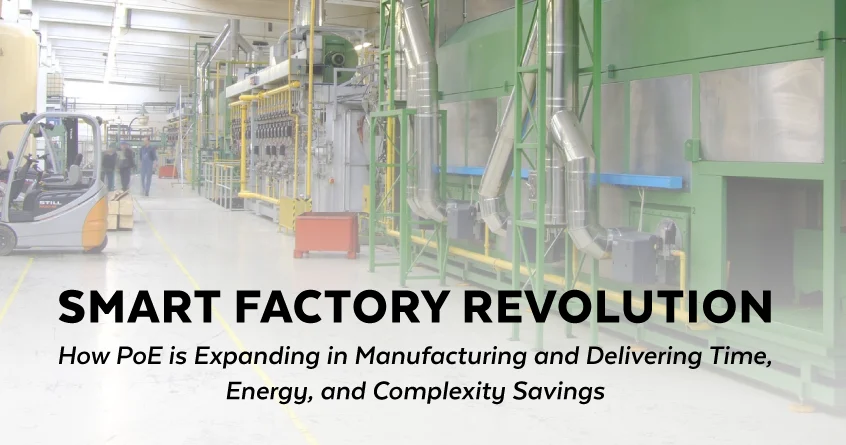
The modern factory floor is undergoing a metamorphosis. For decades, the landscape of industrial manufacturing was defined by a chaotic "spaghetti" of high-voltage conduits, bulky transformers, and daisy-chained extension cords snaking around heavy machinery. This traditional approach to infrastructure was not merely an aesthetic eyesore; it represented a significant operational bottleneck. Every time a new sensor, camera, or automated terminal was introduced, facility managers were forced to enlist licensed electricians to run dedicated power lines, leading to prolonged downtime and escalating labor costs.
Today, that clutter is being replaced by the elegant simplicity of Power over Ethernet (PoE). By consolidating electricity and data transmission into a single Ethernet cable, PoE is acting as the unsung hero of the Industry 4.0 revolution. As manufacturing environments become increasingly data-dense, the shift toward PoE is not just a trend—it is a foundational strategic pivot. With a projected Compound Annual Growth Rate (CAGR) of 17% through 2034, PoE is rapidly becoming the nervous system of the modern smart factory.
The Chronology of Power: From VoIP to Industrial Automation
To understand the current dominance of PoE in manufacturing, one must look back at its origins. Initially, PoE was a niche solution designed for the office environment, primarily tasked with powering Voice-over-IP (VoIP) phones and low-resolution security cameras. It was a convenient way to eliminate power bricks, but it lacked the robustness required for the industrial sector.
The transition to industrial-grade PoE began in earnest with the maturation of the Institute of Electrical and Electronics Engineers (IEEE) standards. Each iteration of these standards expanded the power budget and data capacity, moving from the modest 15.4 watts of the original 802.3af standard to the high-wattage, high-bandwidth capabilities of modern 802.3bt (PoE++).
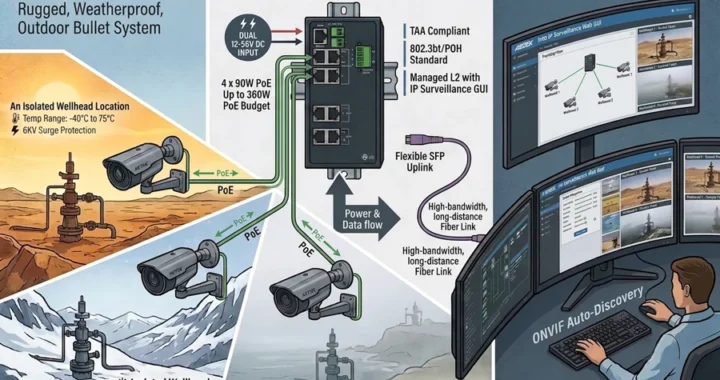
As smart manufacturing matured, the requirements evolved. Industrial engineers needed more than just power; they needed a system that could endure the "harsh environment" trifecta: dust, vibration, and extreme temperature fluctuations. Manufacturers began demanding ruggedized switches capable of operating in ranges from -40°C to 75°C. This evolution effectively bridged the gap between IT networks and Operational Technology (OT), allowing for the seamless deployment of high-power devices like robotic arms, advanced machine vision systems, and edge computing nodes that were previously tethered to traditional electrical grids.
Supporting Data: Why PoE is the Logical Choice
The market momentum behind PoE is supported by clear, quantifiable data. As IIoT (Industrial Internet of Things) sensor density increases, the complexity of power delivery scales exponentially. Conventional wiring cannot keep pace with the agile, AI-driven demands of modern production.
Operational Efficiency Metrics
Studies indicate that transitioning to a PoE-based infrastructure can reduce deployment time for new peripherals by up to 80%. When a facility is wired with a centralized PoE switch, adding a new sensor is a matter of "plug-and-play" connectivity. This eliminates the need for electrical permits and the high hourly rates associated with specialized electrical contractors.
Energy Optimization
One of the most compelling arguments for PoE is its potential for intelligent, centralized power management. Modern PoE switches utilize AI-driven algorithms to optimize power allocation. By delivering electricity only where and when it is needed, these systems reduce the "always-on" waste associated with traditional AC outlets.

Industry reports suggest that factories transitioning to intelligent PoE systems realize a 25% reduction in energy bills for lighting and device networks. This is achieved through:
- Remote Power Cycling: Administrators can reboot unresponsive devices remotely without sending a technician to the site.
- Scheduling: Power can be throttled or disabled during non-production hours.
- Load Balancing: Centralized switches manage the total power budget, preventing overloads and optimizing the draw from the primary electrical source.
The Implications of a Unified Network
The adoption of PoE creates a fundamental shift in how manufacturing facilities are managed. By collapsing the distinction between data and power, factories are achieving a level of interoperability that was previously impossible.
Bridging the IT/OT Divide
For years, IT (Information Technology) and OT (Operational Technology) teams operated in silos. IT managed the data networks, while OT managed the heavy machinery. PoE acts as the "bridge" between these two worlds. Because industrial-grade PoE switches are designed to be managed via standard IT interfaces, OT managers can now monitor physical machinery through the same software dashboards used to manage network traffic. This convergence allows for real-time visibility into the health and productivity of the production line.
Future-Proofing for AI and Automation
The implications for AI-driven automation are profound. As factories integrate predictive maintenance tools, the network must support higher bandwidth to process data from thousands of vibration, heat, and visual sensors. PoE systems today support multi-gigabit speeds, ensuring that the infrastructure installed today will not be obsolete when the next generation of AI-enabled robotics arrives.
Official Perspectives and Industry Standards
Industry experts and standard-setting bodies like the Ethernet Alliance are clear: the future of manufacturing is tied to the evolution of Ethernet. With current developments pushing toward 200 Gbps, 400 Gbps, and eventually 1.6 Tbps, the data backbone of the factory is rapidly expanding.
According to manufacturers who have implemented these systems, the initial capital expenditure (CAPEX) for high-end PoE switches is often offset within 18 to 24 months. The savings in labor, the reduction in maintenance, and the mitigation of production downtime provide a clear Return on Investment (ROI).
"We are moving toward a software-defined factory," notes one industry analyst. "When you remove the physical constraints of power wiring, you gain the agility to reconfigure your production line in real-time. That agility is the single most important competitive advantage in today’s global market."
Strategic Benefits: A Closer Look
To fully grasp the competitive edge provided by PoE, it is essential to examine the granular benefits of this technology.

1. Simplified Scaling and Flexibility
In a traditional factory, reconfiguring a production line is a massive project. Moving machinery often requires moving power outlets, which in turn requires electrical work. With a PoE-enabled factory, the infrastructure is ubiquitous. If an automated assembly station needs to be moved to a new zone, it can be disconnected and reconnected in seconds, provided there is an Ethernet port nearby. This scalability is critical for manufacturers who need to pivot quickly to meet changing consumer demands.
2. Reduced Complexity and Failure Points
Every hard-wired electrical junction is a potential point of failure. By moving to a centralized PoE architecture, the number of physical power connections is drastically reduced. Fewer cables mean cleaner pathways, reduced fire hazards, and easier troubleshooting. When a device stops working, the diagnostic tools within a PoE switch can immediately identify whether the issue is a data packet loss or a power delivery failure, significantly shortening the Mean Time to Repair (MTTR).
3. Sustainability and "Green" Manufacturing
Beyond the bottom line, PoE supports environmental, social, and governance (ESG) goals. By reducing the volume of copper wiring and plastic conduit required for a facility, manufacturers significantly lower their carbon footprint. The efficiency of intelligent power delivery further minimizes the facility’s total energy consumption, aligning with modern green manufacturing standards.
The Future Trajectory: Single Pair Ethernet and Beyond
As we look toward the next decade, the industry is already testing the next evolution of PoE: Single Pair Ethernet (SPE). By reducing the number of wires within the Ethernet cable, SPE allows for even longer reaches and lower bulk, enabling IP connectivity to penetrate the deepest, most remote areas of the factory floor.
Furthermore, as AI integration becomes more sophisticated, PoE switches are transitioning from simple power distributors to predictive tools. These switches are now capable of analyzing power usage patterns to signal mechanical wear—such as a motor drawing more current than usual—before a total system failure occurs.
In conclusion, the transition to a PoE-powered manufacturing environment is no longer an optional upgrade for the forward-thinking factory. It is a critical requirement for any organization that intends to remain competitive in the age of Industry 4.0. By embracing this unified infrastructure, manufacturers can move away from the chaotic, expensive, and inflexible systems of the past and into an era of agile, data-driven, and highly resilient production. As the technology continues to scale toward multi-gigabit speeds and smarter power management, those who invest in PoE today will be the leaders of tomorrow’s industrial landscape.