






[City, State] – [Date] – As artificial intelligence rapidly transitions from experimental curiosity to the operational bedrock of global enterprises, a critical challenge has emerged: how to harness the transformative power of AI without compromising sensitive data or introducing new security vulnerabilities. Today, Palo Alto Networks, a global leader in cybersecurity, announced a significant stride in addressing this paradox with the integration of its Prisma AIRS API directly into Anthropic’s Claude Enterprise. This collaboration promises to fortify AI deployments, ensuring that businesses can innovate at speed while maintaining robust security and compliance.
The widespread adoption of AI agents and assistants across departments – from Claude Code accelerating software delivery for developers to Claude.ai, Claude Cowork, and Claude Design facilitating business functions and collaboration – signifies a fundamental rewiring of corporate operations. Enterprises are increasingly relying on advanced AI models like Anthropic’s Claude to drive complex, autonomous workflows for their most critical tasks. However, this seismic shift in how businesses operate has thrust enterprise security teams into a precarious position. They are tasked with the monumental challenge of securing this new frontier without stifling the very innovation that AI promises.
This integration directly tackles three paramount security questions that have been keeping CISOs up at night:
- Data Leakage Prevention: How can organizations prevent sensitive proprietary data from inadvertently becoming part of the AI model’s training or output?
- Runtime Attack Mitigation: How can enterprises effectively intercept and neutralize sophisticated runtime attacks, such as prompt injection, before they can compromise systems or exfiltrate data?
- Consistent Guardrail Enforcement: How can these crucial security guardrails be enforced uniformly and in real-time across every single AI interaction, regardless of the specific Claude surface being utilized?
The answer, now powered by Palo Alto Networks and Anthropic, lies in a seamless, API-driven integration that injects zero-trust governance directly into the AI inference process.
The Genesis of a Secure AI Partnership
The journey towards this integration began with the recognition that as AI becomes more embedded in business-critical functions, its security posture must evolve in lockstep. Traditional security perimeters and methods are often ill-equipped to handle the dynamic and often opaque nature of AI interactions. The potential for data exfiltration through cleverly crafted prompts or the subtle manipulation of AI outputs necessitates a proactive, integrated approach.
Anthropic, known for its commitment to AI safety and its development of the Claude family of models, has been at the forefront of enabling enterprises to leverage AI responsibly. Their Claude Enterprise offers advanced capabilities designed for business use, providing a powerful platform for innovation. However, the responsibility for securing these powerful tools within an enterprise context falls to organizations and their security partners.
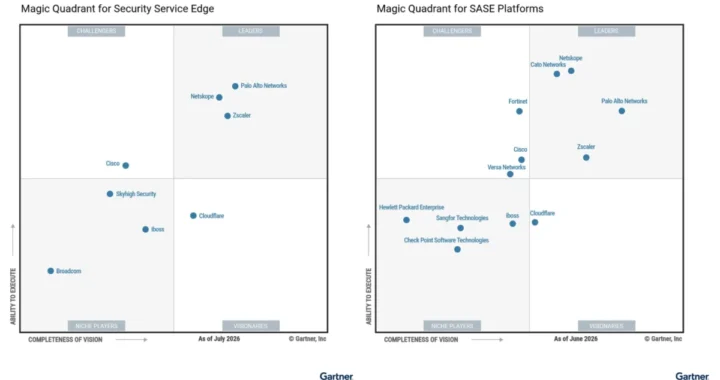
Palo Alto Networks, with its deep expertise in enterprise security and its comprehensive platform of SASE (Secure Access Service Edge) solutions, was uniquely positioned to provide the necessary security layer. The development of Prisma AIRS (AI Runtime Security) was a direct response to the growing need for specialized security solutions for AI deployments. AIRS is designed to provide visibility, control, and protection for AI applications, ensuring that they can be deployed and operated securely.
The announcement of the direct integration of the Palo Alto Networks Prisma AIRS API with Claude Enterprise via inference hooks marks a pivotal moment. This isn’t merely an add-on security feature; it’s a foundational integration that allows security policies to be applied at the point of AI interaction.
How the Integration Works: A Zero-Trust Framework for AI
The setup for implementing zero-trust governance within a Claude Enterprise environment is designed for speed and simplicity, requiring just a few clicks. This ease of deployment is crucial for enterprises looking to rapidly adopt AI without incurring significant operational overhead.
At its core, the integration operates by establishing a robust verification process for every interaction with Claude Enterprise. Prisma AIRS securely stores a signing secret within an encrypted edge Key-Value Map (KVM). This encrypted secret serves as the cryptographic key to verify the authenticity of every incoming request before it is processed by Claude. This initial handshake is critical, acting as a gatekeeper that ensures only legitimate and trusted requests proceed.
The flow of information is designed to be both efficient and secure:
- Prompt Initiation: A user or an application initiates a request to Claude Enterprise.
- Pre-Inference Hook: Before Claude processes the prompt, the payload is intercepted and sent to Prisma AIRS. This is the crucial "inference hook" that allows for real-time security inspection.
- Security Evaluation: Prisma AIRS then evaluates the incoming payload against the organization’s meticulously configured security profile. This profile encompasses a wide range of policies, including data loss prevention rules, acceptable use guidelines, and defenses against AI-specific threats.
- Synchronous Verdict: Based on the evaluation, Prisma AIRS returns a synchronous verdict to Claude Enterprise: either "allow" or "deny." This real-time feedback loop ensures that decisions are made instantaneously, preventing any untrusted or malicious content from reaching the AI model.
- Enforcement: If the verdict is "allow," Claude proceeds with processing the prompt. If the verdict is "deny," Claude immediately blocks the prompt. In cases of denial, the system can optionally present a user-facing explanation, providing immediate feedback to the user about why their request was blocked. Crucially, a unique audit correlation code is returned to the security telemetry dashboards, enabling comprehensive logging and analysis.
This "How It Works" illustrates a sophisticated yet streamlined approach to AI security, ensuring that every interaction is validated and governed according to established enterprise policies.
Unified Governance Across All Claude Surfaces
One of the most significant benefits of this integration is the provision of unified governance across all manifestations of Claude within an enterprise. This means that whether employees are using Claude for coding assistance, collaborative document creation, or design ideation, the same robust security and data protection policies are applied consistently.
The integration extends the reach of existing enterprise security infrastructure, eliminating the need for redundant rule creation or the management of separate AI-specific security tools. For organizations already leveraging Palo Alto Networks’ Enterprise Data Loss Prevention (DLP) engine, the Prisma AIRS integration offers immediate and impactful benefits.
Removing the Data Inspection Blind Spot:
This integration natively leverages the Palo Alto Networks Enterprise DLP engine that many organizations already operate. This means that current DLP policies, custom definitions of "confidential" data, and existing compliance dashboards are instantly extended to govern Claude interactions. This eliminates a significant "data inspection blind spot" that often accompanies the adoption of new AI technologies.
- No Redundant Rule Creation: Enterprises do not need to rebuild their data protection policies from scratch for AI. Existing, proven rules are automatically applied.
- No New Management Overhead: The existing management consoles and workflows for DLP remain the central point of control, simplifying administration and reducing the burden on security teams.
- Real-time Classification: Every prompt is classified in real-time, before it reaches the AI model. This proactive approach is fundamental to preventing data leakage.
- Instant Policy Updates: Data Policy updates that are made to the central DLP engine are immediately reflected in Claude’s governed interactions.
- Unified Reporting: Claude events are integrated into the same dashboards and audit reporting systems used for all other enterprise channels, providing a consolidated view of security posture.
This seamless extension of existing DLP capabilities transforms AI from an outlier in a data protection strategy into just another channel that is comprehensively covered.
Preventing Data Leakage:
In practice, this unified governance helps prevent a range of critical data leakage scenarios:
- Accidental Disclosure of Sensitive Information: Employees are prevented from inadvertently including confidential client data, proprietary code snippets, or personally identifiable information (PII) in prompts that could be logged or used for model training.
- Unauthorized Access to Internal Systems: Prompts designed to extract sensitive internal information or credentials are automatically flagged and blocked.
- Compliance Violations: Organizations can ensure that AI interactions adhere to industry regulations (e.g., GDPR, HIPAA) by preventing the input or output of regulated data without proper controls.
- Intellectual Property Theft: Proprietary algorithms, trade secrets, or strategic business plans are protected from being exposed through AI prompts.
AI Safety & Runtime Threat Protection
Beyond data loss prevention, Prisma AIRS also addresses the unique operational risks and potential for runtime attacks inherent in large language models. These threats are often more nuanced than traditional cyberattacks, requiring specialized detection and mitigation capabilities.
Simultaneously, Prisma AIRS inspects payloads for operational risks specific to large language models, including:
- Prompt Injection Attacks: This is a critical area of concern where malicious actors attempt to manipulate the AI’s behavior by embedding hidden instructions within a seemingly benign prompt. Prisma AIRS is designed to detect and block these attempts, preventing the AI from executing unintended actions, such as revealing sensitive system information or generating harmful content.
- Data Exfiltration via AI Output: Malicious actors might try to trick the AI into revealing sensitive data through its responses. Prisma AIRS’s DLP capabilities, now extended to AI outputs, can help prevent this.
- Denial of Service (DoS) Attacks: While less common in the context of individual prompts, the underlying infrastructure of AI deployments can be targeted. AIRS can contribute to identifying anomalous or resource-intensive prompt patterns that might indicate a DoS attempt.
- Insecure Output Handling: Prisma AIRS can help ensure that AI-generated outputs do not themselves contain vulnerabilities or expose sensitive information in an insecure manner.
If a prompt violates the organization’s security policy, Prisma AIRS issues a definitive "deny" verdict. Claude Enterprise then immediately blocks the prompt. This swift action is crucial for mitigating potential damage. The system’s ability to optionally present a user-facing explanation provides immediate feedback, helping users understand and correct their behavior. Simultaneously, the generation of a unique audit correlation code ensures that every security event is meticulously logged and available for forensic analysis, threat hunting, and compliance reporting within the organization’s existing security telemetry dashboards.
The Implications: Deploying Claude Without the Risk
The integration of Palo Alto Networks Prisma AIRS with Anthropic’s Claude Enterprise represents a paradigm shift in how businesses can approach AI adoption. It fundamentally transforms security from a potential deployment bottleneck into a powerful business enabler. Organizations no longer face the arduous choice between the comprehensive operational control and security posture provided by Palo Alto Networks and the immense cognitive velocity and innovation potential offered by Claude.
This partnership signifies a maturing of the AI security landscape. It moves beyond basic access controls and token management to offer deep, granular inspection and policy enforcement at the very core of AI interactions. This allows enterprises to:
- Accelerate AI Adoption: With robust security assurances in place, businesses can confidently and swiftly deploy AI across their operations, unlocking new efficiencies and competitive advantages.
- Enhance Developer Productivity: Developers can leverage powerful AI tools like Claude Code with the peace of mind that their work and proprietary code are protected.
- Foster Cross-Departmental Collaboration: Business teams can collaborate more effectively using AI assistants, knowing that sensitive company data remains secure and compliant.
- Strengthen Regulatory Compliance: The integration provides a clear path to demonstrating compliance with data privacy and security regulations when using AI.
- Build Trust in AI: By proactively addressing security concerns, this integration helps build trust among employees, customers, and stakeholders regarding the responsible use of AI.
Choosing Your Path Forward: A Strategic Advantage
The availability of this integrated solution presents enterprises with a clear and strategic advantage. They can now choose their path forward with confidence, knowing that the power of advanced AI models can be harnessed responsibly and securely. This integration offers a tangible solution to the complex challenges of AI governance, making it possible to:
- Embrace Generative AI Safely: Organizations can confidently deploy generative AI tools without the fear of data leakage or malicious manipulation.
- Protect Sensitive Data: The integration ensures that confidential information remains secure, both in transit and in potential AI processing.
- Mitigate Emerging AI Threats: Advanced runtime threat protection safeguards against novel AI-specific attacks.
- Achieve Unified Security Policy Enforcement: A single pane of glass for security policies across all AI interactions simplifies management and enhances visibility.
In conclusion, the integration of Palo Alto Networks Prisma AIRS API with Anthropic’s Claude Enterprise is a landmark development in the ongoing evolution of AI security. It provides a robust, unified, and user-friendly solution that empowers businesses to embrace the transformative potential of AI while maintaining the highest standards of security and compliance. This partnership is poised to accelerate AI adoption across industries, enabling organizations to innovate faster, operate more securely, and navigate the future of work with greater confidence.
Forward-Looking Statements
This blog contains forward-looking statements that involve risks, uncertainties, and assumptions, including, without limitation, statements regarding the benefits, impact, performance, or potential benefits, impact, or performance of our products and technologies or future products and technologies. These forward-looking statements are not guarantees of future performance, and there are a significant number of factors that could cause actual results to differ materially from statements made in this blog. We identify certain important risks and uncertainties that could affect our results and performance in our most recent Annual Report on Form 10-K, our most recent Quarterly Report on Form 10-Q, and our other filings with the U.S. Securities and Exchange Commission from time-to-time, each of which are available on our website at investors.paloaltonetworks.com and on the SEC’s website at www.sec.gov. All forward-looking statements in this blog are based on information available to us as of the date hereof, and we do not assume any obligation to update the forward-looking statements provided to reflect events that occur or circumstances that exist after the date on which they were made.