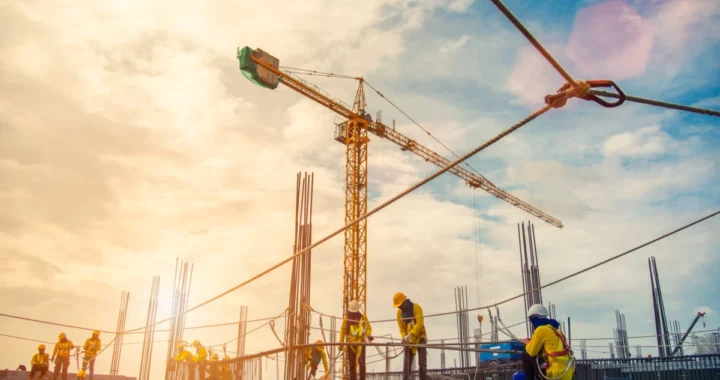








The landscape of American infrastructure is undergoing its most significant transformation in decades. Driven by the confluence of the Bipartisan Infrastructure Law (BIL) and the subsequent "Build America, Buy America" (BABA) Act, the United States is actively pivoting toward a philosophy of domestic self-reliance. For manufacturers like NSI Industries, this legislative shift is not merely a regulatory hurdle to be cleared; it is a fundamental recalibration of how American goods are sourced, produced, and distributed to meet the demands of a modern, resilient economy.
Main Facts: Understanding the BABA Mandate
At its core, the Build America, Buy America Act—enacted as part of the Infrastructure Investment and Jobs Act (IIJA) of 2021—serves as a powerful economic lever. It dictates that any infrastructure project utilizing federal financial assistance must prioritize materials manufactured within the United States. This mandate is expansive, covering a vast array of critical sectors including, but not limited to, highway and bridge construction, water system rehabilitation, and the rapid expansion of broadband internet across rural and underserved areas.
The scope of BABA is intentionally broad. It targets iron and steel, manufactured products, and construction materials. By tethering federal dollars to domestic manufacturing requirements, the legislation aims to eliminate the "leakage" of taxpayer funds to foreign markets, ensuring that the capital invested in American soil yields a return that bolsters the American middle class. For contractors, engineers, and municipal planners, this means that compliance is no longer optional—it is a prerequisite for project viability.
Chronology: The Road to "Made in the USA"
The trajectory of this policy shift began in earnest with the signing of the Bipartisan Infrastructure Law in November 2021. Recognizing that the U.S. had become overly reliant on fragile, international supply chains that were laid bare by the COVID-19 pandemic, policymakers sought a mechanism to insulate the nation’s infrastructure from future global shocks.
- November 2021: The Infrastructure Investment and Jobs Act (IIJA) is signed into law, authorizing over $1 trillion for transportation, utility, and climate-resilience infrastructure.
- Early 2022: The Office of Management and Budget (OMB) begins drafting the specific guidance for the BABA Act, establishing the criteria for "domestic content" in federally funded projects.
- 2023–2024: A period of implementation and transition, where manufacturers—including industry leaders like NSI Industries—undertook rigorous internal audits to align their product portfolios with BABA standards.
- 2025 and Beyond: The focus shifts toward long-term manufacturing growth, as the steady stream of infrastructure projects necessitates consistent, high-quality domestic supply chains that can scale with demand.
Supporting Data: The Economic Multiplier Effect
The rationale behind BABA is supported by strong economic data suggesting that local production provides a "multiplier effect" on regional economies. When a company invests in domestic production, the capital circulates locally through wages, secondary service providers, and tax contributions.
For companies like NSI Industries, the commitment to domestic manufacturing is evidenced by high-volume production of electrical and HVAC components. In an industry where lead times for international components can stretch into months due to logistics bottlenecks, domestic production offers a distinct competitive advantage: availability.
Data from the manufacturing sector indicates that "near-shoring" and "on-shoring" initiatives have significantly reduced project downtime for contractors. By maintaining robust in-stock inventory within the United States, manufacturers can insulate their distributor partners from the volatility of international shipping costs and customs delays. This reliability is the lifeblood of the construction industry, where delays in a single component—such as an electrical connector or an HVAC fitting—can halt a multi-million-dollar project.
Official Responses: The Strategic Pivot
The transition to BABA-compliant operations has been met with proactive enthusiasm by stakeholders who recognize the long-term benefits of a strengthened domestic base.
G.R. Schrotenboer, Chief Executive Officer of NSI Industries, characterizes the shift as a necessary evolution in customer service. "One of our top priorities is always putting our customers first and thinking of ways we can make it as easy as possible to do business with us," Schrotenboer stated. "By making a large portion of our products here in the U.S. to meet BABA guidelines, our distributors know and trust that we’ll have a consistent inventory for their customers’ needs. It’s one of our competitive advantages, and the right way to do business."
This sentiment is echoed throughout the supply chain. Distributors, who were once burdened with the complexity of verifying foreign-made parts, now find that partnering with domestic manufacturers simplifies their compliance documentation and ensures that their inventory remains "shovel-ready" for any federal project.
Implications for the Future of U.S. Manufacturing
The BABA Act is not merely a temporary policy; it is a catalyst for structural change. The implications for the U.S. economy are profound and multifaceted:
1. Innovation and Process Engineering
The mandate forces manufacturers to refine their processes. To compete with the historical price points of imported goods, U.S. manufacturers are increasingly adopting advanced automation and lean manufacturing techniques. This creates a high-tech manufacturing environment that requires a skilled workforce, thereby incentivizing investment in domestic vocational and technical education.
2. Supply Chain Resilience
Global events, from geopolitical tensions to environmental disasters, have proven that relying on a single, distant source for critical components is a liability. By nurturing a robust stateside manufacturing base, the U.S. is building a "defensive moat" around its infrastructure. This ensures that even in the face of global disruption, the internal work of building bridges, roads, and electrical grids continues unabated.
3. Global Leadership
The BABA Act positions the United States as a leader in the global manufacturing hierarchy. As the U.S. successfully navigates this transition, it sets a standard for high-quality, sustainably produced infrastructure components. This expertise becomes an exportable commodity—both in terms of physical goods and the intellectual property generated by new manufacturing methods.
4. Sustaining the Standard of Quality
NSI Industries has long prided itself on maintaining the highest quality standards, a reputation that has only been bolstered by the requirements of the BABA Act. When production is kept domestic, companies exert greater control over the quality assurance process. This eliminates the uncertainty that often accompanies imported goods, where the distance between the manufacturer and the end-user can result in inconsistent quality control. For the customer, this means a reliable, durable product that meets the stringent requirements of modern engineering codes.
Conclusion: A Commitment to Domestic Excellence
As the United States continues its ambitious path toward modernizing its infrastructure, the role of manufacturers becomes increasingly vital. The Build America, Buy America Act serves as the framework for this era of domestic renewal.
Companies like NSI Industries demonstrate that compliance with BABA is not just a hurdle to jump, but an opportunity to lead. By investing in American jobs, strengthening local supply chains, and prioritizing the needs of distributors and contractors, these manufacturers are ensuring that the infrastructure of tomorrow is built on the solid foundation of American quality today.
For those navigating the complexities of these requirements, transparency and education are key. Whether you are a contractor, a distributor, or a municipal decision-maker, understanding the nuances of the BABA Act is essential to project success. For further guidance and resources on how to navigate these requirements, visit www.IIJABuyersGuide.com.
In the final analysis, the BABA Act represents a return to the fundamentals: building with the best, sourcing from our neighbors, and investing in the people who do the work. It is a bold, necessary strategy that promises to define the American industrial landscape for generations to come.