






1. Main Facts: The Strategic Shift in Physical Infrastructure
The global colocation data center market is undergoing a structural transformation. As AI-driven high-performance computing (HPC) and hyperscale requirements push rack densities from traditional 5 kW levels toward 100 kW, the underlying physical infrastructure—specifically the optical fiber backbone—has emerged as a critical bottleneck.
For colocation operators, the optical backbone is no longer merely a cabling concern; it is the central nervous system of the facility. The modern colocation environment must serve a heterogeneous mix of cloud providers, financial institutions, and sovereign government entities, each demanding distinct levels of uptime, security, and bandwidth.
The core challenge identified in current industry trends is that many facilities still rely on legacy distribution architectures. These conventional models struggle to accommodate the shift toward 400G, 800G, and 1.6T transmission speeds. When a facility cannot scale its backbone without service interruptions, it loses its "speed-to-market" advantage—a metric that is currently the primary procurement criterion for premium, high-revenue tenants.
2. Chronology: From Static Facilities to Dynamic Ecosystems
The evolution of data center topology can be categorized into three distinct phases:
- The "Legacy" Era (Pre-2015): Data centers were designed with static, point-to-point cabling. Fiber counts were low, and expansion required significant "rip and replace" construction, leading to downtime and high operational expenditure (OpEx).
- The "Hybrid" Transition (2015–2022): Operators began adopting Meet-Me-Room (MMR) concepts but relied on proprietary, non-modular patch panels. While flexibility improved, physical density remained constrained by outdated rack-space management strategies.
- The "Hyper-Modular" Present (2023–Present): Driven by the surge in Generative AI, the current state-of-the-art involves the deployment of high-density, modular architectures. These systems prioritize "non-disruptive scalability," allowing for the integration of massive fiber counts (3,000+ per cabinet) without impacting existing tenant traffic.
3. Supporting Data: The Economic and Technical Imperatives
The transition to advanced backbone topologies is backed by clear economic logic. In a colocation facility, every Rack Unit (RU) is a revenue-generating asset. Traditional cabling systems often consume 20% to 30% more floor space than modular high-density counterparts.
Density and Throughput Metrics
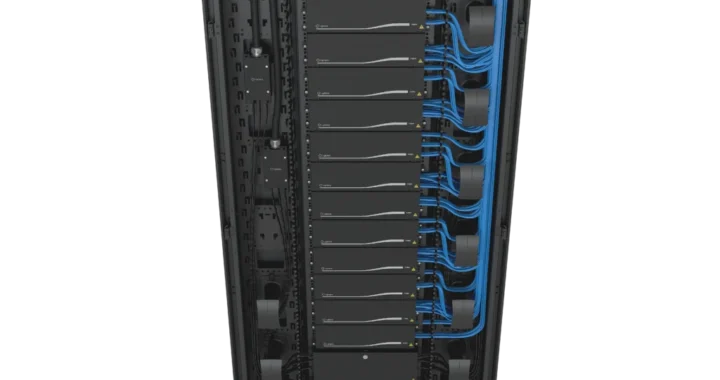
- Fiber Capacity: Current standards for future-proof facilities suggest a shift toward high-density termination modules capable of handling 288 to 3,456 fibers per cabinet.
- Power-to-Fiber Ratio: As rack power density rises, the number of fiber strands required to support the associated data throughput grows exponentially. Failure to account for this in the design phase leads to "stranded capacity," where a facility has power but lacks the connectivity to support high-speed AI clusters.
- The Cost of Downtime: For financial and sovereign cloud tenants, the cost of a single hour of downtime can exceed $1 million. Modular designs that allow for "hot-swappable" expansion eliminate the need for maintenance windows, directly protecting the operator’s Service Level Agreements (SLAs).
4. Official Perspectives: Engineering Excellence as a Business Strategy
According to Cássio Cardoso, Senior Engineer at Lightera and an expert in high-density optical infrastructure, the industry is witnessing a decoupling of technical design from general building construction.
"The optical backbone is invisible when it works," Cardoso notes. "But when you are competing for hyperscale anchor tenants, the quality of your physical layer is the first thing they scrutinize during due diligence. It is no longer about just providing space and power; it is about providing a resilient, agile, and secure fabric."
Cardoso emphasizes that top-tier operators are now treating the MMR not just as a room, but as a "Strategic Hub." By standardizing MMR-to-MMR and MMR-to-Cage topologies, operators can create a "plug-and-play" environment that reduces the time to provision new cross-connects from weeks to hours. This agility is a direct competitive advantage, allowing operators to secure tenants who require rapid deployment cycles.

5. Implications: The Three Strategic Pillars
To remain competitive, operators must align their physical infrastructure with three foundational pillars:
I. Non-Disruptive Scalability
In the modern market, hyperscale tenants can emerge overnight. A modular backbone allows operators to add capacity in increments, using standardized, interchangeable components. This ensures that the infrastructure remains a dynamic growth platform rather than a static, depreciating asset. By decoupling the expansion process from the active traffic paths, operators ensure that their SLAs remain untouched during facility growth.
II. Maximizing Revenue per Square Foot
High-density termination modules are essential for maximizing the return on investment (ROI). By condensing hundreds of connections into a smaller footprint, operators reclaim rack space that can be sold as premium colocation capacity. This is an economic imperative in high-cost urban markets where physical space is a finite resource.
III. Physical Security and Regulatory Compliance
The "physical" in physical security is becoming a major audit focus. With the rise of sovereign cloud programs, tenants are demanding evidence of strict fiber segregation. Modern topologies allow for the physical separation of tenant paths, restricted access to fusion points, and meticulous, automated documentation. This alignment with international standards—such as ISO 27001 and PCI DSS—is a critical factor in passing the rigorous due diligence processes required by government and financial sector clients.
6. Future-Proofing the Digital Infrastructure
As we look toward the next five years, the convergence of AI, 1.6T networking, and edge computing will place unprecedented stress on the physical layer. Operators who view their backbone as a "set and forget" component will inevitably face obsolescence.
Conversely, those who adopt a modular, high-density strategy are positioning themselves as preferred partners for the next generation of digital infrastructure. The decision to invest in a robust, flexible, and secure optical backbone is not just an engineering choice; it is a fundamental business strategy that defines an operator’s ability to retain premium tenants and navigate the complexities of a rapidly evolving digital landscape.
About the Author
Cássio Cardoso, ATD®, RCDD®, PMP®, is a Senior Engineer at Lightera, specializing in high-density optical infrastructure. With decades of experience in mission-critical environments, he advises global colocation operators on bridging the gap between current network demands and future technological requirements. His work continues to influence how data centers in Latin America and abroad approach the design and deployment of their physical connectivity ecosystems.
Summary Checklist for Colocation Operators:
- Audit Current Backbone: Does your current topology allow for 400G+ scaling without re-cabling?
- Evaluate Modular Potential: Can you add new connections without disturbing live traffic?
- Assess Density: Are you utilizing high-density termination to maximize sellable rack units?
- Review Security: Are fiber paths physically separated and documented for audit readiness?
- Adopt Standardized Components: Are your interconnects modular to reduce procurement and installation lead times?
By addressing these five areas, operators can transform their optical backbone from a hidden cost center into a powerful engine for long-term business growth and tenant retention.