


Palo Alto, CA & Dallas, TX – [Insert Current Date] – In a landscape rapidly reshaped by the accelerating power of Artificial Intelligence and hyperconnectivity, a silent yet profound revolution is underway, threatening the very bedrock of digital trust. As the digital economy surges forward, unlocking unprecedented value, the burgeoning field of quantum computing poses a fundamental challenge to the cryptographic foundations that secure this burgeoning wealth. Recognizing this existential threat, two titans of global networking and cybersecurity, Palo Alto Networks and AT&T Business, have joined forces to introduce a groundbreaking solution designed to usher in an era of quantum-resilient connectivity for businesses worldwide.
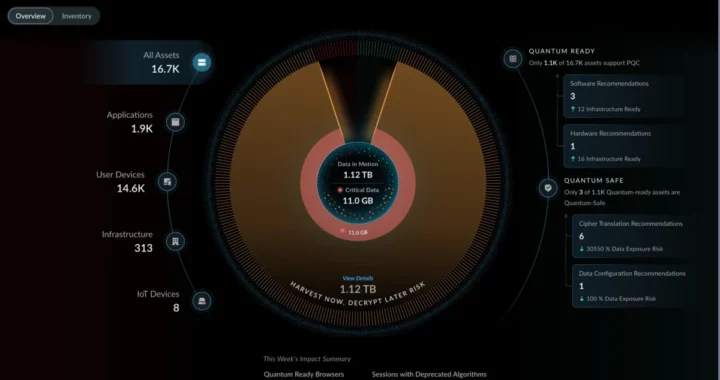
This strategic alliance has culminated in the launch of the Quantum-Resilient SASE Fabric, a unified security and networking solution that proactively addresses the imminent cryptographic vulnerabilities posed by quantum computing. This initiative signifies a paradigm shift, moving beyond theoretical discussions to concrete action, positioning quantum-readiness not as a distant aspiration, but as an immediate and critical strategic imperative. The implications of inaction are stark: data longevity is threatened, and the concept of "Trust Now, Forge Later"—exploiting current encryption weaknesses to retroactively compromise sensitive information—looms large, jeopardizing digital identities and the integrity of global commerce.
The Quantum Leap: From Mathematical Fortress to Vulnerable Foundation
For over three decades, the intricate mathematics underpinning classical cryptographic algorithms, such as RSA and Diffie-Hellman, have served as the robust shield for the global economy. These algorithms were designed to be computationally intractable for even the most powerful classical computers, rendering the task of decryption a Herculean effort, effectively safeguarding sensitive data. However, the advent of quantum computing fundamentally alters this equation.
Quantum computers, with their unique ability to harness quantum phenomena like superposition and entanglement, can perform calculations at speeds unfathomable to their classical counterparts. This exponential advantage is particularly pronounced when dealing with the mathematical problems that underpin current encryption standards. Dr. John Preskill, a theoretical physicist at Caltech, famously coined the term "quantum supremacy" to describe this capability, highlighting the moment a quantum computer could outperform the most powerful classical supercomputers on a specific task.
The implications for cybersecurity are profound. The application of Shor’s Algorithm, a quantum algorithm developed by Peter Shor in 1994, can break many of the public-key cryptography systems currently in use. What would take a classical supercomputer millennia to decipher could potentially be accomplished by a sufficiently powerful quantum computer in mere hours. This presents a clear and present danger, as sensitive data encrypted today, even if deemed secure by current standards, could become vulnerable to decryption in the future once quantum computers reach maturity. This looming threat necessitates a proactive approach, moving beyond incremental security upgrades to a fundamental reimagining of our digital defenses.
Neutralizing the Quantum Crisis: A Native Integration of Post-Quantum Cryptography
Palo Alto Networks, a recognized leader in cybersecurity innovation, is at the forefront of this quantum defense strategy. The company is embedding Post-Quantum Cryptography (PQC) as a native and foundational pillar within its Prisma SASE (Secure Access Service Edge) fabric. This is not a mere software patch or a bolt-on solution; it represents a fundamental architectural shift designed for long-term resilience.
The move away from a "forklift-upgrade" model, which often involves replacing entire systems, signifies a commitment to a more agile and adaptable security posture. Prisma SASE is built on a software-defined, standards-based foundation that prioritizes the strict separation of management and data plane components. This architectural design is crucial for quantum readiness. The management plane, responsible for configuring and controlling the network and security policies, can be secured using PQC algorithms, while the data plane, which handles the actual traffic flow, can also be transitioned to quantum-resistant encryption without disrupting operations.
This native integration ensures that as quantum computing capabilities advance, the underlying cryptographic strength of the Prisma SASE fabric can evolve in tandem, providing continuous protection. By prioritizing PQC at the core of its offering, Palo Alto Networks is empowering businesses to build a security infrastructure that is inherently resilient to the threats of tomorrow, rather than constantly playing catch-up.
The AT&T Perspective: Security at Global Scale, Embedded in the Network
From the vantage point of AT&T, a global leader in telecommunications and connectivity, the integration of PQC is not merely a technological advancement; it is an operational mandate. The company’s vast network infrastructure serves some of the world’s most regulated industries, where the stakes for data security are exceptionally high. For these organizations, security cannot be an afterthought or an add-on; it must be an intrinsic property of the entire connectivity ecosystem, from the transport layer to the underlying infrastructure.
AT&T’s commitment to a quantum-ready future is intrinsically linked to its Dynamic Defense strategy. This approach emphasizes proactive threat mitigation and a security-first mindset woven into the fabric of its network services. The complexity of managing a global network footprint, spanning diverse technologies such as 5G, fiber optics, and legacy underlays, requires an unparalleled depth of institutional expertise. AT&T possesses this expertise, enabling it to navigate the intricacies of securing a multifaceted global infrastructure.
The collaboration with Palo Alto Networks allows AT&T to extend the reach of its Dynamic Defense capabilities, offering customers a more secure and quantum-ready network. This means that regardless of whether a customer’s data is traversing an MPLS circuit, a fiber optic backbone, or the public internet, the underlying security posture is consistently robust and future-proofed against quantum threats. The focus is on providing security where it matters most: at the point of data transmission, ensuring that the journey of information is as secure as its destination.
Turning Complexity into a Strategic Advantage: The Synergy of Network and Security
The true power of the Palo Alto Networks and AT&T Business collaboration lies in the seamless synergy between their respective strengths: Palo Alto Networks’ cutting-edge security innovation and AT&T’s expansive and robust global network. This integration creates a solution that is far more resilient and effective than the sum of its individual components.
The SPI Advantage: Performance Without Compromise in a Quantum World
A critical element of this partnership is the implementation of Service Provider Interconnect (SPI). This innovative approach allows Palo Alto Networks’ security platforms to natively integrate with AT&T’s private network core. This direct integration creates a "quantum-safe on-ramp" for business traffic. Instead of relying on slow and complex software tunnels built over the public internet, business traffic can now connect directly to AT&T’s secure network.
Historically, achieving high levels of encryption often came with a significant "performance tax," impacting latency and throughput. This was a major concern for organizations that required both robust security and high-performance connectivity. The combined architecture of Palo Alto Networks and AT&T overcomes this challenge. By enabling quantum-safe traffic to flow seamlessly over AT&T’s network backbone, organizations can modernize their security defenses without sacrificing the user experience or compromising critical business operations. This means that the benefits of next-generation encryption are now attainable without the traditional trade-offs in performance.
Securing the Decentralized Perimeter: The Branch as the New Edge
In today’s highly distributed business environment, the traditional concept of a centralized corporate "headquarters" as the sole center of gravity has become obsolete. The network perimeter has fundamentally shifted, extending to the branch office—which now serves as a decentralized edge—and to the individual 5G-connected devices used by employees. These remote and local edge points are critical gateways where sensitive company data is first introduced into the network, making their security paramount.
Leveraging AT&T’s leadership in Wide Area Network (WAN), 5G, and cellular technologies, the collaboration employs Hybrid Public Key Infrastructure (PKI) to secure these edge locations. Hybrid PKI is a sophisticated digital identity framework that issues dual security credentials to every device. This dual-credential system provides one "classical" identity, ensuring compatibility with existing networks and infrastructure, and a second "quantum-resistant" identity. This double-verification mechanism ensures that a remote branch connected via cellular or a mobile site is as impervious to quantum decryption or identity spoofing as a heavily fortified corporate data center. This comprehensive approach to edge security is vital for protecting the integrity of data at its source.
The Path Forward: A Vision for Long-Term Trust and Digital Integrity
The transition to a quantum-ready future is not a sudden event but a strategic journey, a marathon that requires deliberate and proactive steps. Palo Alto Networks and AT&T Business are providing a clear, practical, and actionable path for businesses to achieve quantum resilience.
This initiative is more than just a simple software update; it represents a fundamental re-engineering of network and security architectures to prepare customers for the next generation of digital commerce. By combining their expertise, Palo Alto Networks and AT&T are building a future where the data of today remains protected against the sophisticated threats of tomorrow. This collaborative effort is dedicated to securing the digital integrity of every enterprise they serve, ensuring that businesses can operate with confidence in an increasingly complex and dynamic threat landscape.
As these industry leaders redefine the boundaries of security within connectivity, they extend an invitation to all enterprises to join them in securing their digital future. Businesses are encouraged to contact their respective Palo Alto Networks or AT&T account representatives to initiate a strategic Quantum-Readiness Assessment. This proactive step will allow organizations to understand their current posture, identify potential vulnerabilities, and begin experiencing the tangible benefits of the Quantum-Resilient SASE Fabric. The future of secure digital operations depends on embracing these transformative solutions today.