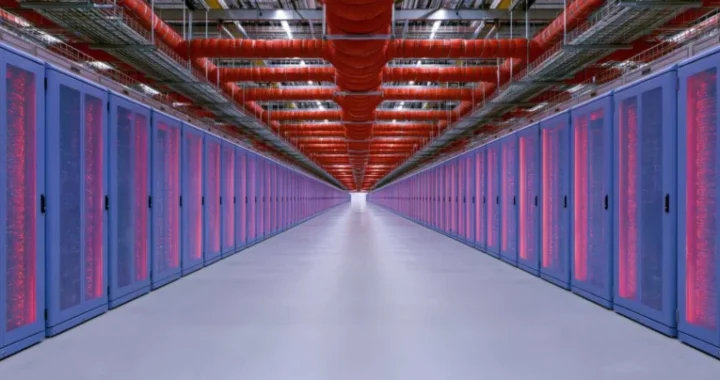








As the global race to achieve artificial intelligence (AI) supremacy accelerates, the geopolitical and economic stakes have shifted from mere software development to the very hardware and network foundations upon which AI rests. Today, the choice of Information and Communications Technology (ICT) vendors is no longer a standard procurement decision; it is a fundamental strategic commitment that will dictate national security, economic sovereignty, and innovation capacity for decades to come.
As the Telecommunications Industry Association (TIA) and policymakers in Washington have increasingly emphasized, AI is not a standalone product. It is a resource-intensive technology that relies entirely on reliable, secure, and resilient digital infrastructure. Data centers, cloud platforms, and global communications networks serve as the nervous system of modern intelligence. If these foundations are compromised, the entire AI ecosystem—and the nations that host them—become vulnerable.
The Strategic Shift: Trust as Infrastructure
In the current global landscape, digital infrastructure is not an interchangeable commodity. Because AI models require massive datasets and low-latency processing, they are inextricably linked to the networks that transport that data. Governments across the globe are currently making long-term infrastructure decisions that will lock their economies into specific technological architectures.
The United States has begun to formalize this strategic imperative by embedding "trusted vendor" requirements into international trade agreements. Recent reciprocal pacts with El Salvador and Guatemala serve as a blueprint for this new diplomacy. These agreements mandate the deployment of technology solutions that meet specific security and interoperability standards, signaling a departure from the "cheapest bidder" procurement models of the past toward a model that prioritizes systemic security and democratic alignment.
Defining the "Trusted Vendor": A Chronology of Standards
The concept of a "trusted vendor" has evolved from a vague industry buzzword into a rigorous, evidence-based set of criteria. The crystallization of this definition began in earnest in 2020, as the geopolitical risks associated with insecure digital supply chains became undeniable.
The 2020 Consensus
The Center for Strategic and International Studies (CSIS) convened a high-level group of international experts to move beyond marketing rhetoric. They established that trust must be rooted in governance, transparency, and accountability. The key criteria established during this period include:
- Jurisdictional Accountability: The vendor must be headquartered or deeply rooted in a legal environment that respects the rule of law, protecting the vendor from arbitrary state interference or forced data extraction.
- Transparency of Ownership: There must be full visibility into the corporate structure to identify foreign government influence or ownership.
- Demonstrable Security Practices: A track record of rigorous security audits, prompt patching, and adherence to international cybersecurity standards.
- Commitment to Open Interoperability: A rejection of "vendor lock-in" strategies that prevent users from integrating multi-vendor solutions, thereby ensuring greater architectural flexibility.
The Policy Evolution
Following the CSIS framework, the U.S. Administration integrated these principles into the broader "Clean Network" initiatives and subsequent bipartisan legislative efforts. By 2023, the focus shifted from merely excluding high-risk vendors to actively promoting an "ecosystem of trust." This transition is evident in the recent trade agreements that tie development aid and market access to the adoption of trusted ICT frameworks, effectively creating a "club" of nations committed to secure, transparent digital development.
The Democratic Advantage: Why Governance Matters
A central pillar of the "trusted vendor" argument is that trust is not a technical feature that can be toggled on or off; it is a byproduct of the legal and political environment in which a company operates.
Democratic nations offer a unique environment for technology development. Independent judiciaries, transparent regulatory systems, and robust protections for civil liberties ensure that if a technology provider acts maliciously, there are legal mechanisms to hold them accountable. When a government selects a vendor from a democratic, rule-of-law-abiding jurisdiction, it is not just buying a server or a router—it is buying a system that is subject to the same democratic oversight as the nation itself.
This creates a "resilience multiplier." When allied nations build their 5G networks, cloud storage, and AI processing centers using shared trusted standards, they create a cohesive, interoperable, and secure international fabric. This reduces systemic risk; if one node in the network is compromised, the entire infrastructure is not necessarily at risk, provided the architecture supports secure, interoperable protocols.
Supporting Data: The Cost of Inaction
The risks of ignoring these criteria are no longer hypothetical. Global intelligence reports and cybersecurity firms have documented an increasing number of instances where "backdoor" access or hidden hardware vulnerabilities have been exploited by state actors.
Data from the TIA and various cybersecurity consortiums suggest that:
- Supply Chain Attacks: The number of software supply chain attacks increased by over 300% between 2020 and 2023, highlighting the necessity of vetting vendors at the root level.
- The "Lock-in" Economic Tax: Nations that rely on proprietary, closed-loop systems from high-risk vendors face a "lock-in" tax, where the cost of transitioning to new technology is exponentially higher once the initial infrastructure is embedded.
- Performance and Reliability: Trusted, interoperable networks consistently show higher uptime and better resistance to large-scale cyber-attacks compared to proprietary, closed-source alternatives.
Official Perspectives and Diplomatic Efforts
The U.S. Office of Science and Technology Policy (OSTP) has been a vocal proponent of this paradigm. Former OSTP Director Michael Kratsios frequently emphasized that nations have a sovereign right to own and operate their digital futures.
"Nations should be able to use best-in-class technology within ecosystems that prioritize independence," Kratsios noted in international forums. This sentiment is the core of the current U.S. diplomatic push: the goal is not to dictate what technology countries use, but to ensure that the infrastructure they choose empowers, rather than surveils, their populations. By partnering with the private sector—including members of the TIA—the U.S. government is positioning trusted vendors as the only logical choice for long-term national competitiveness.
Implications for the AI Future
The implications for the next decade are clear: the AI revolution will be won by the nations that get their infrastructure right.
Economic Sovereignty
AI models rely on the data they are fed and the processing power that runs them. If the infrastructure underneath is untrusted, the integrity of the data cannot be guaranteed. This could lead to "model poisoning" or unauthorized data harvesting, which would destroy the value of any AI investment. By choosing trusted vendors, nations protect the integrity of their domestic AI innovations.
Global Interoperability
The future of AI is collaborative. It will involve cross-border research and shared computing resources. Interoperability is the key to this collaboration. By adhering to international standards and choosing trusted, interoperable equipment, nations ensure they are not isolated in a siloed digital environment. They remain part of a global, innovative, and competitive marketplace.
Building for the Long Term
The TIA and its partners argue that we are currently in a "foundation-laying" phase. Much like the construction of the transcontinental railroads or the interstate highway system, the digital infrastructure we build today will define the economic geography of the 21st century.
"Resilient digital infrastructure is created by embedding trust into design, governance, and execution," the TIA maintains. This is the mantra for the modern digital era. It requires a fundamental shift in mindset: moving away from the short-term savings of low-cost, high-risk hardware, and toward the long-term, compounding value of secure, accountable, and interoperable digital ecosystems.
Conclusion
As AI continues its rapid ascent, the question for every nation is no longer just "how do we innovate?" but "upon what foundation do we build?" The global race to deploy artificial intelligence is a race for control over the digital tools of the future. By prioritizing trusted ICT vendors, nations are making a strategic choice to align themselves with security, transparency, and the rule of law.
The path forward is clear: success in the AI era requires a commitment to a secure and open architecture. By fostering environments where technology is accountable and infrastructure is resilient, democratic nations can ensure that the AI revolution serves as a tool for empowerment, economic growth, and global prosperity. The foundation of the future is not just software—it is the bedrock of trust upon which all innovation must stand.