




The telecommunications landscape is undergoing a radical transformation. As global networks evolve toward 5G-Advanced and the preliminary architecture of 6G, the sheer complexity of managing these infrastructures has outpaced traditional software-defined networking tools. Into this breach steps Artificial Intelligence—but not the generic AI that has dominated the public discourse. Today, the industry is witnessing the birth of "Telco-Grade AI," marked by the landmark release of OTel 2.0.
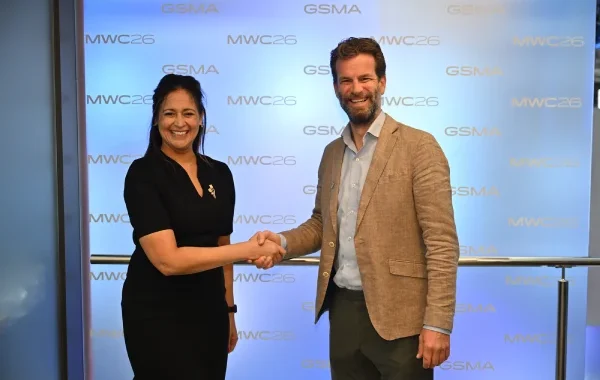
Now live and currently holding the top position on the Open-telco.ai leaderboard, OTel 2.0 represents a paradigm shift. Developed by AT&T, this post-trained iteration of Gemma 4 31B-IT was forged from a massive corpus of 400 billion telecom-specific tokens. This development, which GSMA’s Louis Powell describes as a critical milestone, signals the industry’s departure from reliance on general-purpose Large Language Models (LLMs) toward a future of specialized, high-fidelity machine intelligence.
The Main Facts: What is OTel 2.0?
OTel 2.0 is not merely a chatbot; it is a specialized engine designed to navigate the labyrinthine technical specifications, protocols, and standards that underpin global connectivity. By taking the Gemma 4 31B-IT architecture and subjecting it to rigorous post-training on a proprietary telecom dataset, AT&T has created a model that understands the difference between a network latency issue and a configuration error in a way that generic models simply cannot.
The model is the result of a massive data curation effort. The training set was derived from over 1 trillion processed tokens, filtered down to 400 billion tokens of high-quality, industry-specific data. This focus on data density ensures that the model is not only knowledgeable but efficient—delivering higher accuracy with a significantly smaller parameter footprint than the massive, bloated models currently dominating the consumer market.
The Chronology of a Data Revolution
The path to OTel 2.0 was not a straight line, but a multi-year effort to solve the "data vacuum" that has long plagued telecom AI development.
Phase 1: The Standards Collection (The Foundation)
The journey began with the realization that the "Telco Knowledge Base" was scattered across fragmented PDFs, disparate standards bodies, and internal proprietary archives. The GSMA initiated a collaborative effort to consolidate data from seven primary standards development organizations: 3GPP, ETSI, GSMA, CAMARA, ITU, O-RAN, and the TM Forum.
Phase 2: The Telco Common Corpus
Recognizing that the industry lacked a "Wikipedia equivalent," the GSMA and Pleias joined forces to release the Telco Common Corpus. Spanning approximately 10 billion tokens, this was the first verified, open-access data commons for telecom AI. This dataset served as the bedrock for training, proving that the industry could, in fact, self-organize its knowledge.
Phase 3: The AT&T Integration
With a solid foundation in place, AT&T took the lead in scaling the project. By combining the GSMA/Pleias corpus with internal AT&T datasets and securing hardware and software support from industry heavyweights like Red Hat, Dell, Microsoft Azure, and AMD, the project scaled to 400 billion tokens. This culminated in the release of the OTel 2.0 family.
Supporting Data: Why Generalization Fails
The industry’s push for specialized models is backed by empirical performance metrics. When benchmarked against the Open Telco AI standards, the top three performers are universally domain-adapted models. This outcome provides a compelling rebuttal to the idea that "bigger is better."
The "Generic vs. Domain-Adapted" Gap
General-purpose models are trained on the vast, chaotic expanse of the public internet. While they excel at creative writing or casual conversation, their performance on industry-specific tasks—such as troubleshooting a 5G core network slice or interpreting a specific ETSI specification—is often unreliable.
- Accuracy: Domain-adapted models show a marked decrease in "hallucinations," as their probabilistic weightings are anchored in technical reality rather than creative interpolation.
- Efficiency: Because OTel 2.0 is optimized for specific tasks, it requires less compute power to run. This is a vital requirement for operators who need to deploy AI models at the "Edge"—on-premise, in micro-datacenters, or across diverse cloud environments.
- Enterprise Control: Unlike proprietary black-box models, OTel 2.0 provides the transparency necessary for telecom operators to maintain security and regulatory compliance, ensuring that sensitive network data remains governed by the operator.
Official Responses and Strategic Implications
The release of OTel 2.0 has been met with significant enthusiasm from industry stakeholders, who see it as a necessary evolution of the digital infrastructure.
Why the Industry Needs Sovereignty
"The current generation of AI is fantastic for writing marketing copy, but it doesn’t know how to optimize a radio access network (RAN)," says one industry analyst familiar with the project. "By building OTel 2.0, the industry is reclaiming control over its own intellectual stack."
The implications for enterprise requirements are profound. Telecom operators are under immense pressure to reduce operational expenditures (OPEX) while managing the increasing complexity of virtualized networks. OTel 2.0 is designed to integrate into these workflows, assisting engineers with:
- Network Troubleshooting: Automatically diagnosing complex outages by correlating logs with technical specifications.
- Configuration Management: Translating natural language instructions into standardized configuration scripts.
- Product Development: Accelerating the time-to-market for new service offerings by automating the documentation of complex requirements.
The Roadmap: An Open Ecosystem for the Future
OTel 2.0 is positioned not as a finished product, but as a catalyst for a larger ecosystem. The GSMA is explicitly framing this as an "open" journey. By making the model weights and datasets available, they are inviting vendors, researchers, and competing operators to build upon their work.
Efficiency as the Ultimate Metric
Looking ahead, the next phase of development will focus on "model size diversity." Not every telecom use case requires a 31B parameter model. Future iterations of the OTel family are expected to include smaller, "lite" versions optimized for low-power hardware, ensuring that AI can be embedded into the very hardware of the network.
"The goal is a modular, interoperable library of AI models," says a spokesperson for the Open Telco initiative. "We want an operator in Europe to be able to take our base model, fine-tune it with their specific regional requirements, and share those insights back to the community."
Conclusion: A New Era of Collaboration
The success of OTel 2.0 at the top of the Open-telco.ai leaderboard is more than a technical achievement; it is a victory for open collaboration in an industry that has historically been siloed. By aggregating the collective intelligence of the 3GPP, ETSI, and other standards bodies into a machine-readable format, the telecom industry has finally begun to bridge the gap between human expertise and machine performance.
For the developers, operators, and researchers currently experimenting with OTel 2.0, the invitation is clear: test, iterate, and contribute. The GSMA is actively seeking to showcase real-world applications of these models at upcoming industry forums, including the prestigious MWC (Mobile World Congress) event series.
As we stand at the threshold of this new era, one thing is certain: the future of telecommunications will be defined by those who can best leverage domain-specific AI. With OTel 2.0, the industry has finally built the engine—now it is time to see how far it can take us.
If your organization is working with OTel models and achieving measurable results, the GSMA encourages you to get in touch to discuss potential collaboration and feature opportunities.