




The contemporary sports fan is no longer satisfied with merely watching a game. Today’s spectators demand a seamless, tech-integrated experience that mirrors their digital lives—from instant ticket validation and frictionless payments to high-definition, shareable social media moments. As stadiums evolve into hyper-connected "smart venues," the traditional public Wi-Fi models of the past are proving insufficient. To meet the demands of high-density crowds and mission-critical operations, venue architects are increasingly turning to a robust combination of Power over Ethernet (PoE) technology and private cellular networks.
The Architecture of Connectivity: Understanding PoE and Private Networks
At the heart of the modern stadium revolution lies a dual-layer technological approach: Private Networks (often utilizing CBRS spectrum) and PoE infrastructure.
What are PoE Private Networks?
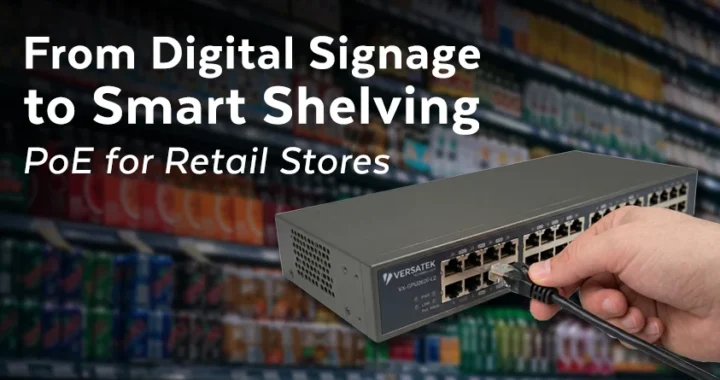
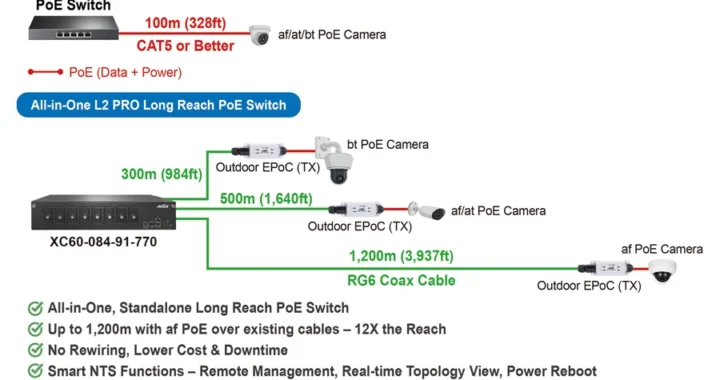
Power over Ethernet (PoE) is a transformative technology that allows both electrical power and data to be transmitted over a single Ethernet cable. This eliminates the need for proximity to traditional AC power outlets, granting stadium operators the flexibility to deploy IoT sensors, surveillance cameras, digital signage, and wireless access points (WAPs) in optimal locations regardless of existing electrical infrastructure.
Complementing this is the emergence of private networks, particularly those leveraging the Citizens Broadband Radio Service (CBRS). Established by the FCC in 2015, CBRS utilizes the 3550-3700 MHz band to provide a dedicated, secure, and high-performance wireless lane. While fans utilize public Wi-Fi or carrier cellular services for their personal social media needs, stadium operations—such as on-field communications, security, and concession point-of-sale (POS) systems—operate on a private, isolated network. This ensures that operational data never competes for bandwidth with thousands of fans uploading videos simultaneously.
Chronology: The Evolution from Concrete Bowls to Smart Arenas
The transition to smart infrastructure has been a steady march of innovation over the last decade.

- 2010–2014: The Wi-Fi Struggle. As smartphone adoption exploded, stadiums realized that public Wi-Fi was often overwhelmed. Infrastructure was reactive rather than proactive, leading to the infamous "stadium dead zone."
- 2015: The CBRS Breakthrough. The FCC’s introduction of CBRS provided the spectrum necessary for stadiums to build private LTE/5G networks, creating a dedicated "private lane" for mission-critical traffic.
- 2016–2019: The Rise of IoT. With the maturation of high-wattage PoE standards, venues began deploying massive arrays of security cameras, smart lighting, and digital wayfinding signs that could be managed via single-cable connectivity.
- 2020–Present: AI and Immersive Integration. Modern venues like SoFi and Allegiant Stadium have moved beyond simple connectivity, integrating real-time AI-based security, AR fan experiences, and predictive data analytics for venue management.
Supporting Data: The High-Stakes Environment of Modern Venues
The necessity of private networks is backed by the sheer volume of data generated during a single event. In a stadium with a 60,000-person capacity, the demand for bandwidth is not linear; it is a massive, simultaneous spike.
- Device Density: Modern stadiums must manage upwards of 100,000 concurrent devices (phones, tablets, wearables, and IoT sensors).
- Mission-Critical Latency: Coaches relying on tablets for play-calling require sub-millisecond latency. Any lag caused by a fan downloading a highlight clip on the public network could result in a competitive disadvantage.
- Security Through Segmentation: By utilizing managed PoE switches, IT departments can segment networks into VLANs. This ensures that a breach in a guest Wi-Fi portal cannot propagate to the stadium’s payment processing or security camera network.
Official Perspectives: The Value of Reliable Infrastructure
Industry leaders view the shift to PoE and private networks as the single most important investment in the lifespan of a stadium.
"The goal is invisibility," says a representative from Versa Technology, a leader in PoE infrastructure. "When the technology works perfectly, the fan doesn’t think about the network. They think about the game. When a fan can scan their ticket in one second, pay for a drink without a queue, and navigate to their seat via an app, that is a success story built on the back of a secure, PoE-powered foundation."
University athletic departments, such as that of the University of Washington, have echoed this sentiment. Their recent infrastructure renovations focused heavily on the "back-of-house" connectivity. By utilizing PoE-backed switches, the university ensured that ticketing, POS kiosks, and coaching communications remained isolated from the erratic spikes of student and fan traffic.
Implications: The Future of the Fan Experience
The implications of this technological shift are profound, impacting everything from security to revenue generation.

1. The Frictionless Fan Journey
The "Smart Stadium" is designed to remove every point of friction. Parking is optimized through IoT sensors, digital ticketing replaces paper, and indoor mapping guides fans to the restroom with the shortest line. This is only possible because PoE devices—placed strategically throughout the concourse—provide the constant data stream needed to monitor real-time flow.
2. Enhanced Security and AI Surveillance
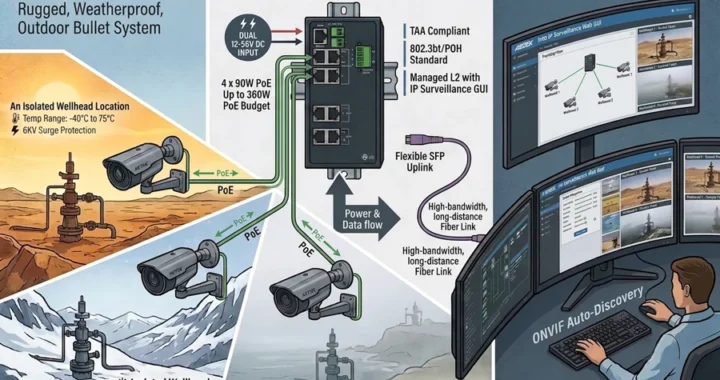
Security has evolved from human-monitored feeds to AI-driven threat detection. PoE allows for the placement of high-resolution, AI-capable cameras in remote areas of the facility that would otherwise be impossible to power. These systems can detect unauthorized access, identify potential security threats, or monitor crowd density to prevent dangerous bottlenecks.
3. Operational Intelligence
The most significant long-term impact is the data. By capturing information on fan movement, concession spending, and virtual reality usage, stadiums can perform deep-dive AI analyses. This allows owners to optimize staff scheduling, adjust product inventory in real-time, and tailor marketing efforts to specific demographics.
Case Studies: The Global Leaders
The top-tier of smart stadiums in the United States sets the blueprint for the rest of the world:
- Mercedes-Benz Stadium (Atlanta): Boasting a 360-degree halo video board and 1,800 wireless access points, this venue relies on an extensive PoE-powered infrastructure to manage its high-density environment.
- SoFi Stadium (Inglewood): Utilizing AI-based weapon detection and a massive 360-degree 4K screen, SoFi’s infrastructure is a masterclass in how to integrate high-bandwidth display technology with high-security, low-latency private networks.
- Levi’s Stadium (Santa Clara): With 400 miles of cabling and 40 gigabits of bandwidth, the stadium provides a high-tech model where fans can order concessions directly to their seats, proving that network infrastructure is a direct driver of revenue.
- Allegiant Stadium (Las Vegas): Through the deployment of a private 5G network, the stadium offers augmented reality (AR) replays, keeping fans engaged even when the action on the field is at the opposite end of the stadium.
Conclusion: The Backbone of the Next Generation
As we look toward the future, the integration of 5G, IoT, and AI will only increase the demand for reliable, secure, and scalable infrastructure. Public networks will continue to serve as the "front door" for fan engagement, but the "foundation"—the private network—will remain the critical backbone of the operation.

PoE private networks provide the scalability required to support these next-generation venues. Organizations like Versa Technology remain at the forefront of this evolution, providing the managed switches and industrial networking solutions necessary to keep these digital cathedrals running. As the line between physical sports and digital entertainment continues to blur, the stadiums that invest in their network infrastructure today will be the ones that define the sports experience of tomorrow.
For operators looking to modernize their facilities, the roadmap is clear: invest in the cabling, invest in the power, and build a private network that can handle the intensity of the modern game. For more information on securing your stadium’s connectivity, contact Versa Technology to explore how advanced PoE solutions can future-proof your venue.