






In the modern digital landscape, the volume of data generated by enterprise software systems has reached a tipping point. As organizations embrace microservices, cloud-native architectures, and distributed systems, they are flooded with a continuous deluge of telemetry—metrics, logs, traces, deployment records, and infrastructure metadata. While engineering teams have achieved unprecedented visibility into the health of their systems, a persistent paradox remains: despite having more data than ever, the process of resolving production incidents remains largely manual, fragmented, and slow.
New Relic, a leader in observability, is seeking to break this cycle with the launch of New Relic Autopilot. By shifting the paradigm from static observability to dynamic, autonomous operations, the company aims to transform how organizations bridge the gap between "what happened" and "what happens next."
The Crisis of Context: Why Observability is No Longer Enough
For years, the industry mantra has been "more telemetry equals better visibility." However, the sheer density of modern operational data has created an "investigative bottleneck." When a high-severity incident strikes, engineers are often forced to manually pivot between disparate dashboards, correlate recent deployments with infrastructure spikes, cross-reference service dependencies, and hunt through historical incident reports—all while under the pressure of mounting customer impact.
The fundamental challenge has shifted. It is no longer about the collection of signals; it is about the synthesis of those signals into confident, operational decisions.
"Observability tells you what happened," notes Doug Braun, Product Marketing Manager at New Relic. "But the next decade of software operations will be defined by how intelligently those systems are managed. The differentiator isn’t just having the data; it’s the ability to reason across it."
Bridging the Gap: The Architecture of New Relic Autopilot
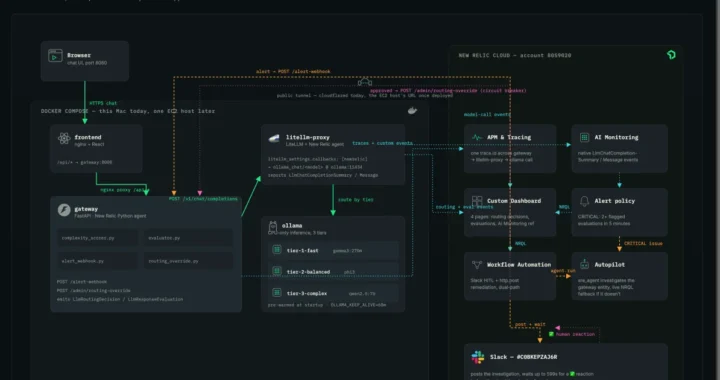
New Relic Autopilot is designed as an evolution beyond the reactive nature of standard AI assistants. While many AI-driven tools in the market focus on summarizing logs or answering simple prompts, Autopilot is architected to perform continuous operational reasoning.
How it Works:
- Continuous Reasoning: Unlike static scripts or basic chatbots, Autopilot evaluates the entire operational context—including telemetry, topology, service relationships, and business impact—in real-time.
- Evidence-Based Recommendations: Rather than providing isolated answers, the system connects the dots between disparate signals to explain why an incident is occurring.
- Human-in-the-Loop Governance: Autopilot is not designed to replace engineers but to act as an intelligent co-pilot. It offers recommendations that humans can validate, ensuring that the most critical, high-stakes decisions remain under human oversight.
The system is further bolstered by New Relic Ground Truth, a capability that allows organizations to codify their unique institutional knowledge. By organizing enterprise-specific operational intelligence, Ground Truth allows Autopilot to become increasingly tailored to the specific nuances of an organization’s architecture, making recommendations that are both more accurate and more trustworthy.
Chronology of a Transformation: Moving Toward Autonomy
The journey toward autonomous operations is not an overnight transition, but a multi-stage progression that aligns with an organization’s operational maturity.
Phase 1: AI-Assisted Investigation
The process begins by reducing the cognitive load on engineers. By automating the collection of evidence and summarizing the state of the environment, AI-assisted tools eliminate the "stare-and-compare" phase of incident response, where engineers waste time manually stitching together the timeline of a failure.
Phase 2: Context-Aware Reasoning
In the second stage, the system begins to connect the dots. It no longer just shows the data; it proposes a likely root cause based on service dependencies and deployment history. Here, the AI acts as a diagnostic partner, suggesting the "next best action" while providing the underlying evidence to support its conclusion.
Phase 3: Governed Automation
As organizations build confidence in the system’s reasoning, the final stage involves the implementation of governed workflows. Routine, repetitive tasks—such as scaling resources, clearing caches, or restarting services—can be orchestrated automatically. Importantly, these actions are governed by strict policies, ensuring that human intervention remains the final authority for high-risk changes.
The Problem with Traditional Automation
To understand the necessity of Autopilot, one must analyze the limitations of legacy automation. Traditional approaches, such as static runbooks, scripts, and workflow engines, operate on a binary assumption: the correct action is already known.
In the real world of production, however, incidents are rarely predictable. They involve uncertainty, shifting variables, and complex interdependencies. When an incident begins, the priority is not to run a script, but to understand the scope of the problem.
New Relic Autopilot departs from the static decision-tree model. Because it continuously refines its understanding as new evidence surfaces, it is capable of handling the "unknowns" that break traditional automation. It is this capacity for continuous reasoning that allows engineering teams to move from being reactive firefighters to proactive architects of reliability.
Building Trust Through Explainability
One of the greatest hurdles to AI adoption in DevOps is the "black box" problem. Engineering teams are historically wary of automated systems that make changes to production without clear justification. If an AI suggests a remediation path, an engineer must know why that path was chosen.
New Relic has prioritized explainability as a core pillar of Autopilot. Every recommendation generated by the system is grounded in the operational context of the New Relic platform. When an action is recommended, the system provides the "why"—linking the proposal to specific telemetry, deployment events, or service relationships. This transparency allows engineers to validate the AI’s logic, building a foundation of trust that is essential for the transition to more advanced, automated operations.
Implications for the Future of Software Operations
The shift toward Autonomous Operations carries significant implications for the future of the engineering profession. As routine, repetitive tasks are handled by intelligent systems, the role of the software engineer will evolve.
1. From "Toil" to Strategy
By automating the investigative work that consumes thousands of engineering hours annually, organizations can redirect their most expensive resources—their people—toward strategic innovation rather than "keeping the lights on."
2. The Rise of the "Agentic" Engineer
In the coming years, the most successful engineering teams will be those that effectively partner with AI agents. These engineers will spend less time assembling context and more time defining the policies, guardrails, and strategic objectives that guide their autonomous systems.
3. Resilience as a Competitive Advantage
As software systems grow more complex, the speed of recovery becomes a primary competitive differentiator. Organizations that can resolve incidents faster and more consistently will be better positioned to maintain customer trust and operational uptime, directly impacting the bottom line.
Conclusion: The Next Evolution of Observability
The message from New Relic is clear: the industry has reached the limit of what "passive" observability can provide. While knowing what happened was the challenge of the last decade, determining what happens next is the challenge of the future.
New Relic Autopilot, when combined with the enterprise-specific context provided by Ground Truth, offers a path forward that balances the need for speed with the necessity of human oversight. It represents a fundamental shift in how we approach software operations—moving away from a world of fragmented, manual investigations and toward a future of intelligent, orchestrated, and autonomous action.
As AI continues to proliferate throughout the tech stack, the winners will not necessarily be those with the most advanced models, but those with the most robust, context-aware operational systems. By focusing on operational reasoning, New Relic is betting that the future of software reliability lies in the seamless integration of human expertise and machine intelligence.
For the modern engineering organization, the message is simple: Stop searching for the needle in the haystack, and start empowering your systems to help you find it. The age of Autonomous Operations has begun.