







For over a decade, the mandate for engineering organizations has been singular and relentless: collect more. More logs, more metrics, more traces, and more events. This “more is better” philosophy fueled the rapid expansion of the observability market, enabling teams to gain unprecedented visibility into the intricate inner workings of modern distributed systems. From the deepest layers of Kubernetes clusters to the ephemeral nature of serverless functions and the sprawling architecture of cloud-native APIs, the modern stack has never been more transparent.
Yet, a paradox has emerged. Despite having more data than ever before, the time required to resolve production incidents has not decreased proportionally. In many cases, it has ballooned. Engineering teams are finding themselves in a state of “analysis paralysis,” where the abundance of telemetry has become a liability rather than an asset.
As New Relic and other industry leaders suggest, we are reaching a turning point. The industry is moving away from the era of raw data collection and entering the era of Operational Understanding.
The Main Facts: The End of the “More Data” Era
The core challenge facing modern engineering is no longer visibility—it is coherence. When a distributed application experiences a failure, it rarely presents as a single, clean error message. Instead, it manifests as a cascade of symptoms. A latency spike in a frontend service might trigger alerts in the load balancer, the backend microservice, the database, the network layer, and the underlying cloud infrastructure.
If each of these components triggers a unique alert, the responder is not met with a clear diagnosis, but with a “storm” of fragmented notifications. The facts are as follows:
- Data Overload: Organizations now track thousands of signals, yet a single incident can generate dozens of disparate, disconnected alerts.
- The Investigative Tax: Engineers spend the vast majority of their time during an incident simply stitching together the story of what happened, rather than performing the actual remediation.
- Contextual Vacuum: Traditional monitoring platforms treat alerts as isolated events, forcing human operators to manually perform the correlation that the software should be doing automatically.
Chronology: How We Got Here
The evolution of observability can be categorized into three distinct phases, each defined by the prevailing technological need of the time.
1. The Era of Monitoring (The Pre-Cloud Phase)
In the early 2010s, monitoring was largely binary: Is the server up or down? Is the CPU usage above 90%? Systems were monolithic, and the challenge was simply knowing if a component was healthy.
2. The Era of Observability (The Distributed Systems Phase)
As microservices and Kubernetes became the standard, the "unknown unknowns" grew exponentially. Organizations pivoted to observability, focusing on high-cardinality data. The goal was to collect enough telemetry to reconstruct the path of a request through a complex web of services. This phase was successful in providing visibility, but it inadvertently created the current "alert fatigue" crisis.
3. The Era of Operational Understanding (The Current Pivot)
Today, we are moving toward the intelligent synthesis of telemetry. This phase assumes the data exists, but focuses on the interpretation of that data. It is the shift from "How many errors occurred?" to "What is the scope, impact, and root cause of this specific business-critical issue?"
Supporting Data: The Hidden Costs of Fragmented Ops
The impact of this fragmentation is rarely captured on a balance sheet, yet it acts as a silent drain on corporate resources. According to industry observations, the "hidden operational tax" manifests in several ways:
- Mean Time to Resolution (MTTR): As complexity increases, MTTR often plateaus or climbs. The time taken to manually correlate signals is the primary driver of this inefficiency.
- Engineering Attrition: Constant context switching and the pressure of "alert fatigue" contribute to burnout among SREs (Site Reliability Engineers) and DevOps teams.
- The Collaboration Gap: When alerts arrive in silos, teams work in silos. A database team might be looking at a query timeout while the network team investigates packet loss, unaware that both are symptoms of the same upstream configuration change.
The industry is beginning to recognize that "better alerts" (through dynamic thresholds or basic machine learning) are a necessary first step, but they are insufficient. Reducing false positives is helpful, but it does not tell the responder why the true positives are occurring simultaneously.
Official Perspective: The New Relic Strategy
New Relic has been vocal about this shift, framing it as the next critical layer of "Intelligent Observability." According to the company’s internal product roadmap and research, the goal is to transform telemetry through a structured, multi-layered approach:
- Telemetry: The raw capture of signals across the entire technology stack.
- Smart Alerts: The application of AI and ML to ensure that the signals being captured are high-fidelity and relevant, filtering out the noise.
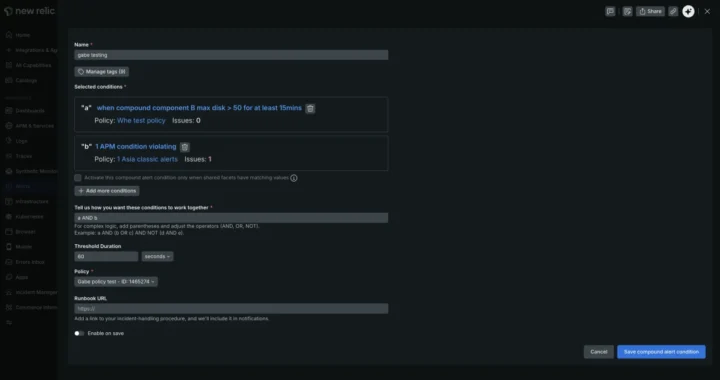
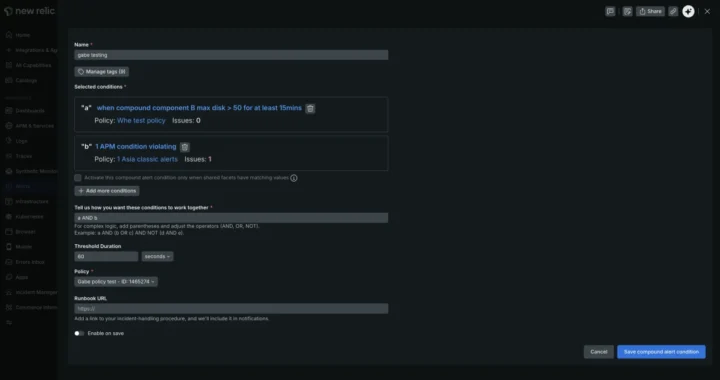
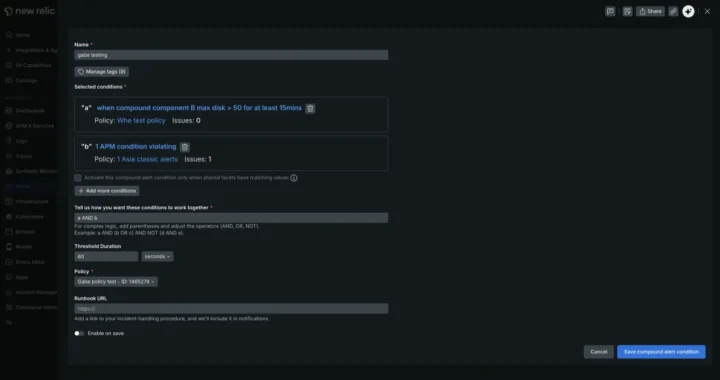
- Compound Alerts: The correlation of related alerts into a single "Issue." This is where the transition from data to understanding occurs. By grouping related signals, the platform provides a coherent operational picture.
- Ground Truth: The enrichment of these issues with business context—mapping technical failures to customer impact.
- Autopilot/Autonomous Operations: The final stage where AI agents don’t just alert, but actively assist in the investigation or even suggest/execute remediations.
As Doug Braun, a Product Marketing Manager at New Relic, highlights: “Autonomous Operations requires more than intelligent agents. It requires progressively higher-quality operational intelligence at every stage of the workflow.”
Implications: Building for the Autonomous Future
The transition to operational understanding has profound implications for how software organizations will be structured in the coming decade.
The Rise of AI-Assisted Operations
AI is often touted as the solution to operational complexity, but AI is only as good as the context it is fed. If an AI agent is presented with fifty independent, unlinked alerts, it will struggle to make a coherent decision. By providing an "operational picture" rather than a stream of alerts, platforms enable AI to reason over problems with the same, if not greater, accuracy than a senior engineer.
Shifting Engineering Focus
When the "detective work" of an incident is handled by the platform, engineers are freed to focus on high-value tasks:
- Reliability Engineering: Proactively identifying architectural weaknesses before they manifest as incidents.
- Innovation Velocity: Spending less time "fighting fires" and more time delivering features that improve the customer experience.
- System Design: Designing for failure in a way that aligns with the observability platform’s ability to interpret those failures.
The Strategic Value of Coherence
Organizations that master this transition will gain a significant competitive advantage. In a market where uptime is synonymous with customer trust, the ability to resolve incidents in minutes rather than hours is a core business differentiator. The "winner" in the observability space will no longer be the vendor that stores the most petabytes of data, but the one that provides the most immediate, actionable, and accurate understanding of the state of the business.
Conclusion: The Road Ahead
The future of observability is not about the volume of data; it is about the efficacy of insight. We have spent the last decade building a world of total visibility, and now we must spend the next decade building a world of total understanding.
As engineering teams navigate this evolution, the focus must remain on the human—and eventually, the machine—responder. By moving beyond raw telemetry and embracing the correlation of signals into actionable operational issues, organizations can finally close the gap between detection and resolution. This is the promise of Intelligent Observability: a system that does not just tell us what is broken, but explains why it happened and guides us toward the fix.
The tools are evolving, and the methodologies are shifting. For those who can successfully bridge the gap between data and understanding, the reward is a more reliable, scalable, and sustainable path to operational excellence. The era of the "data deluge" is ending; the era of "operational intelligence" has arrived.