





In the contemporary landscape of professional sports, the "in-person" experience faces stiff competition from the high-definition, multi-angle broadcast available at home. To win the battle for the fan’s attention, stadiums have evolved from simple concrete bowls into hyper-connected, technology-dense ecosystems. Today’s sports fans expect more than just a game; they demand a frictionless, high-tech experience characterized by instant connectivity, personalized engagement, and seamless logistics.
Delivering these expectations requires an underlying infrastructure that far exceeds the capabilities of standard public Wi-Fi. As stadiums pivot toward becoming "smart venues," industry leaders are increasingly turning to a combination of Power over Ethernet (PoE) and private network infrastructure to act as the central nervous system for modern stadium operations.
Main Facts: The Intersection of Power and Data
At its core, the transformation of the modern stadium relies on two critical technologies: Power over Ethernet (PoE) and Private Networks, such as those leveraging the Citizens Broadband Radio Service (CBRS).
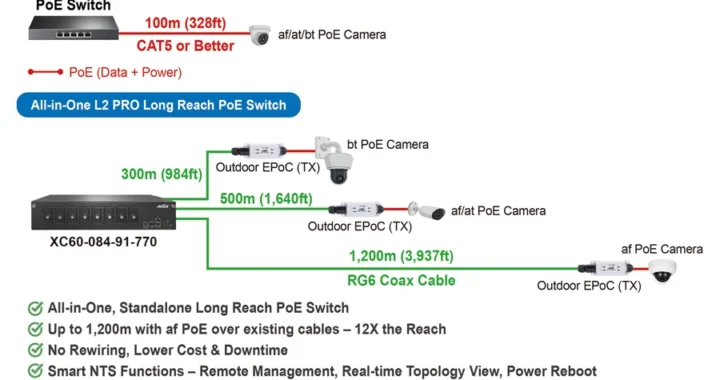
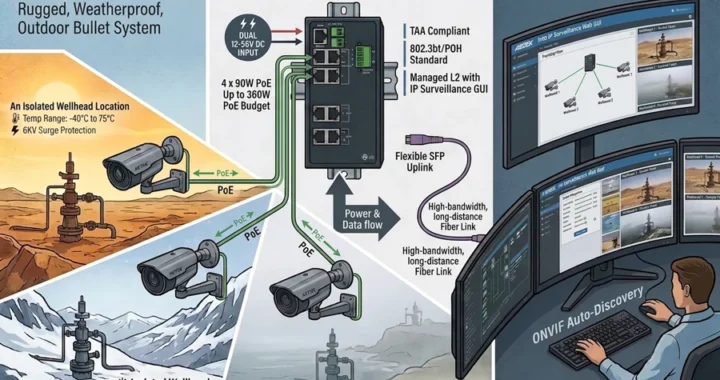
PoE technology allows for the simultaneous transmission of electrical power and data over a single twisted-pair Ethernet cable. This innovation removes the geographical constraints of traditional power outlets, enabling the deployment of IoT devices—surveillance cameras, wireless access points (WAPs), digital signage, and sensors—in optimal locations regardless of existing electrical infrastructure.
When paired with a private network, this hardware becomes part of a dedicated, secure, and high-performance communication ecosystem. Unlike public cellular networks that buckle under the pressure of 60,000 fans uploading high-resolution video to social media, a private network is an enterprise-grade environment. It allows stadium management to ring-fence mission-critical traffic—such as payment processing, on-field play-calling, and building security—away from the bandwidth-hungry activities of the general public.

Chronology: The Evolution of Connectivity
The trajectory of stadium technology has moved in parallel with the evolution of mobile connectivity:
- Pre-2010 (The Analog Era): Connectivity was limited to basic scoreboard operations and rudimentary PA systems. Fans were largely disconnected from the internet once they entered the gates.
- 2010–2015 (The Wi-Fi Explosion): Stadiums began installing high-density public Wi-Fi. While helpful, these systems often suffered from massive latency and dropped connections as smartphone adoption skyrocketed.
- 2015–2020 (The Rise of Private Spectrum): The FCC’s introduction of CBRS (3550-3700 MHz) in 2015 was a watershed moment. It allowed venues to operate their own 4G LTE/5G networks, providing a dedicated "lane" for operations, separate from the public internet.
- 2020–Present (The Smart Venue Era): The integration of PoE switches with private 5G and AI-driven analytics has turned the stadium into a data-gathering machine. Modern infrastructure now supports real-time, ultra-low latency applications that were previously impossible.
Supporting Data: Why "More Bandwidth" Isn’t Enough
The challenge for modern stadiums is not just volume; it is density. In a venue packed with tens of thousands of people, the radio frequency (RF) environment is incredibly noisy.
The Latency Problem
When public cellular infrastructure is overloaded, the result is "network congestion," leading to failed transactions at POS kiosks and delayed security responses. A PoE-backed private network mitigates this by segmenting traffic. For instance, coaches using tablets on the sideline to view play diagrams require guaranteed low latency that public Wi-Fi cannot provide. By using dedicated PoE-powered access points, the stadium ensures that critical operational data is never competing with a fan streaming a video replay.
Scalability of IoT
Recent deployments demonstrate the necessity of PoE. For example, a stadium may deploy over 1,500 PoE-enabled wireless access points. Using PoE, the cost of installing these units is reduced by up to 30-50% compared to traditional electrical wiring, as every access point is powered via the network switch. This allows for a density of connectivity that ensures a "full-bar" experience regardless of how many thousands of fans are in the building.
Official Perspectives: Industry Implications
The move toward private networks is supported by a growing consensus among technology architects and venue managers.

"The goal is invisibility," says one network engineer specializing in stadium infrastructure. "When the technology is working perfectly, the fan doesn’t notice it. They just notice that their digital ticket scanned instantly, their payment went through in a heartbeat, and they found their seat using the app’s turn-by-turn navigation."
From a cybersecurity standpoint, the shift toward segmented, private networks is a move toward "Zero Trust" architecture. By utilizing PoE switches with advanced Layer 2 and Layer 3 security features, IT teams can isolate the ticketing network from the concession network and the surveillance network. This ensures that even if one segment is compromised, the impact is contained, protecting both the stadium’s revenue streams and the fans’ sensitive personal information.
Implications for the Future: The AI-Driven Experience
The deployment of PoE private networks is not merely a maintenance upgrade; it is an investment in the future of AI and real-time operational intelligence.
Real-Time Data and Fan Engagement
Stadium management is now utilizing real-time data to optimize the fan journey. By tracking crowd flow through PoE-powered sensors and cameras, stadiums can adjust concession staffing in real-time or send push notifications to fans about shorter lines at restrooms located in different sectors.
Safety and Security
Security teams now leverage PoE-powered AI cameras for everything from weapon detection to lost-child tracking. These devices are "always on" and can be powered through backup UPS systems connected to the PoE switches, ensuring that security remains functional even in the event of a power outage.

Case Studies in Excellence
Several major venues have set the global standard:
- Mercedes-Benz Stadium (Atlanta): Known for its massive 360-degree halo board, the venue utilizes 1,800+ wireless access points to ensure connectivity, relying on a robust fiber and PoE backbone to keep the massive displays and facial recognition systems running.
- SoFi Stadium (Inglewood): The stadium’s design integrates AI-based security and high-density 4K video boards that rely on an incredibly high-speed, segmented private network to handle the sheer volume of data required for high-resolution, real-time broadcasts.
- Levi’s Stadium (Santa Clara): A pioneer in the "smart" space, this venue leverages 400 miles of cabling and 40 gigabits per second of bandwidth to power a fan experience that includes in-seat food delivery and precise navigation.
Conclusion: The Foundation of the Next Generation
As the sports industry continues to chase the "immersive" experience, the demand on network infrastructure will only increase. We are moving toward a future of augmented reality (AR) in the stands, where fans will expect to see live statistics and broadcast overlays floating above the field on their mobile devices.
Such innovations require a level of network reliability, speed, and security that only a private network, underpinned by robust PoE infrastructure, can provide. Companies like Versa Technology are at the forefront of this shift, providing the managed PoE switches and industrial-grade networking solutions that allow these massive, complex environments to function as a singular, intelligent organism.
For the modern stadium, the game is no longer just played on the grass—it is played in the bits and bytes transmitted through the thousands of miles of cabling hidden beneath the stands. The stadiums that invest in this infrastructure today will be the ones that define the fan experience for the next generation.