Main Facts: A Digital Shield for the UK’s Liquid Gold
In a landmark move for the United Kingdom’s utility and telecommunications sectors, Southern Water has announced a strategic partnership with the technology firm Lightsonic. This collaboration aims to deploy cutting-edge acoustic sensing technology across the South of England to combat one of the most persistent and damaging issues facing the nation’s infrastructure: subterranean water leakage.
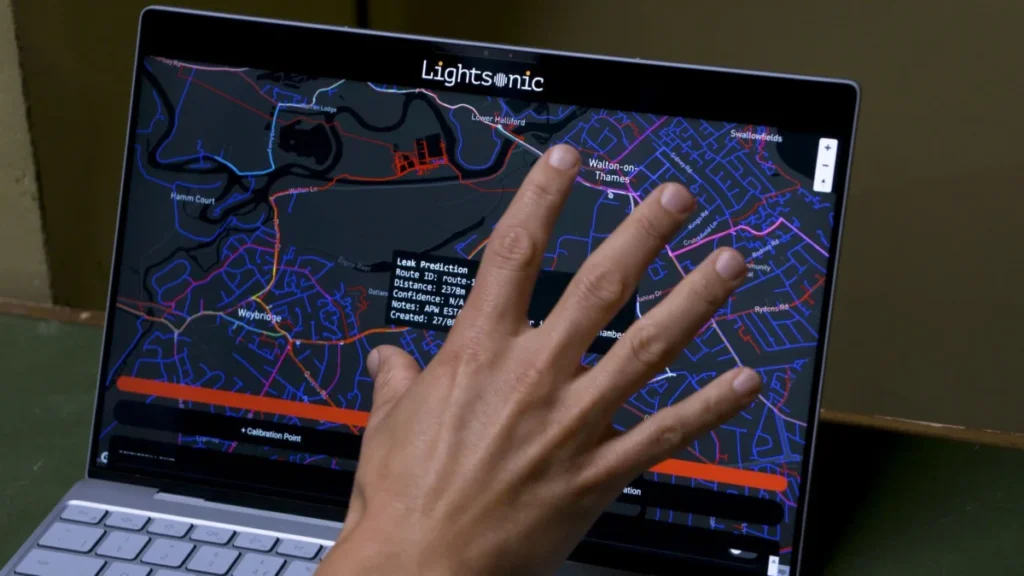
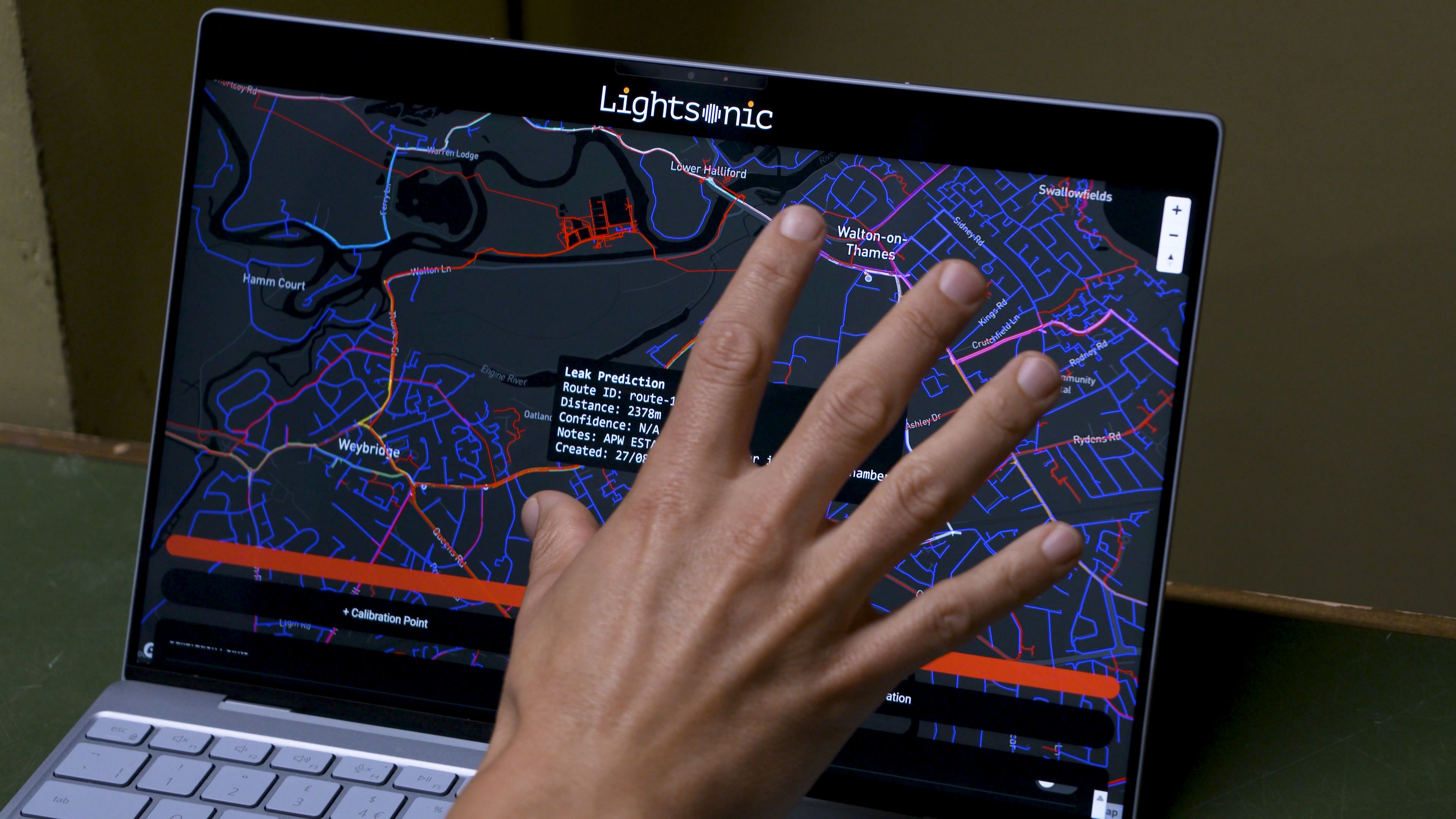
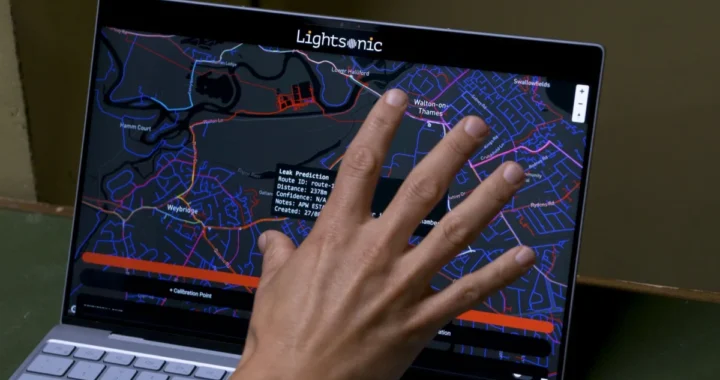
The initiative leverages the existing Openreach fibre-optic network—the very cables that provide high-speed broadband to millions—to act as a sophisticated, real-time monitoring system for water mains. By attaching specialized acoustic sensing units to these fibre cables, Lightsonic can detect the minute vibrations caused by escaping water. This "dual-use" of infrastructure allows Southern Water to identify, locate, and prioritize repairs with a level of precision that traditional methods have long struggled to achieve.
The scale of the problem is staggering. The UK’s aging pipe network, much of which dates back to the Victorian era, currently loses approximately 2.6 billion litres of water every single day. This partnership arrives at a critical juncture, as the technology has already demonstrated its efficacy by saving more than 4 million litres of water per day across a 650km stretch of the UK’s existing network. For Southern Water, which serves a region increasingly defined by "water stress," this technology represents a vital tool in securing the future of the region’s water supply.
Chronology: From Pilot Success to Regional Deployment
The journey toward this regional rollout began earlier this year, marking a rapid transition from proof-of-concept to operational reality.
March 2024: The Affinity Water Trial: The technology underwent its first major real-world test through a partnership between Openreach, Lightsonic, and Affinity Water. These initial trials were designed to determine if the vibrations from leaking pipes could be distinguished from the "noise" of urban environments (such as traffic or construction) using standard fibre-optic cables. The trials proved that the optical signals within the fibre were sensitive enough to detect the specific frequency of a water leak.
Summer 2024: Data Validation and Scaling: Following the success with Affinity Water, Lightsonic released data showing that their solution typically detects 1.2 million litres of water leaks per day for every 100km of network covered annually. These metrics provided the financial and environmental justification for larger utility providers to take notice.
September 2024: The Southern Water Partnership: Amidst a summer of record-breaking temperatures and increasing public scrutiny over water management, Southern Water officially joined forces with Lightsonic. This stage of the deployment focuses on the South of England, a region particularly vulnerable to droughts and high population demand.
The Future Roadmap: The partnership is viewed as a blueprint for a nationwide rollout. With Openreach continuing its aggressive expansion of "Full Fibre" broadband across the UK, the "sensing framework" is expanding in tandem, allowing for a near-continuous monitoring of the subterranean landscape without the need for extensive new construction.
Supporting Data: The Mechanics of Acoustic Sensing
To understand why this partnership is a "game-changer," one must look at the technical efficiency of the Lightsonic solution compared to legacy methods.
How Distributed Acoustic Sensing (DAS) Works
Lightsonic’s technology utilizes a principle similar to Distributed Acoustic Sensing. Fibre-optic cables are made of glass, and as light pulses travel through them, any external vibration—such as the hiss of a high-pressure water leak—causes microscopic changes in the way the light reflects back.
The Sensor: Acoustic units are installed at specific points on the Openreach network.
The Signal: When a nearby pipe leaks, the vibrations "shake" the parallel fibre cable.
The Analysis: Lightsonic’s algorithms analyze the interference in the optical signal to pinpoint the leak’s location, often within a few meters.
Performance Metrics
The impact of this technology is quantifiable and significant:
Daily Savings: Currently saving 4 million litres per day over 650km.
Detection Rate: 1.2 million litres per day per 100km of coverage.
National Context: With 2.6 billion litres lost daily nationwide, a full-scale deployment of this tech could theoretically recover hundreds of millions of litres, significantly reducing the need for new reservoirs or extreme water rationing.
Infrastructure Synergy: Because the technology uses existing fibre, there is no need to dig up roads to install thousands of individual battery-powered sensors, which are prone to failure and require expensive maintenance.
Official Responses: Leadership on the Water Crisis
The leaders of the involved organizations have framed this partnership not just as a business deal, but as a necessary response to a mounting national crisis.
Tommy Langnes, CEO of Lightsonic, emphasized the convergence of multiple threats:
“Ageing infrastructure, leaking networks and mounting climate pressure are converging, causing major water stress. By utilising existing fibre optic infrastructure, we have a solution that can be quickly and effectively scaled across the UK to help utility companies get a handle on leaks, secure supply and generate savings that can be reinvested to upgrade our aging network. The industry needs a quick and comprehensive response and that is what we offer.”
For Openreach, the UK’s largest network provider, this project proves that their multi-billion-pound investment in fibre-to-the-premises (FTTP) has benefits far beyond faster Netflix streams. Trevor Linney, Director of Network Technology at Openreach, stated:
“The results of our existing pilots with Lightsonic show that our new full fibre infrastructure can deliver value far beyond broadband – and could prove to be a real game changer in solving real-world challenges like water conservation. Combining Lightsonic’s technology with the reach of Openreach’s Full Fibre network makes continuous utility monitoring genuinely scalable, without the cost and disruption of building a separate sensor network.”
Southern Water has also signaled that this is a core part of their strategy to meet stringent regulatory targets set by Ofwat (the Water Services Regulation Authority), which has demanded that water companies significantly reduce leakage or face heavy fines.
Implications: Climate, Infrastructure, and the Future of Smart Cities
The partnership between Southern Water and Lightsonic carries profound implications for the UK’s environmental and economic landscape.
1. The Climate Imperative
The UK is currently grappling with the hottest summer on record. With global temperature records predicted to continue falling, water security has moved from a secondary concern to a primary national security issue. Hosepipe bans are already in effect across much of the country, and the public’s patience with water wastage is at an all-time low. By reducing leaks, utility companies can maintain reservoir levels longer during heatwaves, delaying or preventing the need for restrictive measures.
2. The Infrastructure Gap
The urgency of leak detection is compounded by the failure to expand physical storage capacity. Recently, plans for a major new reservoir—intended to alleviate water stress in the South—were delayed by five years. When new supply cannot be built quickly enough, the only viable alternative is to manage existing supply more efficiently. Transforming the "passive" fibre network into an "active" sensing framework is the fastest way to bridge this gap.
3. Economic Reinvestment
The "savings" mentioned by Tommy Langnes are not just in water, but in capital. Traditional leak detection is labor-intensive and often involves "reactive" repairs—fixing a pipe only after a sinkhole appears or a customer reports a loss of pressure. "Proactive" detection via Lightsonic allows Southern Water to fix small leaks before they become catastrophic bursts. The money saved from emergency repairs and lost treated water can be funneled back into the massive task of replacing Victorian-era pipes.
4. The "Smart City" Evolution
This project serves as a premier example of "Smart City" integration. It demonstrates how different sectors—telecoms and utilities—can share infrastructure to create a more resilient urban environment. As the UK continues its digital transformation, the expectation is that fibre networks will eventually monitor everything from traffic flow and bridge stability to gas leaks and power grid health.
Conclusion
The Southern Water and Lightsonic partnership is more than a technical upgrade; it is a vital adaptation to a changing world. By listening to the "whispers" of leaking pipes through the veins of the internet, the UK is taking a significant step toward a sustainable future where technology and conservation go hand in hand. In a country where every drop is becoming increasingly precious, the ability to turn light into a guardian of water may be the most important innovation of the decade.