





In the world of electrical contracting, the quality of a project is rarely judged by the hidden components behind a wall or inside a control panel. Instead, it is judged by the finish—the visible craftsmanship that signals to building owners, inspectors, and future maintenance crews that the installation was handled by a professional. Every cable run is a testament to the technician’s skill. From the most complex industrial infrastructure to a residential panel upgrade, the state of the wiring left behind is the calling card of the electrician.
Maintaining an organized installation is not merely a matter of aesthetics; it is a critical component of safety, efficiency, and long-term asset management. Recognizing this, industry leader NSI Industries provides a comprehensive range of cable management solutions designed to transform chaotic wiring into a structured, reliable system.
The Professional Standard: Why Organization Matters
For the uninitiated, cable management might seem like a secondary concern—a task completed only after the "real" electrical work is finished. However, veteran electricians know that the organization of a job site is intrinsically linked to its performance.
Efficiency and Troubleshooting
A tidy workspace is the foundation of efficient maintenance. When wires are bundled neatly, labeled, and routed with purpose, troubleshooting becomes a logical process rather than a guessing game. If a fault occurs, an organized layout allows a technician to identify the specific wire requiring attention instantly. Conversely, in a "spaghetti" installation, tracing a single circuit can take hours, increasing labor costs and frustrating the client. Furthermore, clean organization makes disconnecting wires safer, as technicians are less likely to accidentally disturb adjacent live circuits while navigating a tangled mess.
Safety: The Hidden Risks of Neglect
Beyond efficiency, poorly managed cables pose tangible safety risks. Loose, hanging wires can become significant trip hazards, creating liability for both the installer and the building owner. More importantly, improper cable management can lead to physical degradation of the wire itself. When cables are coiled tightly, knotted, or subjected to extreme bends, they create "hot spots." These concentrated heat zones can lead to insulation breakdown, electrical failure, and, in worst-case scenarios, fire. An orderly installation ensures that bend radii are respected and that heat dissipation is optimized, directly contributing to the fire safety of the structure.
The Reflection of Professionalism
Finally, there is the undeniable element of reputation. A professional, tidy job site is a living advertisement for the installer’s expertise. When a client opens a junction box or inspects a cable tray and finds organized, well-supported, and labeled components, their confidence in the installer’s overall technical ability skyrockets. In an industry built on trust, that visual cue is invaluable.
Chronology of an Organized Installation: Planning to Completion
Achieving a high-standard installation does not happen by accident; it is the result of a systematic, chronological approach to project management.
Phase 1: The Vision and the Design
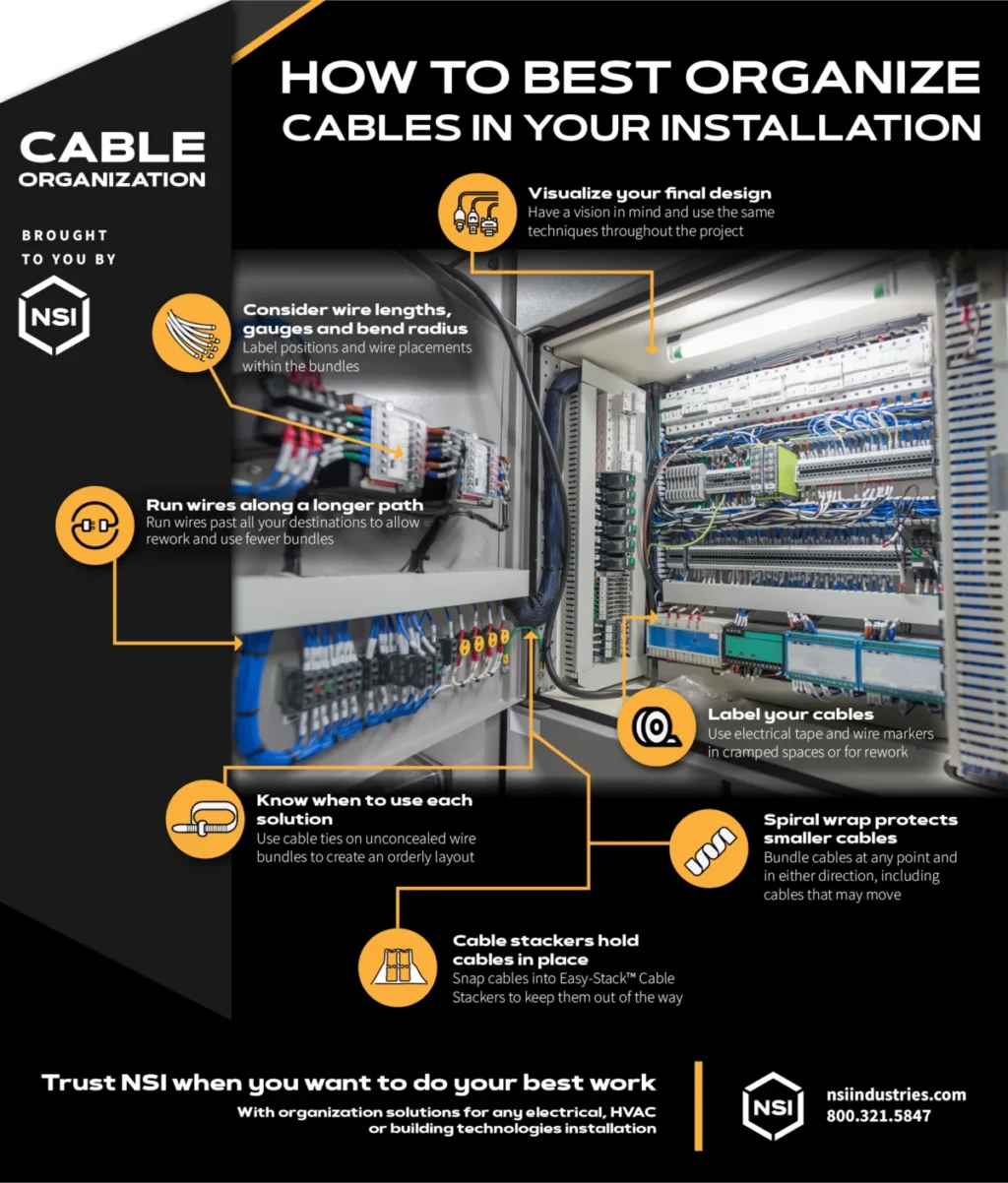
Before the first wire is pulled, the installer must have a clear vision of the final design. Consistency is the secret ingredient. By deciding on specific techniques, spacing, and routing paths at the outset, the installer ensures that the project remains cohesive from start to finish. This vision prevents the "ad-hoc" decision-making that leads to cluttered, unorganized work as a project nears completion.
Phase 2: The Planning of Geometry and Materials
Planning is where technical knowledge meets physical reality. Installers must carefully consider the wire gauges being used, the minimum bend radius requirements, and the necessity of potential future access. It is often a strategic mistake to run wires in the shortest possible line. While it might save a few feet of cable, it creates a rigid system that is impossible to rework. Savvy professionals often choose slightly longer paths to allow for future trimming, re-terminating, or maintenance, ensuring the longevity of the installation.
Phase 3: Selection of Management Solutions
Choosing the right hardware for the environment is crucial.
- Cable Ties and Mounts: Ideal for bundles that remain exposed, these provide structural integrity to the route. Using consistent colors and spacing creates a uniform look.
- Spiral Wrap: This is the go-to for protecting smaller cables, especially those that might be subject to movement. Its flexible nature allows for cables to exit or enter the bundle at any point, providing modularity.
- Wire Marking: Electrical tape and specialized marking products are the "map" of the installation. In complex environments, labels are the difference between a five-minute fix and a full-system shutdown.
- Cable Stackers: These tools, such as NSI’s Easy-Stack™ Cable Stackers, represent the modern standard for speed. By snapping cables into place against a stud, they provide an immediate, orderly solution that is far faster than traditional, labor-intensive clips.
Supporting Data: The Impact of Proper Management
Industry benchmarks suggest that projects utilizing formal cable management systems see a significant reduction in long-term maintenance costs. Studies have shown that when cables are managed, the time required to trace a fault can be reduced by as much as 40–60%. Furthermore, the reduction in mechanical stress on the cable jacket—thanks to proper clamping and support—can extend the operational lifespan of the conductors by years, preventing the microscopic fractures that lead to voltage drops and intermittent signal loss.
Official Industry Perspectives
Representatives from NSI Industries emphasize that their product development is driven by the needs of the professional in the field. "When you want to do your best, you want it to be organized," notes a spokesperson from the NSI team. The company’s philosophy is rooted in the idea that the right tools should be an extension of the electrician’s skill. Their portfolio, which includes everything from heavy-duty clamps and conduits to sophisticated labeling systems, is designed to meet the rigorous demands of modern electrical, HVAC, and building technology installations.
By listening to the feedback of thousands of contractors, NSI has refined their offerings to focus on "self-securing" and "time-saving" hardware. In an era where labor costs are the primary driver of project expenses, products that reduce the "time-on-ladder" are not just luxury items; they are essential for profitability.
Implications for the Future of Electrical Contracting
The industry is moving toward higher levels of complexity. As smart buildings, IoT integration, and complex building automation systems become standard, the sheer volume of low-voltage and high-voltage wiring within modern structures is increasing. This creates a "cable density" problem that only disciplined management can solve.
The Rise of Intelligent Installations
As buildings become more interconnected, the importance of "future-proofing" installations has never been higher. An organized, labeled, and well-documented installation is essentially a roadmap for the next generation of technicians. When systems need to be upgraded or integrated with new technologies, the clarity provided by proper cable management becomes the deciding factor in whether a project can be completed in a single afternoon or requires a complete, costly gutting of existing infrastructure.
Professional Standards and Certification
We are also seeing a shift toward higher professional standards. Regulatory bodies and building inspectors are increasingly looking for evidence of "neat and workmanlike" installations—a phrase often found in the National Electrical Code (NEC). While this is subjective, inspectors are much more likely to trust the integrity of an installation that is clearly organized. Conversely, messy wiring is often a "red flag" that triggers more intense, time-consuming inspections of the electrical components themselves.
Final Thoughts: The Mark of the Craft
Ultimately, cable management is a philosophy. It is the practice of respecting the work you do and the client you serve. Whether you are working on a massive industrial plant or a simple residential remodel, the principles remain the same: plan ahead, use the right tools for the job, and maintain consistency.
When you invest in high-quality cable management products from providers like NSI Industries, you are not just buying plastic ties or metal clips; you are investing in the longevity of your work and the integrity of your professional reputation. In an industry where everything is eventually covered up by drywall or ceilings, the organization of your wires remains the permanent evidence of your commitment to excellence.
When you need the best organization to support your best work, trust in the solutions that are designed to endure. Because at the end of the day, how you leave the job is exactly how you will be remembered.