







MUNICH, GERMANY — In a move that signals a profound shift in the landscape of wearable technology, Huawei has unveiled a comprehensive strategy to transition its devices from mere consumer electronics into sophisticated platforms for medical research, data collection, and preventive healthcare. At a high-profile event held at the SHOWPALAST in Munich, the global technology giant introduced a suite of new products and initiatives—led by the Watch D3 and the Terve Research platform—positioning itself as a bridge between the tech-savvy consumer and the academic medical community.
This evolution comes at a critical juncture for the wearable market. As basic fitness tracking becomes a commoditized feature, the industry’s vanguard is moving toward "clinical-grade" validation. Huawei’s latest announcements suggest that the company is no longer content with simply "counting steps"; instead, it is building an infrastructure capable of continuous, longitudinal health monitoring that meets the rigorous standards of European medical institutions.
I. Main Facts: Redefining the Wrist-Worn Medical Device
The centerpiece of Huawei’s recent showcase is the HUAWEI Watch D3, a device that represents the third generation of the company’s specialized blood pressure monitoring line. Unlike many competitors that rely solely on software-based estimations for blood pressure, the Watch D3 utilizes a hybrid approach. It combines a physical miniature pump and airbag (oscillometric measurement) with Photoplethysmography (PPG) sensors for continuous trend tracking.
Alongside the hardware, Huawei launched Terve Research, a European-centric platform designed to facilitate collaboration between wearable users and medical researchers. Managed independently by the medical technology provider Thryve, Terve serves as an infrastructure layer where academic institutions can conduct large-scale studies using real-world data generated by Huawei devices.
Further diversifying its portfolio, the company also announced:
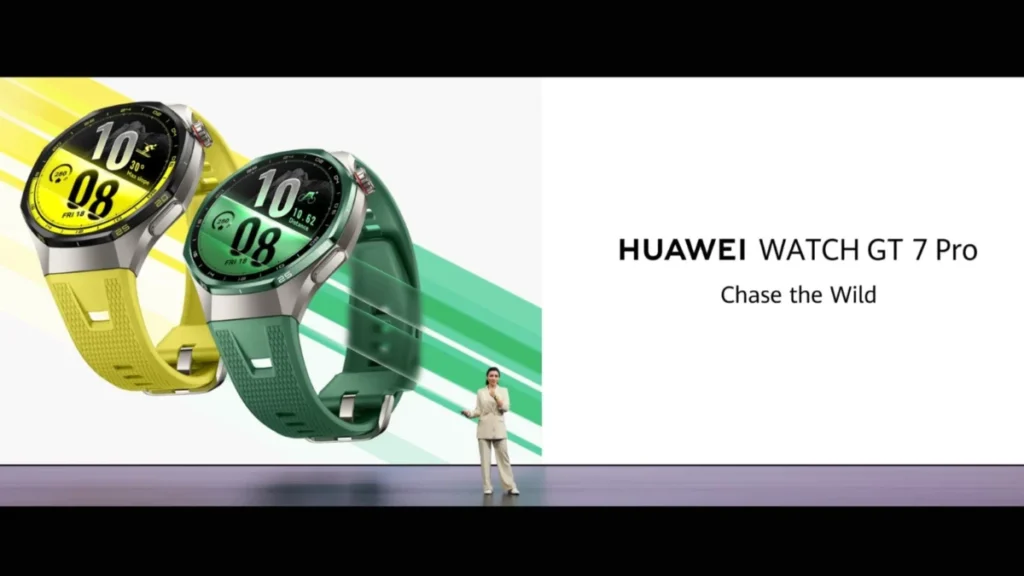
- The HUAWEI Watch GT 7 Series: A premium line featuring nano-tech ceramic bezels and titanium frames, emphasizing high-performance sports tracking like G-force detection and extensive ski mapping.
- The HUAWEI Watch 6 Series: A strategic re-introduction of this line to the European market, focusing on AI-driven workout analysis and independent connectivity.
- The HUAWEI Mate XT 2: Launched concurrently in Guangzhou, China, this flagship foldable smartphone introduces the LogicFolding Tau chip and integrated ECG analysis, further blurring the lines between mobile communication and health diagnostics.
II. Chronology: The Evolution of Huawei’s Health Vision
Huawei’s ascent in the health-tech space has been a multi-year progression rather than an overnight pivot. To understand the significance of the Watch D3 and Terve, one must look at the roadmap established over the last half-decade.
- 2021: The Oscillometric Breakthrough. Huawei released the first-generation Watch D. It was a bulky but revolutionary device, being one of the first to incorporate a physical inflatable cuff within a standard-sized watch strap. This addressed the primary criticism of wearable blood pressure tools: the lack of physical pressure to occlude the artery for a "true" reading.
- Early 2024: The Shift to Ambulatory Monitoring. The Watch D2 was introduced, bringing 24-hour Ambulatory Blood Pressure Monitoring (ABPM) to the wrist. This allowed users to track blood pressure fluctuations during sleep and daily activities, a metric previously reserved for uncomfortable, bulky medical equipment.
- September 2024: The Munich & Guangzhou Launches. On September 2, the Watch D3 made its global debut. This iteration focused on "wearability"—reducing the size and weight while improving the AI algorithms that bridge the gap between physical pump readings and optical sensor data. Simultaneously, the Terve platform was launched in Europe to provide a home for the data these devices generate.
- Late 2024 and Beyond: The company has confirmed its digital-health ecosystem now includes partnerships with over 160 healthcare institutions globally and the operation of 10 research centers, including three dedicated sports and health science laboratories in Europe and Asia.
III. Supporting Data: Precision and Market Trends
The strategic shift is backed by rigorous technical specifications and market analysis. According to Counterpoint Research, the global smartwatch market is undergoing a fundamental transformation. Their quarterly model trackers now prioritize features such as sleep apnea detection, ECG, and blood pressure monitoring as key drivers of Average Selling Price (ASP) and market share, rather than just shipment volumes.
Technical Refinement of the Watch D3
The Watch D3 is significantly more ergonomic than its predecessors. It is 17.7% thinner and 9% lighter than the Watch D2. These metrics are not merely aesthetic; in the world of medical wearables, "compliance" (the willingness of the patient to wear the device) is the biggest hurdle. By making the device smaller, Huawei increases the likelihood of 24/7 data collection.
The device has also secured CE Medical Device certification for:
- Resting blood pressure measurement.
- Ambulatory Blood Pressure Monitoring (ABPM).
- Pre- and post-exercise blood pressure monitoring.
Significantly, Huawei claims the Watch D3 is the world’s first wrist-worn device to pass ISO standards for accurate blood pressure measurement specifically before and after physical activity. This is a notoriously difficult metric to capture due to the physiological noise generated by movement and increased heart rates.
The Terve Research Ecosystem
The Terve platform is launching with two primary clinical studies that underscore its utility:
- Social Jetlag Study: Investigating the health impact of disrupted circadian rhythms on the European population.
- Cardiovascular Risk Study: Examining the direct correlation between specific exercise patterns (captured via GPS and heart rate sensors) and long-term cardiovascular health.
By utilizing Thryve as an independent operator, Huawei addresses European data privacy concerns, ensuring that researchers can access anonymized data while users maintain control over their participation via an opt-in model.
IV. Official Responses: A Vision of "Full-Body" Sensing
The leadership at Huawei emphasizes that the company’s goal is to move beyond the "wrist-only" perspective.
Rico Zhang, President of Huawei’s Smart Wearable and Health Product Line, articulated a future where wearables act as a responsive system. “From metabolic monitoring and active health management to brain activity sensing, wearables are no longer just about your wrist,” Zhang stated. “We are moving toward a complete picture of your health, a full-body system that monitors, understands, and responds.”
This sentiment was echoed by Zhou Hong, President of Huawei Research Institute, Europe, who highlighted the unique value proposition of wearable data compared to traditional clinical visits. “Wearable devices enable fast, convenient and reliable multimodal measurements anytime and anywhere, providing actionable insights to personalize interventions,” Hong said. “That is why the health sector is so promising: the potential for discovery is enormous, and the need has never been greater.”
The company’s messaging at the Munich event, themed "Chase the Wild," was designed to contrast the rugged, active lifestyle of the modern user with the invisible safety net of clinical-grade monitoring. The "Wild" represents both the outdoor activities the devices track and the "wild" frontier of untapped medical data that exists outside of a doctor’s office.
V. Implications: The Future of the Wearable Industry
The implications of Huawei’s strategy are three-fold, affecting the consumer market, the medical community, and the broader tech industry.
1. The Death of "Basic" Fitness Tracking
As Huawei integrates medical-grade sensors (like the oscillometric pump in the D3) and advanced AI chips (like the LogicFolding Tau in the Mate XT 2), competitors will be forced to follow suit. The market is bifurcating: budget trackers will remain for casual users, but the premium "smartwatch" category is effectively becoming a "health-watch" category. Consumers are increasingly viewing these devices as insurance policies for their well-being rather than just accessories for their smartphones.
2. Democratization of Medical Research
The Terve platform represents a shift in how medical research is conducted. Traditionally, clinical trials are expensive, localized, and limited in duration. By using a platform like Terve, researchers can tap into a "living laboratory" of thousands of participants across Europe. This could accelerate the discovery of digital biomarkers—early warning signs of conditions like hypertension or heart failure that only appear in long-term data trends.
3. The Geopolitical and Regulatory Landscape
By launching Terve as a European-managed platform (via Thryve) and seeking CE certification, Huawei is navigating a complex regulatory environment. This "local-first" approach to data management is essential for gaining the trust of European medical institutions. If successful, this model could serve as a blueprint for how global tech firms handle sensitive health data across different jurisdictions.
4. Integration with the "Foldable" Era
The inclusion of ECG analysis in the Mate XT 2 suggests that health monitoring is not limited to the wrist. As foldable phones provide more screen real estate for data visualization, the smartphone may become the "hub" or the "dashboard" where complex health data from the watch is analyzed by AI and presented to the user in a readable format.
Conclusion
Huawei’s Munich showcase was more than a product launch; it was a manifesto for the future of digital health. By combining physical measurement hardware with a collaborative research infrastructure, the company is attempting to solve the two biggest problems in wearable health: accuracy and utility.
The Watch D3 proves that medical-grade hardware can be miniaturized for daily use, while the Terve platform ensures that the data generated by that hardware serves a purpose beyond the individual user. As the line between consumer tech and medical technology continues to blur, Huawei’s "precision plus trend" approach may well become the industry standard, transforming the smartwatch from a luxury gadget into an essential tool for 21st-century medicine.