





In a landmark move to fortify Utah’s water security, the Central Utah Water Conservancy District (CUWCD) has officially greenlit a massive $750-million infrastructure undertaking. The Strawberry High Line Improvement Project marks a critical shift from legacy, open-air irrigation methods to a high-tech, pressurized pipeline system designed to support a projected population of 420,000 residents across south Utah County and eastern Juab County.
The project, engineered by a joint venture between Jacobs and Bowen Collins & Associates, is set to modernize a century-old conveyance system, effectively bridging the gap between the agricultural heritage of the early 20th century and the urban demands of the 21st.
The Historical Context: From Strawberry Valley to Modern Urbanization
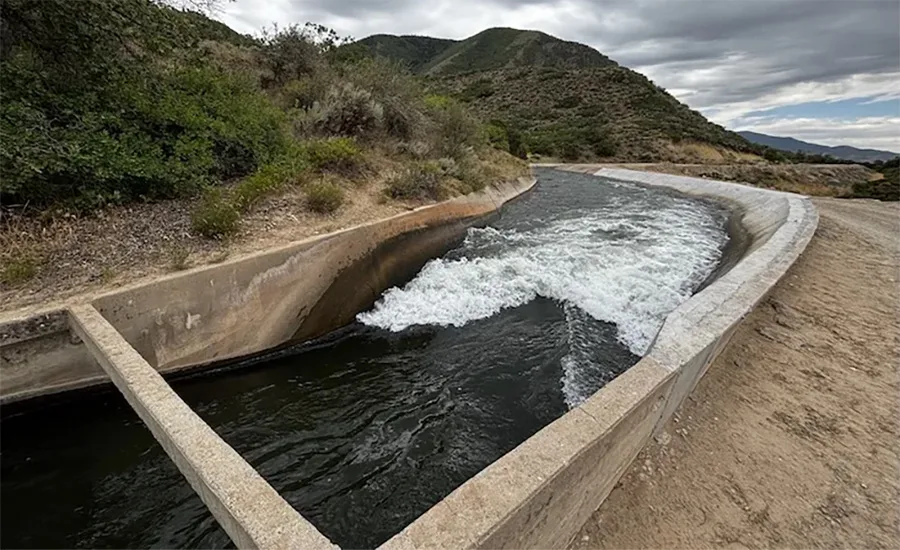
To understand the scope of this project, one must look back to 1916. The original Strawberry High Line Canal was a cornerstone of the historic Strawberry Valley Project, a pioneering effort to divert water from the Strawberry Reservoir and the Spanish Fork River to facilitate regional growth. For over a century, this gravity-fed, open-water canal has served as a lifeline for the region’s agricultural sector.
However, the passage of time and the rapid encroachment of urban sprawl have fundamentally altered the landscape. What was once rural farmland is now a burgeoning corridor of residential developments and commercial hubs. As Brad Perkins, senior engineer at the CUWCD, notes, the canal’s age has made it a liability. "The existing Strawberry High Line Canal is more than 100 years old, prone to breaches, and is rapidly being surrounded by urban development," Perkins says. "By enclosing the canal, the project will reduce the risk of flooding and other safety concerns caused by aging infrastructure."
Chronology of the Modernization Effort
The transition of the Strawberry High Line system is not an overnight endeavor. It represents a multi-phase, years-long strategy aimed at systemic integration.
- Phase I: Strategic Planning and Federal Backing: Throughout 2024 and early 2025, CUWCD finalized designs and secured a massive $100-million boost from the U.S. Department of the Interior. This federal investment was a decisive factor in moving the project from the conceptual stage to the contractual phase.
- Contract Award (2026): The awarding of the $750-million contract to the Jacobs/Bowen Collins & Associates joint venture in the fall of 2026 serves as the official launch of the execution phase.
- The Two-Year Horizon: Over the next 12 months, the project will move through final design refinements and geotechnical assessments. By the two-year mark, the CUWCD expects to have a substantial portion of the pipe in the ground, with up to six distinct subprojects operating concurrently.
- Integration with the Spanish Fork-Santaquin Pipeline: The project is designed to dovetail with the recently completed 49-mile Spanish Fork-Santaquin Pipeline. While the latter provided the supply routes, the High Line Improvement Project provides the distribution backbone to ensure that water can be moved efficiently to where it is needed most.
Supporting Data and Technical Specifications
The engineering challenges associated with this project are significant. The existing canal footprint, which in some areas spans up to 200 feet wide, provides the construction crews with a vital "right-of-way" corridor, allowing for the installation of large-diameter pipes without the immediate need for complex land acquisition.
Materiality and Hydraulic Design
While the final specifications are being refined through rigorous modeling, the project is expected to utilize pipes ranging from 36 inches to 84 inches in diameter. The choice of material is a result of years of institutional learning within the district.
"We have previously had great success with welded steel pipe that is mortar-tape coated and mortar-lined," says Perkins. This combination provides the necessary durability to withstand high pressure while preventing the corrosion that typically plagues aging water conveyance systems.

Geological studies are currently underway to assess soil stability and seismic risks along the alignment. Because the project involves a significant transition from open-channel flow to a pressurized environment, these studies are essential to inform mitigation efforts and prevent future infrastructure fatigue.
Implications for Water Conservation and Quality
The primary driver of the project is conservation. In an open-water canal system, evaporation and seepage represent a substantial, unavoidable "tax" on the water supply. By moving this water into a closed, pressurized pipeline, the CUWCD anticipates saving thousands of acre-feet of water annually.
Beyond simple volume, the quality of the water is set to improve dramatically. Currently, open canals are susceptible to contamination from agricultural runoff, sediment, and airborne debris. The modernization project includes:
- Enhanced Desedimentation: New intake systems will be designed to filter sediment before it enters the pipeline, protecting downstream infrastructure and users.
- Regional Treatment Integration: The project acts as a connector to a future regional water treatment plant, ensuring that water delivered to the municipal tap meets the highest health and safety standards.
- Operational Resiliency: The ability to pressurize the system allows for more precise control. Water managers can now redirect flows in real-time, providing greater flexibility to balance the needs of agricultural irrigation users against the increasing demands of the growing municipal and industrial (M&I) population.
Official Responses and Strategic Vision
The CUWCD views this project not merely as a pipe replacement, but as the final piece of a regional water puzzle. For decades, the district has focused on creating a redundant, high-capacity system that can withstand the variability of the Western climate.
The inclusion of the Strawberry High Line into this network ensures that water coming from the Colorado River—brought in by the Spanish Fork-Santaquin Pipeline—is effectively distributed across the valley. By linking these new supply lines directly into the existing regional network, the CUWCD is creating a "loop" of infrastructure. This redundancy means that if one section of the network requires maintenance, water can be rerouted, preventing service outages for the hundreds of thousands of residents who rely on the district for their daily needs.
Looking Ahead: The Future of Utah’s Infrastructure
The modernization of the Strawberry High Line is a bellwether for how rapidly growing regions must adapt to climate stress. As the population of Utah continues to climb, the margin for error regarding water management has shrunk.
The CUWCD’s proactive approach—securing federal funding early, partnering with top-tier engineering firms, and prioritizing long-term durability over short-term savings—serves as a model for other municipal water districts across the American West. While construction will undoubtedly cause localized disruptions during the coming years, the long-term implications are clear: a more secure, efficient, and reliable water future.
As the project enters the next phase of construction, the district remains committed to transparency, with plans to keep the public informed as construction staging areas and final project sequencing are determined. For a region that was shaped by the original Strawberry Valley Project over a century ago, this $750-million upgrade ensures that the legacy of the region’s water infrastructure remains as robust as the community it serves.
Summary of Project Benefits
- Safety: Eliminates open-water hazards near urban developments and reduces flooding risk.
- Conservation: Prevents thousands of acre-feet of water loss via evaporation and seepage.
- Quality: Advanced filtration and desedimentation for cleaner water delivery.
- Capacity: Designed to support a population of 420,000, ensuring regional viability through the end of the century.
- Integration: Links seamlessly with existing regional pipelines to provide a redundant and flexible water distribution system.