




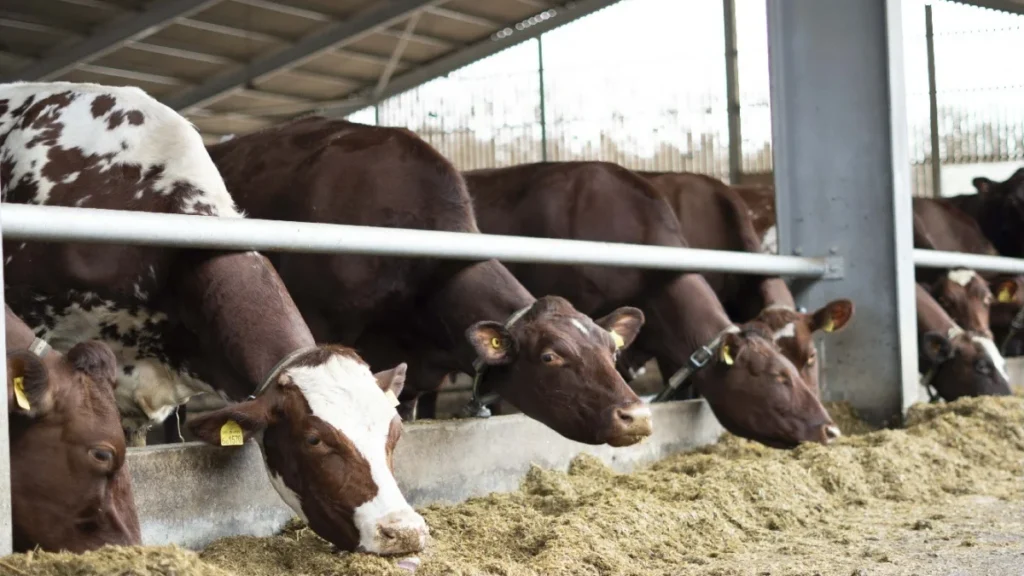
WEST SUSSEX, UK – In a significant leap forward for the United Kingdom’s agricultural sector, West Sussex County Council has announced a major milestone in its "Growing Sussex" programme. By integrating advanced 5G connectivity with specialized environmental sensors, the initiative is providing farmers with unprecedented, near real-time insights into livestock-building conditions. This technological intervention aims to bolster animal welfare, increase productivity, and fortify farm resilience against the escalating threats of climate change and extreme weather.
The project represents a strategic collaboration between the public sector, telecommunications giant Boldyn Networks, and agritech innovator Pneumonitor. By deploying 5G Reduced Capability (RedCap) technology to link in-pen sensors, the partnership is setting a new standard for "Smart Farming" in the British countryside.
Main Facts: The Intersection of 5G and Agritech
The core of this initiative lies in the deployment of Pneumonitor’s specialized environmental monitoring devices across West Sussex farms. Unlike traditional sensors, which are often mounted on walls at a distance from the livestock, Pneumonitor’s units are placed directly within the pens. This placement is critical because the micro-climate at the animal’s level—where heat, humidity, and ammonia levels are highest—can differ significantly from the conditions recorded at the periphery of a building.
The connectivity backbone is provided by Boldyn Networks through a private 5G network. This infrastructure utilizes 5G RedCap (Reduced Capability), a specialized version of 5G designed specifically for Internet of Things (IoT) devices. RedCap offers a middle ground between high-speed broadband and low-power wide-area networks, providing the reliability and low latency of 5G without the high energy consumption or hardware costs associated with traditional 5G modules.
Key objectives of the deployment include:
- Respiratory Disease Prevention: Identifying spikes in humidity and poor air quality that lead to pneumonia and other respiratory issues in livestock.
- Heat Stress Mitigation: Providing early warnings during heatwaves to allow farmers to activate cooling systems or adjust ventilation before animal health declines.
- Operational Efficiency: Reducing the need for manual checks and enabling data-driven decision-making.
- Scalability: Demonstrating a model that can be replicated across the UK’s diverse agricultural landscape.
Chronology: From Vision to 2025 Implementation
The journey toward a "Connected Sussex" has been a multi-year effort driven by the need to modernize the region’s rural economy.
- Early 2024: The Blueprint: West Sussex County Council and Boldyn Networks formally announced plans to establish four private 5G networks. These networks were designed to serve as "innovation hubs" for the Growing Sussex programme, a project co-funded and led by the council to explore the intersection of 5G, AI, and IoT in food production.
- Mid-2024: Strategic Partnerships: The programme onboarded Pneumonitor as the primary agritech partner for livestock monitoring. Technical trials began to ensure that the 5G RedCap technology could maintain stable connections in the often-shielded environments of metal-clad agricultural buildings.
- Late 2024: Pilot Deployments: Initial sensors were placed in select livestock buildings. Data began flowing to farmers’ mobile devices, providing the first glimpse of "at-animal" environmental metrics.
- December 2025: Full Integration: The council confirmed that all four partner sites were fully live and operational. The Pneumonitor integration was finalized, successfully connecting the livestock-monitoring ecosystem to the wider 5G infrastructure.
- Present Day: The project has moved into its operational phase, with data being used not only for immediate farm management but also for long-term research into agricultural resilience.
Supporting Data: Why 5G RedCap and In-Pen Monitoring Matter
To understand the significance of this milestone, one must look at the technical and environmental data driving the need for such systems.
The Problem with "Wall-Mounted" Data
In many livestock buildings, temperature and air quality sensors are placed near exits or high on walls to protect them from the animals. However, research indicates that temperature gradients within a barn can vary by as much as 3–5 degrees Celsius from the center of a crowded pen to the wall. Pneumonitor’s data shows that by the time a wall-mounted sensor triggers an alarm for heat stress, the animals in the center of the building may have already been suffering for hours, leading to a permanent drop in growth rates or milk yield.
The Efficiency of 5G RedCap
Traditional 5G is often "overkill" for simple sensors that only transmit small packets of environmental data. However, 4G and older IoT standards often struggle with the density of devices or the latency required for real-time alerts.
- Battery Life: RedCap devices consume significantly less power, allowing sensors to operate for years on a single charge.
- Cost: The hardware for RedCap is more affordable than full-scale 5G modems, making it economically viable to deploy hundreds of sensors across a single large farm.
- Throughput: It provides sufficient bandwidth for the "near real-time" transmission required to prevent animal distress during rapid weather shifts.
Climate Trends in the UK
The deployment is timely. According to the Met Office, the frequency of "hot days" in the UK has increased significantly over the last decade. For livestock, particularly pigs and cattle, "heat load" is cumulative. High temperatures combined with high humidity prevent animals from cooling down at night. The Growing Sussex data helps farmers identify when this cumulative load reaches a "tipping point," allowing for intervention (such as misting or increased airflow) before the animals enter a state of clinical stress.
Official Responses: Voices of Leadership
The success of the Growing Sussex milestone has been hailed by local government leaders and technology executives as a template for the future of the rural economy.
Cllr Yvonne Gravely, Cabinet Member for Economy and Skills at West Sussex County Council, emphasized the economic necessity of the project:
"Agriculture plays a vital role in West Sussex, but periods of extreme weather are creating new challenges for the sector. Through Growing Sussex, we’re helping growers and food producers use technology to better understand changing conditions, protect animal welfare and build resilience for the future. That’s good for local businesses, good for our rural economy and good for West Sussex."
Gearoid Collins, Commercial Director at Boldyn Networks, highlighted the technological precedent being set:
"As the connectivity partner for Growing Sussex, we’re committed to helping shape a new era for agriculture and deploy technologies that bring a welcome boost to the West Sussex economy. Connecting Pneumonitor through RedCap shows how private 5G can support practical agritech and provide the digital foundation for many more connected applications across the farming sector."
Isaac Orr, Chief Executive Officer at Pneumonitor, focused on the tangible benefits for the animals and the farmers’ bottom line:
"With heatwaves becoming more frequent, conditions inside livestock buildings can deteriorate faster than they can be spotted by eye. Pneumonitor measures conditions in the pen itself… This project showed when heat load was building and what could be done before yields were affected. The connectivity behind the deployment now allows us to bring this monitoring to far more sites than before."
Implications: The Future of the UK’s Digital Farmland
The West Sussex milestone has implications that reach far beyond the borders of the county. It serves as a proof-of-concept for the "Connected Britain" vision, where rural areas are no longer left behind in the digital revolution.
1. Strengthening Food Security
By reducing the incidence of disease and heat stress, farmers can ensure more predictable yields. In an era of global supply chain volatility, increasing the efficiency and reliability of domestic meat and dairy production is a matter of national food security.
2. Environmental Sustainability
Precision monitoring allows for more efficient use of resources. For example, ventilation systems only need to run at full capacity when the data justifies it, saving significant amounts of electricity. Furthermore, healthier animals require fewer antibiotic interventions, contributing to the global fight against antimicrobial resistance.
3. Closing the Rural Digital Divide
The use of private 5G networks on farms demonstrates that high-speed connectivity is not just for urban "smart cities." As the UK government continues its rollout of the Shared Rural Network (SRN), the West Sussex model shows how this connectivity can be monetized and utilized by traditional industries to remain competitive in a global market.
4. A Data-Driven Agricultural Workforce
This project signals a shift in the skills required for modern farming. The "farmer of the future" in West Sussex will need to be as comfortable with data analytics and IoT dashboards as they are with traditional husbandry. The Growing Sussex programme’s partnership with education providers ensures that this knowledge transfer is happening at the grassroots level.
Conclusion
The integration of Pneumonitor’s in-pen sensors with Boldyn’s 5G RedCap network is more than just a technical achievement; it is a vital lifeline for an industry facing the dual pressures of climate change and economic uncertainty. As the data from these four sites continues to roll in, West Sussex stands as a beacon for how local government and private tech can collaborate to protect both the welfare of animals and the livelihoods of those who care for them. The lessons learned here will undoubtedly inform the next decade of British agricultural policy.