





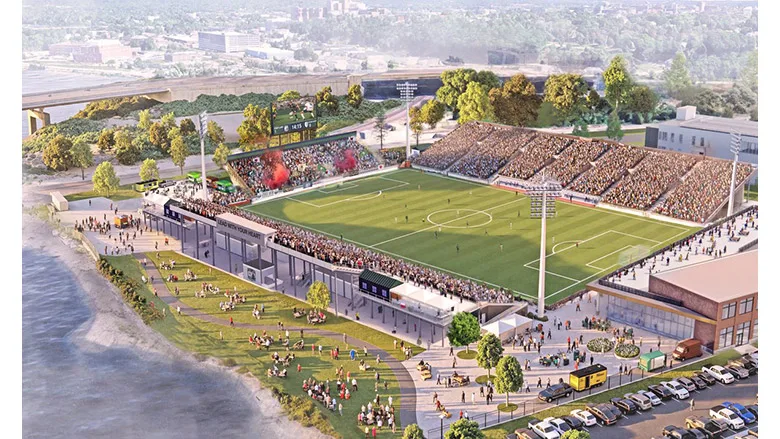
Portland, Maine, is poised for a significant urban transformation. The Portland Hearts of Pine, the state’s inaugural professional soccer club, has unveiled an ambitious $50-million proposal to construct a purpose-built, soccer-specific stadium on the grounds of a dormant industrial site. The project, which seeks to convert a fenced-off coal storage area known as Cassidy Point into a multi-use athletic and public space, represents a major private investment in the city’s waterfront, promising to redefine the peninsula’s western edge.
The Vision: A New Era for Maine Soccer
For a team that only played its inaugural season last year, the trajectory of the Portland Hearts of Pine has been nothing short of meteoric. Currently competing at the 6,000-seat Fitzpatrick Stadium—a venue already straining to accommodate the club’s swelling fan base—the organization is looking toward a permanent home that can house both its men’s squad and a forthcoming women’s team.
During a press conference held earlier this month at the site, Gabe Hoffman-Johnson, the club’s founder and chief community officer, articulated the philosophy behind the project. "Today is about announcing our plans to build a permanent home that allows Hearts of Pine to grow responsibly alongside the community that has embraced it," Hoffman-Johnson stated.
The proposed stadium is designed to hold between 9,000 and 11,000 spectators. However, the club’s leadership is adamant that the project is about more than just seat count. According to Club President Kevin Troll, the development is intended to be a year-round asset for the city. "This project will allow us to transform this site into a place where people can gather, run, walk their dogs, and grab a bite to eat all year round," Troll said.
Chronology of Development: From Industrial Site to Athletic Campus
The path to securing Cassidy Point was a rigorous one. After evaluating 14 potential locations across Greater Portland, the club’s leadership identified the industrial site as the premier choice. The site, currently owned by Sprague Energy and used for coal storage, is at a crossroads due to evolving environmental regulations.
A new city ordinance mandates that the coal pile be covered by 2027 or removed entirely by 2030. According to Jonathan Cully, a founding partner of the club, this regulatory shift presented a unique opportunity. "Our understanding is that Sprague is in the process of carting that coal off-site," Cully noted. Following extensive negotiations, the club has signed a contract to purchase the land, setting the stage for a dramatic environmental and aesthetic reclamation of the waterfront.
The project timeline is equally ambitious:
- Past 9 Months: Initial permitting and site vetting.
- August 2024: Formal announcement and public reveal of the vision.
- Late August 2024: Scheduled neighborhood meeting to gauge community feedback.
- Late September 2024: Anticipated initial planning board workshop.
- Late 2024: Potential Planning Board and City Council votes on necessary zoning amendments.
- 12-Month Outlook: Commencement of construction.
- 2029: Targeted grand opening of the new stadium.
Supporting Data: Why the Need for Growth?
The argument for a new facility is rooted in clear demand. Currently, nearly 8,000 individuals are on a season-ticket waitlist for Fitzpatrick Stadium. The existing venue, while beloved for its history, lacks the modern amenities required for a top-tier professional experience.
Despite the demand for more seats, the Hearts of Pine are eschewing the industry-standard focus on luxury suites and high-end corporate monetization. Instead, the club is prioritizing "grassroots energy." Troll explained that while the new stadium will significantly improve comfort compared to the aging infrastructure at "Fitzy," the organization wants to maintain an intimate atmosphere. "What makes this club special is the grassroots energy," he emphasized.
The proposed site plan includes more than just the pitch. Key features include:

- Indoor Soccer Facility: A year-round training center for the professional club, as well as youth and adult recreational leagues.
- Public Waterfront Access: The inclusion of trails along the Fore River, providing public access to a section of the shore that has long been inaccessible to the average citizen.
- Retail and Dining: Limited, local food and retail vending to serve both match-day crowds and the surrounding neighborhood, fostering a sense of vibrancy that the current industrial site lacks.
The Regulatory Landscape and Official Responses
The project is far from a "done deal." Because the site is currently zoned for heavy industrial use, the club must navigate a complex series of regulatory hurdles. The most significant of these is a requested zoning amendment to allow for an "open-air soccer stadium and other complementary uses."
Should the zoning be approved, the project will then be subjected to a rigorous major site permit application. This will trigger a comprehensive review by the city, covering critical infrastructure concerns such as traffic patterns, parking availability, utility demands, stormwater management, and lighting impacts.
The club has proactively hired traffic engineers to assist with the regulatory process, which requires approval from both the City of Portland and the Maine Department of Transportation.
The City of Portland has maintained a professional, cautious, and neutral stance. "We look forward to officially reviewing their project plans at the appropriate time to ensure that it’s a good fit for the city," a municipal statement read. Jessica Grondin, the city’s spokesperson, indicated that the review process is expected to be thorough, with formal decisions not likely until the close of 2024 or early 2025.
Implications for Portland’s Future
The Cassidy Point project is being positioned as a cornerstone of Portland’s "Plan 2030." The city’s long-term vision seeks a sustainable mix of marine and non-marine uses, and the Hearts of Pine stadium is being marketed as a vital component of that strategy.
Economic and Urban Impact
The $50-million investment is primarily privately funded, a rarity for modern stadium projects that often rely heavily on taxpayer subsidies. While the club intends to seek state and local support for infrastructure surrounding the stadium—such as road improvements or utility upgrades—the core financial risk rests with the private owners.
For the neighborhood, the implications are profound. Transforming a coal storage site into a public-facing recreational hub represents a "brownfield" reclamation success story. By opening the waterfront to pedestrians and cyclists, the project aims to bridge the gap between Portland’s industrial heritage and its future as a modern, accessible city.
The Working Waterfront
A point of clarity for the club is the distinction between the stadium site and the nearby pier. The eight-acre waterfront pier, which is not part of the project, will remain a functioning marine-industrial zone. This ensures that the stadium does not displace the essential maritime activities that define the region’s economy. Instead, the stadium acts as a neighbor to the working waterfront, creating a multi-layered urban fabric where industry and community recreation coexist.
Cultural Identity
Finally, the Hearts of Pine have successfully tapped into a specific cultural zeitgeist. By focusing on accessibility, community connection, and a "grassroots" ethos, the team has turned a sport that is often viewed as a niche hobby into a central pillar of Portland’s identity. The decision to build a stadium that is specifically designed for the fans, rather than for corporate bottom lines, is a bold move that aligns with the values of the Maine community.
As the late-September planning workshops approach, the project will undoubtedly face intense scrutiny regarding traffic, environmental impact, and noise. However, the prevailing sentiment from the club’s leadership is one of optimism. In a city that is rapidly evolving, the Hearts of Pine are not just building a stadium; they are attempting to build a legacy, transforming a relic of the fossil-fuel era into a landmark of future community health and athletic excellence.