





In a significant legal development for regional energy infrastructure, the U.S. Court of Appeals in New York City issued a pivotal ruling on August 21, upholding the New York State Department of Environmental Conservation’s (NYSDEC) water-quality approval for the Northeast Supply Enhancement (NESE) project. The decision effectively rebuffs a multi-pronged challenge from a coalition of environmental organizations, removing a critical regulatory hurdle for the more than $1-billion natural gas pipeline expansion led by Williams Cos.
The court’s decision validates the state’s 2025 reversal of its previous 2020 denial, finding that the NYSDEC provided a robust technical record to justify its updated stance. By affirming the Clean Water Act Section 401 certification, the ruling ensures that the project—a 37-mile expansion designed to bolster energy security for New York City and Long Island—can continue its path toward an anticipated 2027 operational launch.
A Chronology of Regulatory Friction
The NESE project has been a lightning rod for debate since its inception, characterized by a series of stops, starts, and dramatic reversals. The project is designed to increase the capacity of the Transcontinental Gas Pipe Line Co. (Transco) by 400,000 dekatherms per day. This additional supply is earmarked for National Grid, the primary utility provider for millions of residents in New York City and Long Island.
The project’s history is defined by the shifting political and regulatory landscape in Albany:
- 2020: The project appeared dead after both New York and New Jersey regulators denied critical water-quality certifications. At the time, the administration of then-Governor Andrew Cuomo cited concerns regarding the disturbance of contaminated sediment in Raritan Bay and the potential impact on sensitive aquatic habitats.
- August 2025: Following significant redesigns and the submission of new technical data by Williams, the Federal Energy Regulatory Commission (FERC) reissued the project’s federal construction certificate.
- November 2025: Both New York and New Jersey state agencies granted renewed water-quality approvals, setting the stage for the current legal showdown.
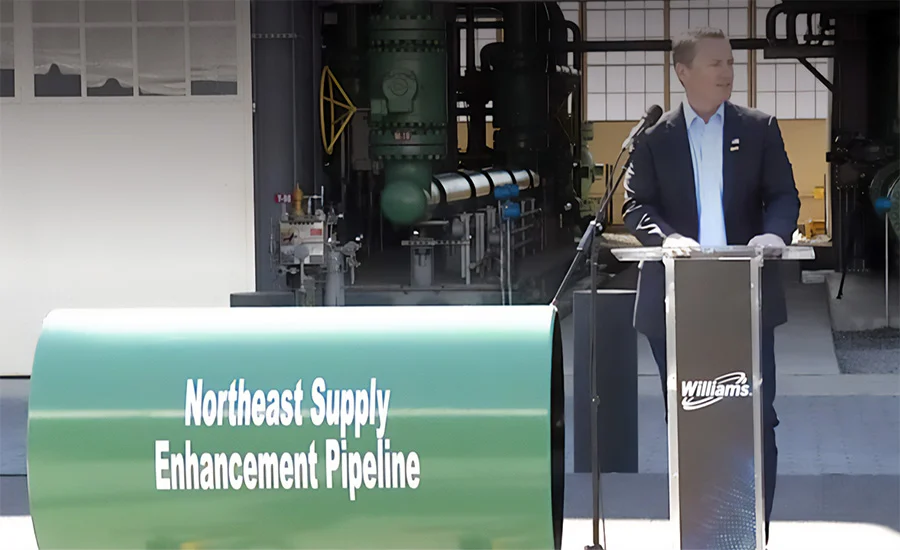
- April 14, 2026: Williams held an official groundbreaking ceremony, marking the commencement of construction activities, though the scale of work completed since that date remains largely undisclosed to the public.
- August 21, 2026: The U.S. Court of Appeals for the Second Circuit issues its summary order, upholding the NYSDEC’s approval and rejecting the claims of the environmental coalition.
Technical Justifications: Addressing the Sediment Dispute
A central component of the legal challenge focused on whether the NYSDEC had properly scrutinized the environmental risks posed by the pipeline’s path through Raritan Bay. Opponents, including the Sierra Club, the Natural Resources Defense Council, and NY/NJ Baykeeper, argued that the agency’s reversal of its 2020 decision was arbitrary and capricious.

The court, however, sided with the agency, noting that the "technical record" supporting the 2025 approval was significantly more comprehensive than the data available five years prior.
Sediment and Habitat Protection
The original 2020 denial was predicated on concerns that jet trenching—a process used to bury the pipe—would release mercury and copper-laden sediment, potentially harming hard-clam habitats. In its renewed application, Transco provided updated survey data that fundamentally altered the environmental risk profile. For instance, the developer corrected a previous calculation that overestimated hard-clam density by a factor of nearly 20, lowering the figure from 69.6 to 3.7 clams per square foot.
Furthermore, the developer presented evidence from completed offshore projects demonstrating that actual sediment loss during trenching was substantially lower than the theoretical models initially feared by regulators. Regarding the burial depth of the pipeline, the NYSDEC determined that while activists lobbied for a 6-foot burial depth, a 4-foot depth was sufficient for this specific project. The agency concluded that the deeper 6-foot burial requested by some parties was primarily intended to mitigate electromagnetic fields—a concern relevant to electric transmission cables but not to natural gas pipelines.
Regulatory "Guardrails"
The court also dismissed the challengers’ argument that the NYSDEC improperly deferred environmental oversight until after the permit was issued. The court ruled that the permit contains sufficient "guardrails," including:
- Strict pollutant limits and defined construction windows to protect marine life.
- Requirements for continuous, real-time water-quality monitoring.
- The mandate for an independent, third-party monitor with the legal authority to order an immediate work stoppage if environmental thresholds are breached.
Implications for Regional Energy Policy
For Williams and its supporters, the court’s decision is a vindication of the project’s environmental mitigation strategies. "The ruling represents an important step forward," said Williams spokesperson Alex Schott. As the company pushes toward a fourth-quarter 2027 service date, the project remains a cornerstone of the regional strategy to meet peak energy demand, particularly during the coldest winter months when natural gas heating is in highest demand.

However, the legal landscape remains complex. While the Second Circuit’s decision clears the New York water-quality hurdle, the project continues to face significant litigation in other jurisdictions.
Ongoing Legal Challenges
Environmental advocates remain undeterred, emphasizing that the project’s survival is not yet guaranteed. Susan Kraham, an attorney with Earthjustice, noted that the environmental coalition is currently reviewing the court’s decision to determine if further appeals are warranted.
Simultaneously, several other critical legal battles are playing out:
- New Jersey Federal Appeals: The U.S. Court of Appeals for the Third Circuit is currently reviewing the challenge to New Jersey’s Section 401 water-quality approval.
- FERC Review: The U.S. Court of Appeals for the D.C. Circuit is considering a separate challenge to the federal construction certificate reissued by FERC in 2025.
- State-Level Land Use: A case in the New Jersey Superior Court seeks to challenge the license granted by the New Jersey Tidelands Resource Council, which allows the pipeline to cross state-owned submerged lands in Raritan Bay.
Conclusion: A High-Stakes Balancing Act
The NESE pipeline project serves as a microcosm of the broader national tension between infrastructure development and environmental preservation. For New York and New Jersey, the project represents a necessity for regional energy reliability, particularly as states phase out older, dirtier power sources. For the environmental community, the project represents a potential risk to marine ecosystems and a long-term commitment to fossil fuel reliance that they argue runs counter to regional climate goals.
As Williams prepares to advance its offshore construction, the eyes of the energy and environmental sectors remain fixed on the remaining federal and state courtrooms. For now, the "necessary guardrails" mentioned by the court will be put to the test. The NYSDEC has signaled that it will be vigilant, stating it remains "committed to closely monitoring" the construction process to ensure total compliance with state water-quality standards. Whether those measures will satisfy the project’s vocal opponents—or if further litigation will delay the 2027 target—remains to be seen.