





Executive Summary: The Main Facts
The United Kingdom’s telecommunications landscape is currently undergoing its most significant structural shift since the initial "dash for fiber" began. For the past decade, the industry—led by a surge of "Altnets" (Alternative Networks)—has been defined by a singular metric: premises passed. However, as 2024 progresses, the "Build Era" is rapidly giving way to the "Operate Era."
According to recent data from Ofcom, full-fiber coverage now reaches more than three-quarters of UK premises. This saturation, combined with a tightening macroeconomic environment, has shifted the focus of investors and lenders from infrastructure expansion to operational efficiency, customer take-up, and revenue stability.
A critical vulnerability has emerged in this transition: the "Operational Gap." Andrian Visnevschi, CEO and CTO of ITcare, warns that while many operators have successfully laid thousands of miles of glass, their ability to manage those networks 24/7 remains dangerously thin. The core issue lies in the "3:00 AM test"—the ability of an operator to not just acknowledge a network alarm in the dead of night, but to actively diagnose and resolve complex routing issues, such as BGP (Border Gateway Protocol) table instabilities, without waiting for the morning shift.
As the market enters a period of inevitable consolidation, the quality of a network’s Network Operations Center (NOC) and the accuracy of its inventory are becoming the primary filters for refinancing and acquisition. Operators who cannot prove their networks are managed by professional, scalable systems—rather than "hero" engineers working on gut instinct—face a looming refinancing cliff by the end of 2026.
Chronology: From the Land Grab to the Refinancing Cliff
2010–2020: The Era of Infinite Expansion
Following the realization that the UK’s legacy copper infrastructure was insufficient for a modern digital economy, the government and private equity flooded the market with capital. This birthed the Altnet movement. Hundreds of small-to-medium operators emerged, fueled by low interest rates and a mandate to "build at all costs." During this period, operational shortcuts were often overlooked in favor of rapid deployment maps.
2021–2023: Market Saturation and the Interest Rate Shock
As Openreach accelerated its own fiber rollout and Altnets began to overlap in high-density areas, the "build" model began to show strain. The global shift in interest rates transformed the cost of debt. Capital that was once "cheap" became expensive, and the metrics for success began to pivot from "potential customers" (premises passed) to "actual customers" (active subscribers).
2024: The Operational Awakening
The industry has now reached a tipping point. With over 75% of the country covered, the "land grab" is largely over. The focus has turned inward. Operators are discovering that the "build era" load—messy inventories, un-triaged alarms, and tribal knowledge—is unsustainable for a mature utility.
2025–2026: The Consolidation Deadline
Industry analysts, including those at AlixPartners, estimate that nearly half of the UK’s fiber operators must refinance their debt by the end of 2026. These new loans will be issued at significantly higher rates and will require rigorous due diligence. Operators who cannot demonstrate a "clean" network with automated, 24/7 oversight will likely be forced into distressed mergers or liquidations.
Supporting Data: The Economics of the 24/7 NOC
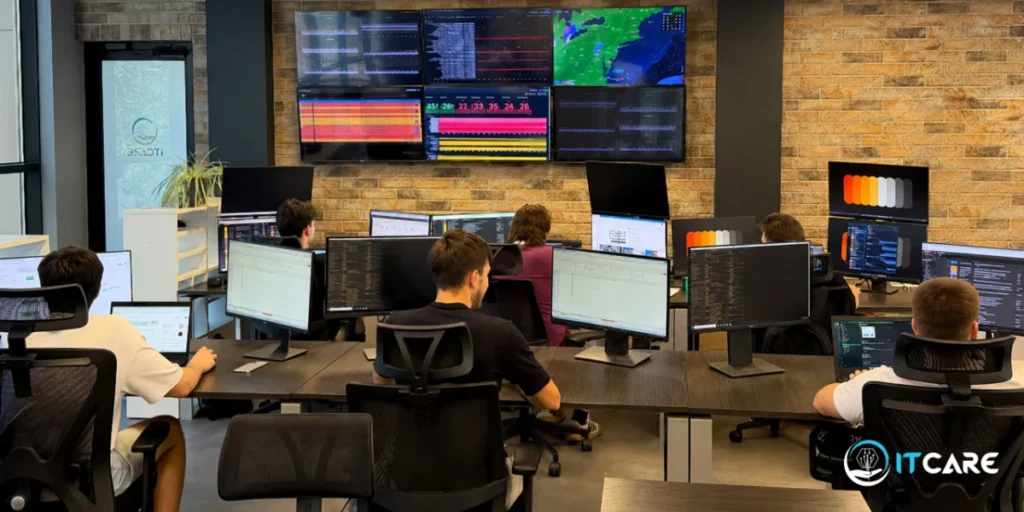
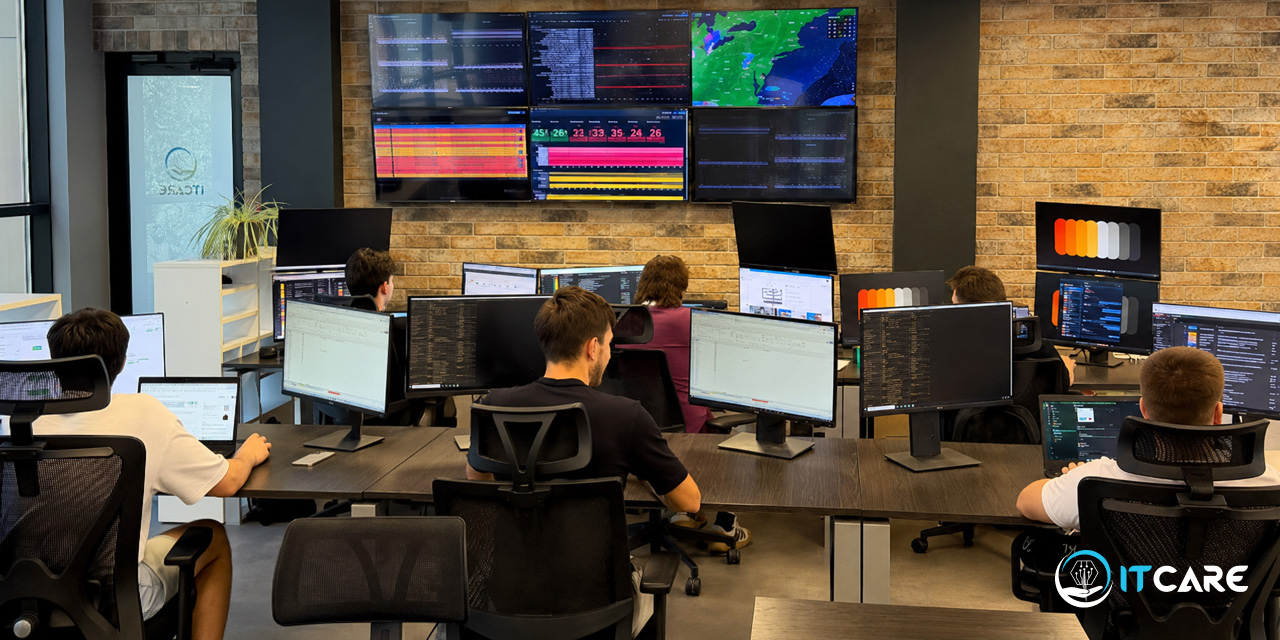
To understand why so many operators are struggling, one must look at the brutal mathematics of staffing a 24/7 Network Operations Center in the UK.
The Staffing Equation
A single "seat" in a NOC—meaning one person monitoring the network at any given moment—is not a five-person job. While a week has 168 hours and a standard work week is 40 hours, the reality of shift work, mandatory rest periods after night shifts, annual leave, and sickness means that a sustainable 24/7 rotation requires a minimum of six engineers.
The Cost Breakdown
According to public salary data and market analysis provided by ITcare, the financial burden of an in-house NOC is often underestimated by Altnet boards:
- Junior/First-line Salaries: £33,000 – £40,000.
- Senior/Escalation Salaries: £50,000 – £70,000+.
- Total Base Pay for a 6-Person Team: Approximately £250,000 per year.
- Fully Loaded Costs: When including employer National Insurance, pension contributions, shift premiums (essential for night work), recruitment fees, and ongoing training, the cost of one 24/7 seat escalates to £350,000 or more per year.
The Talent Scarcity
The problem is not just financial; it is human. There is a chronic shortage of senior network engineers capable of handling complex service provider architectures. Operators are frequently competing for the same small pool of talent, leading to wage inflation and high turnover. When a senior engineer leaves, they often take the "network map"—which may only exist in their head—with them.
Official Responses and Industry Sentiment
The shift toward operational scrutiny is reflected in the stances of both regulators and financial institutions.
Ofcom’s Perspective
Ofcom’s 2025 Nations Report highlights the success of fiber deployment but also subtly emphasizes the need for "service quality." As the UK becomes more dependent on these networks for critical services, the regulator is expected to increase pressure on operators regarding uptime and incident response times.
The Lender’s Mandate
Investment firms and lenders, such as those surveyed by AlixPartners, are signaling a change in "sorting criteria." In the build era, a lender might accept a spreadsheet of "premises passed" as collateral. In 2024, they are demanding to see:
- Churn Rates: How many customers are leaving due to poor service?
- Cost Discipline: Is the operator spending too much on manual firefighting?
- Scalability: Can the network handle a 50% increase in traffic without a 50% increase in headcount?
The "Specialist Model" Response
In response to these pressures, a new "specialist model" is gaining traction. Managed Service Providers (MSPs) like ITcare are offering "Managed NOC" and network engineering services. By spreading the cost of senior talent across multiple clients, these specialists can provide 24/7 coverage for a fraction of the cost of an in-house team, allowing Altnets to focus their remaining capital on customer acquisition.
The Role of AI: Hype vs. Reality
No discussion of modern operations is complete without addressing Artificial Intelligence. However, the industry is currently split between "AI marketing" and "AI utility."
The "Read" Side: Where AI Excels
Andrian Visnevschi notes that AI’s true value in a NOC is on the "read" side—ingesting vast amounts of data to find the "needle in the haystack." Platforms like ITcare’s HORA use AI to correlate:
- BGP state changes.
- Traffic flows and latency spikes.
- Syslogs and telemetry metrics.
- Discovered physical topology.
By correlating these disparate data points, an AI-enhanced NOC can identify the root cause of an outage in minutes, a task that might take a human engineer hours of manual "show commands."
The "Write" Side: The Danger of Automation
Conversely, there is a strong industry consensus that AI should not be given autonomous "write" access to network devices. The risk of an AI "hallucinating" a configuration change that takes down a core router is too high. The professional standard is moving toward Deterministic Automation: the AI proposes a solution, but a human engineer approves it, and the execution is carried out by audited, pre-written code.
Implications: The Future of the UK Fiber Market
The transition from building to operating has several profound implications for the next 24 months:
1. The End of "Hero Culture"
Operators can no longer rely on one or two "hero" engineers who know where all the bodies are buried. For a network to be an investable asset, it must have a "Source of Truth"—a digital, automated inventory that is independent of any single employee’s memory.
2. Operational Due Diligence as a Deal-Breaker
In the upcoming wave of mergers and acquisitions (M&A), the "messy" network will be penalized. If an acquiring company (such as a Tier 1 provider or a large Altnet like CityFibre) looks at a target and sees drifted inventories and a lack of 24/7 oversight, they will either walk away or significantly devalue the offer.
3. The Pivot to "Managed Services"
To survive the refinancing cliff, many small-to-mid-sized Altnets will outsource their NOC functions. This allows them to convert a high, fixed CAPEX/OPEX burden (staffing) into a lower, predictable monthly fee. This shift will likely lead to a more standardized, professionalized UK network landscape.
4. Customer Experience as the Ultimate Metric
As fiber becomes a commodity, the only way to prevent churn is through superior service. A network that goes down at 3:00 AM and stays down until 9:00 AM because "nobody was on shift" will lose customers to more resilient competitors.
Conclusion
The strategic question for UK fiber operators heading into the autumn of 2024 is no longer "How fast can we dig?" but rather "How well can we run?" The "3:00 AM test" is not just a hypothetical scenario; it is a barometer for the financial health and longevity of the business. Those who embrace professionalized, AI-enhanced operations will be the consolidators; those who don’t will be the consolidated.
As the industry prepares to gather at Connected Britain this September, the conversation will likely move away from the excitement of the "build" and toward the cold, hard reality of the "operate." The era of the amateur Altnet is over; the era of the professionalized utility has begun.