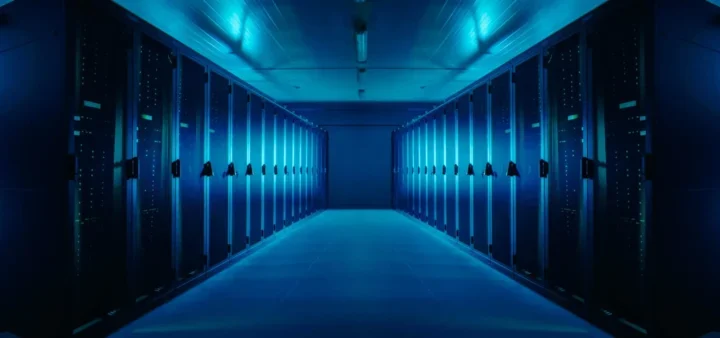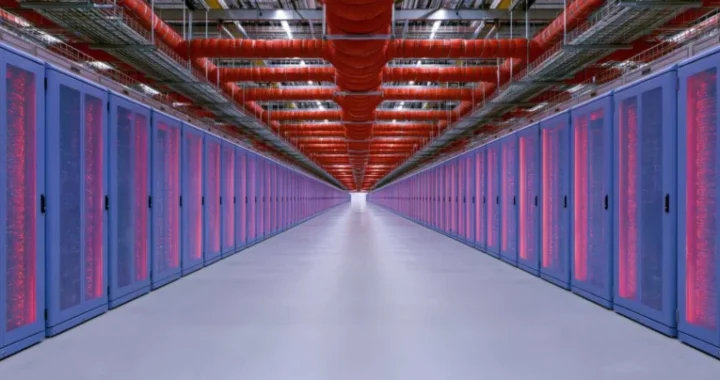





In the current era, the global economy is not merely supported by digital services; it is entirely defined by them. From the hyper-scale cloud environments powering enterprise business processes to the computationally intensive demands of generative AI and real-time streaming, the modern digital infrastructure has become the "nervous system" of global commerce. At the heart of this system lies the data center.
As these facilities scale at unprecedented rates to accommodate rising rack densities and power requirements, the margin for error has effectively vanished. Reliability, resilience, and operational efficiency are no longer "value-add" features; they are mission-critical imperatives. To navigate this complexity, the Telecommunications Industry Association (TIA) has emerged as a standard-bearer, championing a dual-pronged approach to infrastructure integrity: the ANSI/TIA-942 design standard and the DCE 9000 quality management framework. Together, these standards represent a comprehensive strategy to secure the data center lifecycle from the blueprint phase to the deployment of physical hardware.
Main Facts: The Pillars of Infrastructure Integrity
The stability of the digital economy rests on the premise that data must be accessible, secure, and uninterrupted. However, achieving this at scale requires a standardized language.
ANSI/TIA-942 serves as the industry’s architectural North Star. It provides the essential criteria for the physical design of data centers, covering everything from site selection and architectural layout to the minutiae of fire suppression, physical security, and power distribution. By creating a unified rating system—ranging from Rated 1 (basic, non-redundant) to Rated 4 (fully fault-tolerant)—TIA-942 allows operators and investors to communicate clearly about a facility’s capability to withstand operational stressors.
Complementing this is DCE 9000, the Data Center Excellence Quality Standard. While TIA-942 governs the where and how of the facility, DCE 9000 governs the what—the hardware itself. It focuses on the infrastructure supply chain, ensuring that the uninterruptible power supplies (UPS), cooling units, and cabling systems arrive at the site with a guaranteed level of quality and performance. By applying the rigor of aerospace (AS 9100) and automotive (IATF 16949) quality standards to the data center sector, DCE 9000 aims to eliminate the variability that often plagues rapid infrastructure rollouts.
Chronology: The Evolution of Standardization
The necessity for these standards did not arise overnight. It is the result of a decades-long maturation process in the telecommunications and IT sectors.
- 2005 – The Birth of TIA-942: The TIA-942 standard was first published to provide the first comprehensive, vendor-neutral standard for data center design. It was a milestone that shifted the industry away from proprietary, "black-box" design methodologies.
- 2010s – The Cloud Revolution: As cloud computing began to dominate enterprise IT, the demand for "five-nines" (99.999%) availability became the industry benchmark. TIA-942 saw widespread adoption as global operators sought to prove their reliability to cloud-native clients.
- 2020s – The AI Pivot: The post-pandemic surge in AI-driven workloads introduced unprecedented challenges regarding power density and thermal management. The industry recognized that design standards alone were insufficient if the underlying hardware components were subject to inconsistent manufacturing quality.
- 2024–2025 – The Advent of DCE 9000: Recognizing the supply chain as the new "weak link," TIA initiated the DCE 9000 program. This standard was designed to harmonize quality management across the global supply chain, acknowledging that a "Rated 4" data center is only as resilient as its weakest power distribution unit.
Supporting Data: Why Reliability is a Financial Necessity
The cost of data center downtime is staggering. According to various industry reports, large-scale enterprise outages can cost companies upwards of $1 million per hour in lost productivity, data recovery, and reputational damage.
Data from the TIA and its engineering committees indicate that:
- Predictability is Profit: Facilities that strictly adhere to ANSI/TIA-942 report a 30% reduction in "unexpected maintenance" incidents compared to non-standardized legacy facilities.
- Supply Chain Efficiency: DCE 9000 aims to reduce the "Cost of Poor Quality" (COPQ) by 20% for infrastructure suppliers. By implementing a common Quality Management System (QMS), suppliers spend less time navigating customer-specific audit processes and more time on R&D and production.
- Density Trends: Current data indicates that average rack densities have increased from 5kW to over 20kW per rack in the last five years. This shift makes the rigorous thermal management specifications found in ANSI/TIA-942 essential for avoiding catastrophic thermal runaway.
Official Responses: TIA’s Leadership Perspective
The TIA, through its TR-42 engineering committee, emphasizes that these standards are not merely documents—they are living ecosystems.
"The modern data center is no longer just a room with servers; it is a complex, integrated machine," says a TIA spokesperson. "When you decouple the design from the supply chain, you create gaps in reliability. Our objective with the integration of TIA-942 and DCE 9000 is to provide a ‘cradle-to-grave’ assurance. We are moving toward a future where an operator can look at a facility and know, with mathematical certainty, the quality of every component and the resilience of every system."
Industry experts involved in the development of DCE 9000 highlight that the standard is intentionally built on the ISO 9001 high-level structure. This allows companies that already operate under international quality management systems to integrate data-center-specific metrics without having to overhaul their entire business process. It is a pragmatic approach to a massive, global engineering challenge.
Implications: The Future of the Data Center Landscape
The push for standardization has profound implications for stakeholders across the digital value chain.

For Operators and Developers
For those building the next generation of data centers, the implication is clear: standardization is the path to lower insurance premiums and higher asset valuations. Institutional investors are increasingly looking for "TIA-certified" or "DCE-compliant" facilities as a proxy for de-risking their portfolios. A data center built to these standards is a more liquid asset, as it is readily understood by auditors, prospective tenants, and insurance underwriters.
For Equipment Suppliers
For manufacturers, the DCE 9000 standard represents an opportunity for consolidation and market differentiation. By adopting a globally recognized quality metric, suppliers can bypass the cumbersome process of maintaining unique QMS workflows for every hyperscale client. It creates a "passport" for high-quality equipment, allowing suppliers to compete on performance rather than the ability to navigate fragmented procurement audits.
For the Global Economy
Ultimately, the standardization of data centers is an environmental and economic imperative. As the industry faces scrutiny regarding its power consumption and water usage, the efficiency mandates embedded in ANSI/TIA-942 become essential for sustainability. By optimizing airflow and power distribution, these facilities can reduce their total carbon footprint.
The convergence of AI, edge computing, and global connectivity will continue to place pressure on data center infrastructure. The efforts by the TIA to codify best practices into ANSI/TIA-942 and DCE 9000 are not merely administrative exercises—they are the architectural and operational bulwarks that will prevent the digital economy from buckling under its own weight.
In the coming years, we can expect these standards to become the default requirement in procurement contracts worldwide. As the digital infrastructure becomes more complex, the ability to simplify, verify, and standardize will be the defining trait of successful organizations. For the data center of tomorrow, reliability is not an option; it is the fundamental prerequisite.
For more information on the implementation of these standards, industry professionals are encouraged to consult the official documentation provided by the TIA-942 portal and the DCE 9000 resources page.